 Newsinc24 Team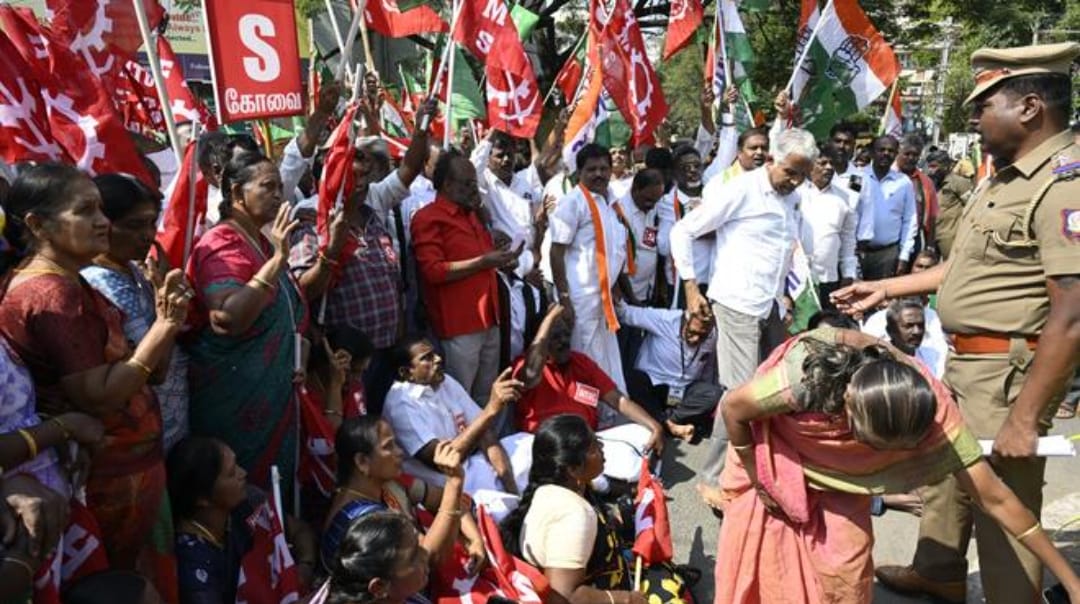
India is witnessing a nationwide Bharat Bandh on Thursday, as a joint forum of 14 national trade unions called for a general strike to protest what they describe as the Centre’s “anti-worker, anti-farmer and pro-corporate” policies. Trade union leaders estimate participation from over 30 crore workers across sectors, making it one of the largest coordinated labour protests in recent years.The strike has the backing of agricultural unions, public sector employees, civil services staff, bank unions and informal sector workers. Demonstrations are expected in nearly 600 districts, with potential disruptions to transport, markets and government services in several states.
While there is no nationwide directive to shut schools and colleges, states such as Odisha, Assam, Kerala and West Bengal are likely to see a stronger impact due to high trade union participation. Public transport services, banking operations, electricity distribution and wholesale markets may face partial or major disruptions in many districts.“All services related to electricity, banking, insurance, transport, health, education, gas and water supply are likely to be affected due to the nationwide strike,” said Amarjeet Kaur, General Secretary of the All India Trade Union Congress (AITUC).
#WATCH | Cuttack, Odisha: All India United Trade Union Centre participate in the nationwide strike, which has been called by several trade unions to protest against various policies of the central government. pic.twitter.com/VQsG2zHE6z
— ANI (@ANI) February 12, 2026
The unions have called the strike to oppose privatisation of public sector undertakings, the Electricity (Amendment) Bill, 2025, and the proposed National Electricity Policy, 2026. Restoration of the Old Pension Scheme (OPS) for power sector employees is also among the key demands.Other demands include scrapping the four labour codes, withdrawal of the Draft Seed Bill, the Electricity Amendment Bill, and the Sustainable Harnessing and Advancement of Nuclear Energy for Transforming India (SHANTI) Act. Trade unions argue that these measures weaken labour rights, threaten job security and undermine farmers’ interests.Employees and workers associated with the joint forum are observing a day-long strike to register their resistance against what they term “anti-national economic policies” of the central government.Authorities are closely monitoring the situation on a state-by-state basis to maintain law and order and ensure essential services. Parents and students have been advised to stay in touch with educational institutions for local updates, as transport disruptions could affect commuting in some areas.








Related Items
TN: Nine from Kerala killed in accident in Coimbatore
SC asks Pawan Khera to seek bail in Assam court, denies further relief
Global oil prices drop 2% amid easing West Asia tensions