 Ira Singh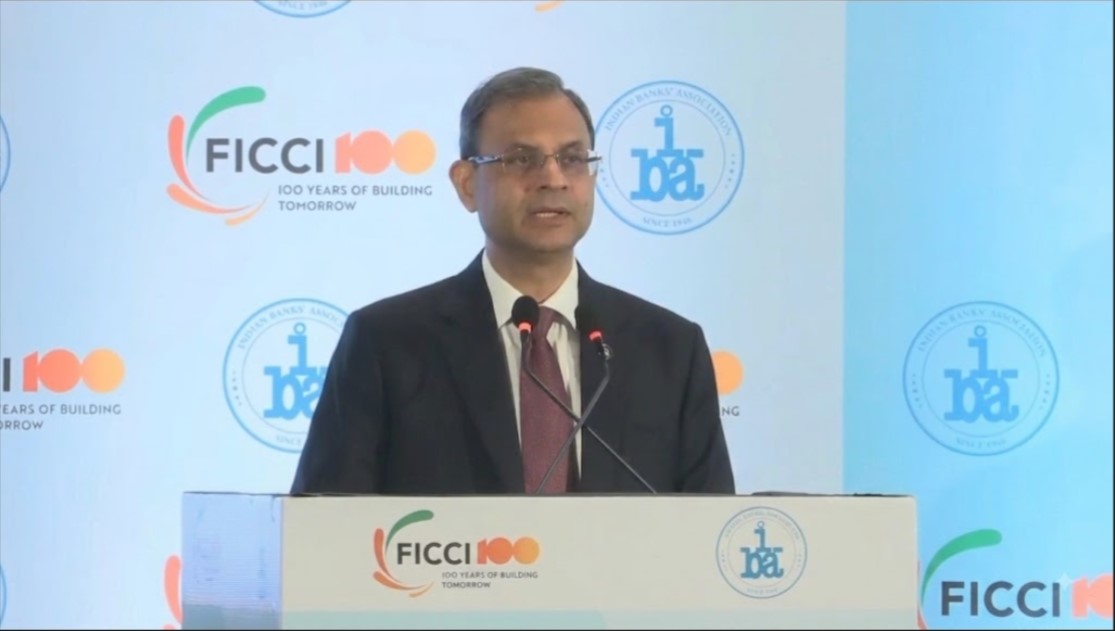
The Reserve Bank of India (RBI) Governor Sanjay Malhotra on Tuesday said India must actively shape its artificial intelligence (AI) journey instead of allowing the technology to reshape the financial sector by default.
Addressing the FIBAC 2026 conference in Mumbai, Malhotra said AI adoption would require a fundamental shift in the way financial institutions assess risks, serve customers, price capital and organise operations.He said the key question for banks and other financial institutions was whether they would take charge of their AI journey or allow technological changes to determine their future.Highlighting India’s advantage, the RBI Governor said the country is uniquely positioned to harness AI because of its advanced digital public infrastructure, including Aadhaar, UPI, DigiLocker and ONDC.
#WATCH | Mumbai: RBI Governor Sanjay Malhotra says, “We in India stand at a unique vantage point to leverage AI. We have the most advanced public digital infrastructure. We are trying to build, improve, and expand the public goods on top of which the private sector can build AI,… pic.twitter.com/1tE6luVQDV
— ANI (@ANI) August 11, 2026
Malhotra said initiatives such as the Unified Lending Interface and Account Aggregator framework would provide public digital infrastructure on which private players could build AI-based solutions. AI, he added, has the potential to transform financial decision-making in a manner comparable to the impact of UPI on financial transactions.He noted that earlier technological breakthroughs largely enhanced physical capabilities and connectivity, while AI has the potential to directly augment human intelligence. He pointed to the rapid evolution of computer coding as an example of how tasks once considered complex are increasingly becoming routine.
The Governor also highlighted progress made in key regulatory areas since the previous FIBAC conference, including financial stability, customer-centricity, ease of doing business and efforts to reduce intermediation costs.He said banks remain on track to implement applicable Basel III guidelines from the beginning of the next financial year under the existing glide path. The RBI has also finalised frameworks covering credit risk capital, expected credit loss, project finance, related-party transactions and dividend policy, alongside stronger supervisory mechanisms.
On regulatory simplification, Malhotra said the RBI had shifted several operational decisions to bank management while streamlining instructions. The central bank has automated more than 203 application types and delivered 99.9 per cent of services within prescribed timelines.
The RBI has also rationalised working capital norms, reviewed bulk deposit pricing and delegated certain foreign exchange approvals to authorised dealers.Measures to expand bank credit have included changes relating to acquisition finance, priority sector lending, project finance and alternative investment funds.Malhotra said AI could play a significant role across these areas, while stressing that reducing intermediation costs would remain an ongoing effort involving both regulators and the banking sector.
(Business Correspondent)



Related Posts
6 silver medals,20 Medals for Excellence, India finishes 10th at WorldSkills
Asian Games 2026: Pincky Balhara clinches Kurash bronze for India
India retain Nona Gaprindashvili Trophy at Chess Olympiad