 Ira Singh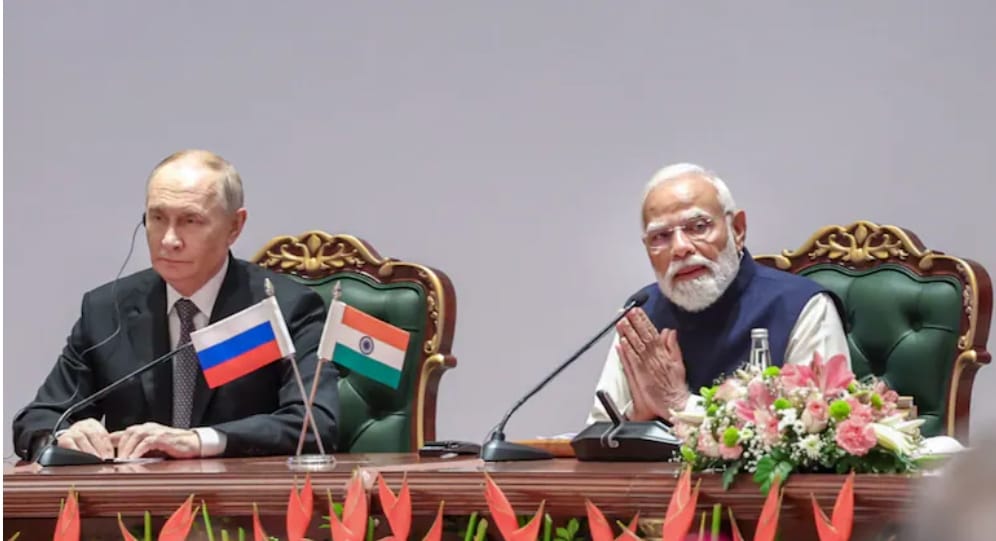
India and Russia are exploring the possibility of introducing a semi-floating rupee–ruble exchange rate, potentially fixed on a monthly basis, to facilitate bilateral trade and lower currency conversion costs, according to information.The move is aimed at reviving momentum in India–Russia trade and reducing reliance on dollar-based transactions, which have come under pressure due to Western sanctions on Moscow. Currently, most trade between the two countries is conducted in local currencies or through third currencies such as the UAE dirham.Industry sources said a direct rupee–ruble exchange rate could significantly cut foreign exchange costs, which can be 4–5 per cent higher when transactions are routed through indirect currency conversions instead of direct settlement in local currencies.Any such arrangement would require close coordination between the Reserve Bank of India and the Russian central bank and forms part of broader efforts to expand local-currency trade. The talks have gained urgency amid tighter Western sanctions that have disrupted traditional dollar- and euro-based payment channels.
In 2025, Western nations intensified sanctions on Russia. The United States imposed curbs on Russian refiners Rosneft and Lukoil, potentially impacting India’s crude oil imports. In October 2025, the European Union rolled out its 19th sanctions package, banning transactions with banks in Central Asia, restricting access to Russian payment systems, and targeting non-EU companies, including third-country buyers of Russian crude, that help generate revenue for Moscow.India first examined a rupee settlement mechanism with Russia after the invasion of Ukraine in February 2022. However, the initiative struggled to gain traction due to the sharply skewed trade balance between the two sides.
Payments for discounted Russian oil have increasingly been de-dollarised and routed through currencies such as the dirham, rupee and yuan to bypass sanctions. Yet, rupee–ruble trade has remained limited as India imports far more from Russia than it exports.Efforts to establish a direct exchange rate have also emerged amid demands from traders to settle Russian oil purchases in Chinese yuan, as nearly $60 billion worth of rupees accumulate annually in Vostro accounts due to India’s widening trade deficit with Russia.
Discussions on setting up a direct local-currency exchange rate gained pace in 2024, when the central banks of both countries began talks on the framework, including avoiding any peg to the dollar or other third currencies.The push for deeper trade and financial cooperation has intensified following high-level engagements, including Russian President Vladimir Putin’s visit to New Delhi in early December.
India is seeking to ramp up exports to Russia to address the widening trade imbalance, making local-currency settlement increasingly important. While rupee-based trade has begun, its scale-up has been gradual, another government source said.The two countries have pledged to raise bilateral trade to over $100 billion by 2030. Total merchandise trade stood at $68.7 billion in FY25, up 5 per cent year-on-year. However, the imbalance remains stark, with India’s exports below $5 billion and imports at around $64 billion, largely driven by crude oil purchases.Government sources said India sees opportunities to expand exports in sectors such as automobiles, auto components and pharmaceuticals, given Russia’s large import basket of nearly $200 billion.Meanwhile, the RBI has taken steps to strengthen the ecosystem for rupee-based cross-border trade, including simplifying operational guidelines and expanding permitted uses of accumulated rupee balances as recently as October.“These measures aim to ensure that rupees received through trade are productively utilised rather than remaining idle,” a government source said.However, exporters continue to face operational challenges. In November, EEPC India flagged payment delays due to sanctions on Russian banks, noting that the rupee–ruble trade mechanism has not functioned smoothly. Some banks of Indian origin have reportedly declined Russian payments or issuance of electronic Bank Realisation Certificates, citing sanction-related concerns.There is a need to establish a robust and reliable direct rupee–ruble exchange mechanism for settling financial transactions between the two countries, EEPC India added.
(Business Correspondent)







Related Items
West Bengal: At least 7 killed in Hotel fire in Tarapith town
MEA Secretary highlights India's BRICS 2026 priorities at Cairo forum
FIH Women's Hockey World Cup: India Draw 2-2 With China