 Newsinc24 Team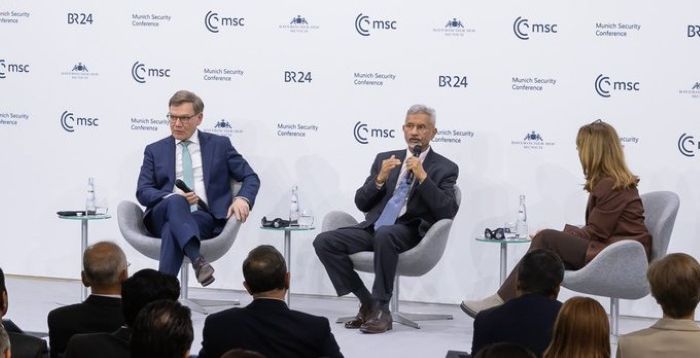
External Affairs Minister S Jaishankar on Saturday met his counterparts from the G4 countries (Germany, Japan, Brazil, and India) and discussed "reformed multilateralism" on the sidelines of the Munich Security Conference 2026 in Germany. India is very much wedded to its policy of "strategic autonomy" and the country's energy procurement will be driven by factors like costs, risks and availability, External Affairs Minister S Jaishankar said on Saturday against the backdrop of Washington's claim that New Delhi has agreed to stop importing Russian crude oil. In an interactive session alongside German Foreign Minister Johann Wadephul at the Munich Security Conference, Jaishankar said the global energy market is "complex" and India's oil companies will take decisions based on what they consider to be in their best interest.
He also met with G7 Foreign Ministers at the Munich Security Conference, reiterating India's support for the UN80 agenda and underscoring New Delhi's role in safeguarding global security. Jaishankar emphasised India's role in safeguarding the sea lines of communication, acting as a first responder in crises, strengthening port security, and contributing to resilient submarine cable infrastructure. Finance Minister Nirmala Sitharaman and Dr Jaishankar joined at a panel on ‘Stability Under Stress: The New Demands of Statecraft.’
The 62nd Munich Security Conference began on February 13 and will go on till February 15, at the Hotel Bayerischer Hof and the Rosewood Munich. Led by MSC Chairman Wolfgang Ischinger, the conference brings together hundreds of decisionmakers and opinion leaders from around the world to deliberate on pressing security challenges. Nearly 50 Heads of State and Government are participating at MSC 2026.






Related Items
Russia backs India's call for peace in Ukraine:Peskov
Jaishankar, Luxembourg Dy PM Bettel discuss trade, investment ties
India expands UNESCO heritage footprint with four new sites