 Newsinc24 Team
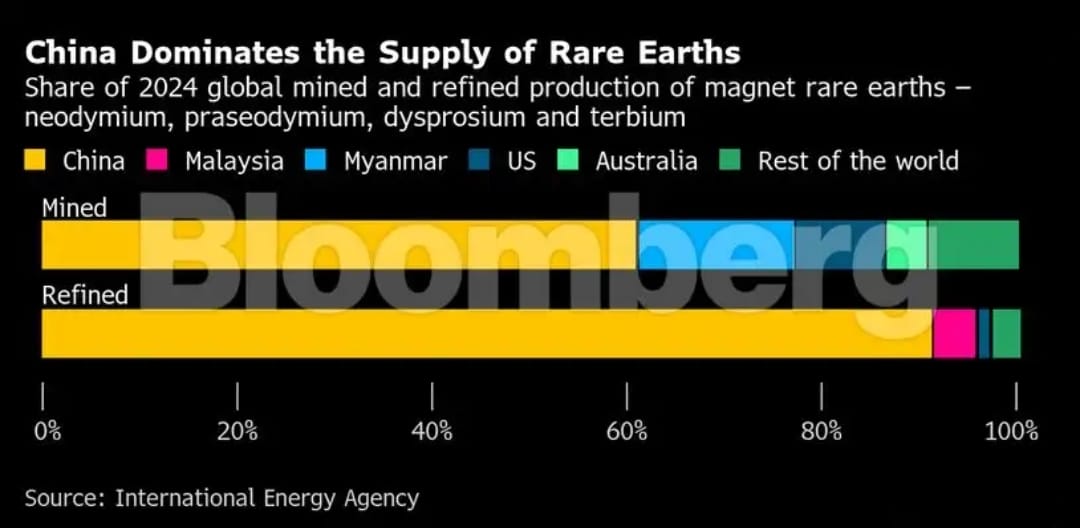
India is preparing to nearly triple the size of its incentive programme for rare earth magnet manufacturing to more than Rs7,000 crore ($788 million), in a move aimed at reducing dependence on China and strengthening domestic capacity in critical technologies.According to information,the proposal currently awaiting cabinet approval — marks a major expansion from the earlier plan worth around $290 million. The new initiative seeks to accelerate India’s ability to secure key materials vital for electric vehicles (EVs), renewable energy infrastructure, and defence applications. The final allocation, however, could still change, they said.The rare earth magnet industry is critical for technologies such as EV motors, wind turbines, and military systems. China currently dominates the global supply chain, processing nearly 90% of the world’s output. Beijing’s move to tighten export controls earlier this year, amid its trade dispute with the United States, disrupted supplies worldwide and prompted several countries to explore alternative sources.
Earlier this year,Prime Minister Narendra Modi has repeatedly cautioned against the weaponisation of critical minerals, urging nations to develop diversified and stable supply chains. India’s rare earth expansion plan aligns with this global push, but experts note that the country still faces significant challenges from limited technical expertise and high production costs to long project timelines and environmental concerns associated with rare earth mining.Under the proposed plan, the government is expected to support around five companies through a mix of production-linked incentives (PLI) and capital subsidies, according to the people cited. State-owned enterprises are expected to lead early efforts to build partnerships with overseas mining companies, given that domestic production remains commercially unviable without subsidies.
Industry officials reportedly stated that while China recently issued its first import licenses allowing rare earth magnets to be brought into India, no licenses have been granted yet to Indian-origin firms. This highlights the continuing dominance of Chinese firms in the global magnet supply chain.In parallel, the Indian government is also funding studies into synchronous reluctance motors — an emerging technology that could help reduce dependence on rare earth materials altogether.Global suppliers have expressed growing interest in serving India’s market, which currently requires about 2,000 tons of rare earth oxides annually — a demand that could easily be met by global producers. By expanding the incentive programme, India hopes to attract global magnet manufacturers to establish local subsidiaries or joint ventures, boosting self-reliance and curbing reliance on Chinese imports often backed by opaque subsidies and aggressive pricing.However, the plan could face headwinds if China’s recent easing of export curbs for the US and European Union is extended to India. Cheaper Chinese magnets could flood the market, potentially discouraging long-term investment in India’s nascent sector.



Related Posts
India’s semiconductor market set to reach $200 Billion by 2035
Asian Games: India opens medal account with silver
India sends fresh tranche of relief material to Nepal