 Newsinc24 Team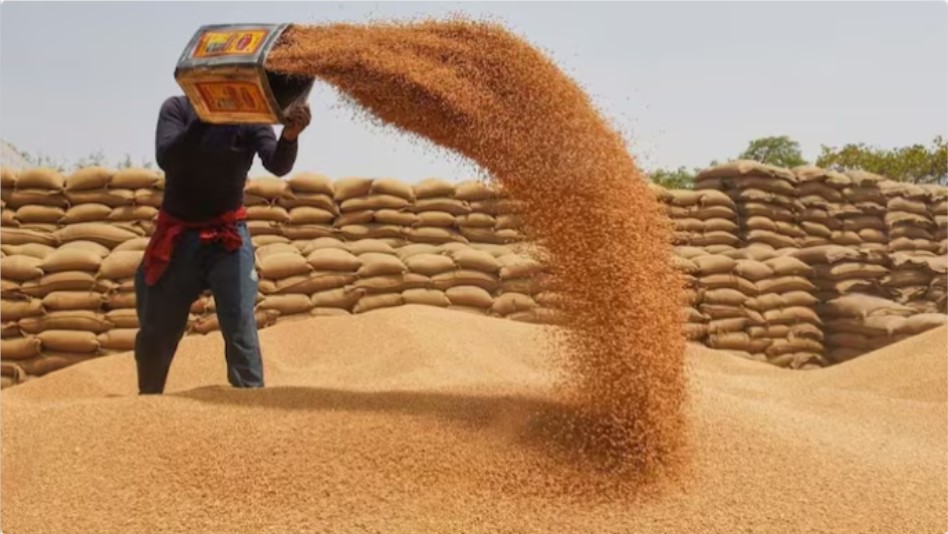
India on Monday lifted its four-year ban on wheat exports with immediate effect, citing record production, large buffer stocks and weak domestic prices that have hurt farmers.The Directorate General of Foreign Trade revised the export policy for wheat from “prohibited” to “free”. The relaxation covers different varieties, including durum wheat, as well as flour, maida, semolina and wholemeal atta.
India, the world’s second-largest wheat producer, had largely prohibited overseas sales in May 2022 to control domestic prices and safeguard food security, according to agency reports.The latest decision replaces the quota-based system introduced earlier this year, under which the government permitted exports of 50 lakh tonnes of wheat and 10 lakh tonnes of wheat products through licences. So far, only around 2.5 lakh tonnes of the permitted 60 lakh tonnes have been shipped.
Food Secretary Sanjeev Chopra said the ban was lifted in the interest of farmers, as domestic wheat prices remain subdued. He said allowing exports would raise market prices, encourage sowing during the coming rabi season and help farmers get better returns. Chopra added that India has sufficient wheat stocks to meet domestic demand and prevent a sharp rise in consumer prices.India produced a record 120.65 million tonnes of wheat in the 2025-26 crop year, up from 117.94 million tonnes a year earlier. The Food Corporation of India holds nearly 49 million tonnes in buffer stocks, while the US Department of Agriculture expects India’s wheat inventories to end the 2026-27 season at a record level.
The export ban was imposed in May 2022 after the Russia-Ukraine conflict disrupted global supplies and pushed wheat prices sharply higher. Rising domestic prices, increased export demand, higher fuel costs and concerns over the impact of a heatwave on production prompted the government to restrict overseas shipments.India’s latest decision also comes as disruptions in the Black Sea region affect wheat shipments from Russia and Ukraine. Fresh Indian exports could provide an alternative source for buyers in Asia, Africa and the Middle East while adding supplies to global markets.However, the volume of exports will depend on international price competitiveness and the availability of export-quality wheat. The policy shift is expected to support farmers through better prices while allowing India to utilise its surplus stocks and expand its presence in global wheat markets.


Related Posts
India targets 1 bn 5G users by 2030, up from 550 mn now: Scindia
India, Canada agree to boost security ties, extradition cooperation
‘Raised India to heavens’: Former Serbian President hails PM Modi