Ira Singh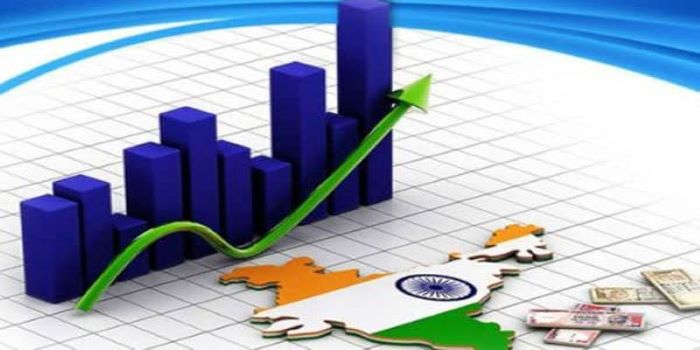
India’s economy is expected to maintain a strong growth trajectory in FY27, expanding between 6.8 per cent and 7.1 per cent, even as global headwinds intensify due to rising oil prices and geopolitical tensions in West Asia, according to a report by State Bank of India’s research.The report underscores that India has entered the current phase of global uncertainty from a position of strength, backed by robust macroeconomic fundamentals. It highlighted that the economy recorded a growth rate of 7.6 per cent in FY26, providing a solid base to navigate external shocks.
“The country has entered the global geo-political conflict from a situation of strength this time,” the report noted, pointing to India’s demonstrated resilience during previous global disruptions.Despite the optimistic outlook, the report highlighted key risks that could weigh on growth, including the possibility of a Super El Niño, which may disrupt agricultural output and rural demand. Inflation is projected to average around 4.5 per cent in FY27, while the fiscal deficit is expected to remain in the range of 4.5 to 4.6 per cent.
The report also highlighted the resilience of India’s financial system, noting that the banking sector remains stable. It stressed the need for a comprehensive policy approach to manage the balance of payments and support the rupee amid global volatility.
According to the analysis, the ongoing tensions in West Asia have created “multiple vortexes of headwinds,” impacting sectors such as agriculture, MSMEs, consumption, and global supply chains. However, it also pointed to emerging opportunities for India to strengthen its integration into global value chains.In particular, financial uncertainty in hubs like Dubai and Abu Dhabi could work in India’s favour, positioning GIFT City as a more stable and attractive global financial destination.
Additionally, disruptions in airspace across parts of the Middle East may open up opportunities for Indian airports to emerge as alternative transit hubs, provided investments are made to enhance infrastructure and passenger services.On the monetary policy front, the report noted that several global central banks have paused rate actions in 2026 following earlier easing cycles. In India, Reserve Bank of India is likely to adopt a status quo stance in the near term.“The growth-inflation paradox leaves little room for a rate decision at this juncture,” the report stated, suggesting that a “lower for longer” interest rate regime may persist until the full impact of evolving global developments becomes clearer.
(Business Correspondent)