 Newsinc24 Team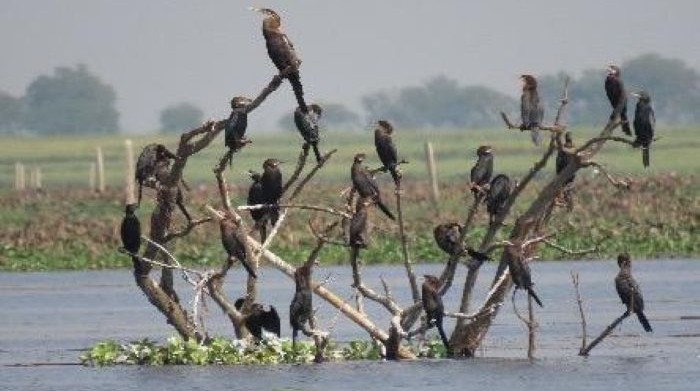
The Centre announced the addition of four new Ramsar sites in India, taking the tally to 89. In a social media post, the Ministry of Environment, Forest and Climate Change said that ahead of World Wetlands Day, the government announced that Sakkarakottai Bird Sanctuary and Therthangal Bird Sanctuary in Tamil Nadu, Khecheopalri Wetland in Sikkim, and Udhwa Lake in Jharkhand have been included in the list of Ramsar sites in the country.
In the post, Environment Minister Bhupender Yadav on Friday shared that India still stands as the country with the highest number of Ramsar sites in Asia and third in the world. He congratulated Tamil Nadu for becoming the state with the maximum number of Ramsar sites, with a tally of 20. He also termed this a special achievement for Sikkim and Jharkhand, which have added their first Ramsar sites.
A wetland is a unique ecosystem that is flooded or saturated by water, either permanently for years or decades or seasonally for shorter periods. Water presence in wetlands leads to oxygen-poor (anoxic) processes, especially in the soils. These unique environments support a specialized assemblage of plants, animals, and microbes that have adapted to tolerate periods of sluggishly moving or standing water.The current status of wetlands in India is a topic of significant environmental importance. As per information available, India has a network of 1301 total wetlands, which includes 85 Ramsar Wetlands and 114 Significant Wetlands. The Ramsar Convention is an international treaty for the conservation and sustainable use of wetlands, and having 85 sites under this designation highlights the country’s commitment to wetland conservation.
The Ramsar Convention was first established in 1971 in Ramsar, Iran, and India became a signatory to it on February 1, 1982. Throughout the long term, the quantity of Ramsar Destinations in India has consistently expanded. From 1982 to 2013, 26 sites were assigned.
Ramsar are defined as the areas of marsh, fen, peatland or water, whether natural or artificial, permanent or temporary, with water that is static or flowing, fresh, brackish, or salt, including areas of marine water, the depth of which at low tide does not exceed six meters. These sites are recognized for their ecological significance and their contributions to biodiversity conservation, water purification, and livelihood support for local communities. There are more than 2,400 Ramsar Sites globally, spanning over 250 million hectares, the Ramsar Convention highlights the immense value of wetlands and the urgent need for their protection and conservation.


Related Posts
India expands UNESCO heritage footprint with four new sites
Bihar, Jharkhand sign Sone water-sharing pact
Jharkhand HC stays cancellation of JSSC-CGL, CDPO appointments