 Ira Singh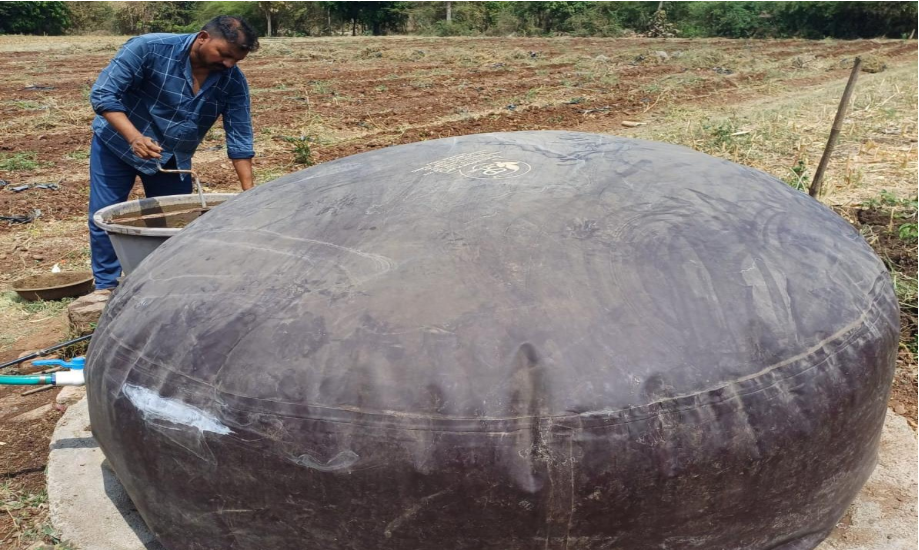
Nearly 1,000 tribal families residing in villages around the Statue of Unity in Gujarat are set to receive biogas plants under a government programme focused on boosting household energy self-sufficiency and lowering reliance on LPG cylinders and firewood. Officials said 665 biogas units have already been installed as the initiative nears completion.
The scheme was announced by Prime Minister Narendra Modi during the National Unity Day Parade held at Ekta Nagar last year, when he said biogas plants would be installed in 1,000 tribal households in areas surrounding the Statue of Unity.The project is being implemented across 89 villages under 38 gram panchayats in Garudeshwar taluka of Narmada district and is being monitored by the District Rural Development Agency (DRDA).
VIDEO | In Gujarat’s Narmada district, a biogas initiative launched around the Statue of Unity is transforming rural lives by promoting clean energy and self-reliance. Introduced on National Unity Day 2025, the scheme aims to benefit 1,000 families in Garudeshwar taluka, with 665… pic.twitter.com/Z5QwXvGFwg
— Press Trust of India (@PTI_News) May 14, 2026
According to officials, the initiative is part of broader efforts to promote self-reliance in household energy use by encouraging the conversion of organic waste into cooking fuel and agricultural inputs.Under the scheme, the entire installation cost is being borne by the government, while beneficiaries are contributing labour for digging pits required for setting up the biogas plants.The installations are reportedly transforming cooking practices and reducing dependence on conventional fuel sources in tribal households across the region.
Ravina Tadvi, a resident of Vaghpura village located around seven kilometres from the Statue of Unity, said the biogas system had eliminated concerns over irregular LPG availability and ensured a steady source of clean fuel.“Now we do not have to worry about LPG cylinders. The biogas plant provides clean fuel every day and the slurry from the biogas plant has become an excellent alternative to chemical fertilisers in farming. Due to organic fertiliser, crop production has also increased,” she said.Another resident, Chandu Tadvi, said the initiative had significantly reduced the burden on women who earlier depended on firewood collection for cooking.“Earlier, after working in the fields, they had to travel long distances to collect firewood. Cooking on traditional stoves caused smoke and also damaged their eyes, but now with the use of biogas they are free from smoke and have become self-reliant in cooking gas,” he said.
According to officials, the slurry generated from the biogas units is also being used as organic manure, helping reduce dependence on chemical fertilisers in agriculture.With more than 665 plants already installed, the remaining units are expected to be completed as part of the ongoing rollout across identified villages in the district.
(State Correspondent)













Related Items
WCEF 2026 begins in Gandhinagar with global focus on sustainability
India, MERCOSUR initiate talks to expand Preferential Trade Agreement
India's August retail inflation rises to 4.82% from 4.45% in July