 Ira Singh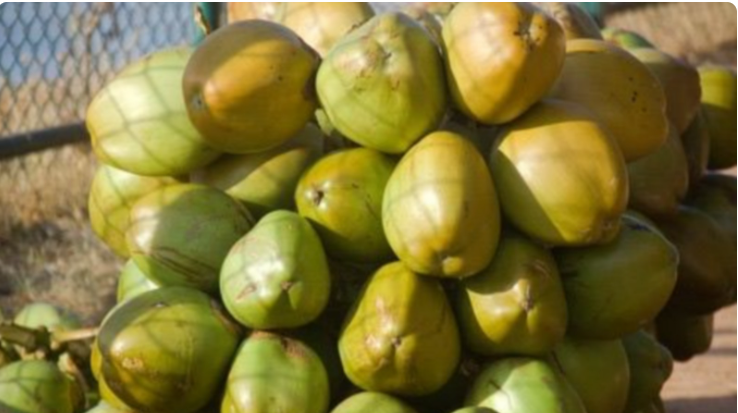
Gujarat has recorded nearly a 20 per cent rise in tender coconut production over the past two years, with annual output touching around 26 crore coconuts, highlighting the state’s rapid expansion in horticulture and value-added farming.According to official data for 2024-25, coconut cultivation is spread across nearly 28,000 hectares in the state, with key contributions coming from Gir Somnath, Junagadh, Bhavnagar, Valsad, Navsari, Kutch and Devbhoomi Dwarka districts. The state’s average productivity has reached around 9,260 coconuts per hectare, according to a government release.
According to officials, Gujarat’s extensive coastline has created favourable conditions for coconut cultivation, directly benefiting farmers amid rising demand for tender coconuts in domestic as well as export markets.The state government has been actively promoting horticulture and value-added farming practices to boost farmer incomes. The Horticulture Department has launched awareness campaigns and training programmes encouraging farmers to diversify into coconut cultivation and adopt modern agricultural practices.
To reduce cultivation costs, the department provides subsidies of up to 75 per cent for coconut plantation. Farmers are also being encouraged to adopt techniques such as mulching, integrated pest management and drip irrigation to improve productivity and water efficiency.Government-run nurseries are supplying quality tall, dwarf and hybrid coconut seedlings, while Gujarat Green Revolution Company Limited is assisting cultivators with drip irrigation systems.The coastal belt from Chorwad to Una, popularly known as “Leeli Nagher”, had been grappling with severe rugose whitefly infestations over the past two years. However, farmers, with support from the state government, have started implementing innovative methods to tackle the pest problem.One such success story has emerged from Sutrapada in Gir Somnath district, where Dinesh Solanki developed a locally inspired solution using a mixture of jaggery and Gir cow’s milk diluted in 1,000 litres of water to control the infestation.Before adopting the method, his annual production ranged between 1,000 and 1,500 coconuts. Following the experiment, output surged to nearly 8,000-10,000 coconuts annually. The sharp increase in production has boosted his yearly income to around Rs12 lakh-Rs15 lakh, inspiring several farmers in the region to replicate the approach.
(State Correspondent)


_(5).jpg)











Related Items
Technology, transparency key for UCBs to stay competitive:Amit Shah
Scindia, MP CM secure Rs 5,500 cr investment deals for Gwalior TMZ
India's manufacturing PMI eases to 53.5 in July, growth moderates