 Newsinc24 Team
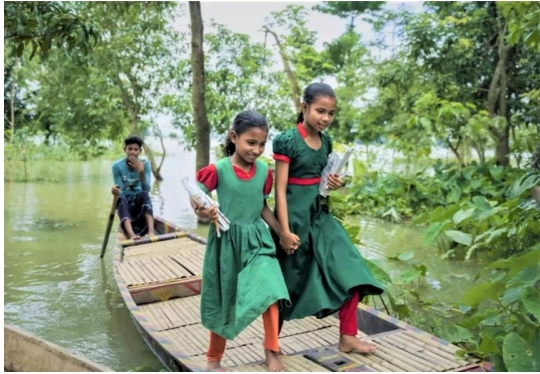
 The number of children and young people out of school worldwide has risen for the seventh consecutive year, reaching 273 million, according to the latest Global Education Monitoring (GEM) Report released recently by UNESCO .Launched at UNESCO’s headquarters in Paris, the report highlights growing concerns over the global education crisis, driven by population growth, ongoing conflicts, and shrinking public budgets. It notes that nearly three out of four out-of-school children and youth are concentrated in Central and Southern Asia and sub-Saharan Africa, underscoring widening regional disparities.
The findings point to a significant slowdown in progress since 2015, with the COVID-19 pandemic playing a major role in reversing gains, particularly in South Asia. Younger children were among the hardest hit, with declining participation in pre-primary education observed not only in South Asia but also in regions such as Northern America, sub-Saharan Africa, and Western Asia.
Despite these setbacks, the report offers a mixed outlook. Since 2000, enrolment in primary and secondary education has increased by 30% globally, with several countries making notable progress. South Asia, in particular, has recorded strong improvements in enrolment and completion rates. Primary enrolment rose by 29%, lower secondary by 51%, and upper secondary by 114%, outperforming many other regions.This progress has been supported by targeted policy measures, including fee regulation in private institutions and expanded financial aid programmes. In countries like India, increased public investment and scholarship initiatives have helped boost participation among disadvantaged groups.
Health interventions have also played a role. In Sri Lanka, malaria control efforts led to a 55% drop in incidence and a 62.5% reduction in school absenteeism, illustrating the strong link between health outcomes and educational access.However, challenges persist. Issues such as grade repetition, over-age enrolment, and socio-economic pressures continue to drive dropout rates, particularly in countries like Bangladesh. Gender disparities also remain a concern, with girls lagging behind boys in secondary school completion, partly due to high rates of child marriage in the region.
The report also introduces an index assessing equity in education systems, highlighting countries such as India, Bhutan, Nepal, and Maldives for their strong performance in inclusive and redistributive education policies.At the same time, gaps in inclusivity remain, particularly for children with disabilities. Around 17% of countries in Central and Southern Asia still mandate segregated education systems, higher than the global average, limiting access to equitable learning environments.
UNESCO Director-General Khaled El-Enany described the trend as alarming but stressed that progress remains possible with sustained efforts. The organisation reiterated its commitment to working with governments and partners to expand access to quality education and ensure that every learner has an equal opportunity to succeed.As global education systems grapple with multiple challenges, the report calls for urgent policy action to reverse the rising number of out-of-school children and safeguard the future of millions worldwide.
Related Posts
Jaishankar discusses Global, Regional Issues with EU & V4 leaders
Bhupender Yadav calls for Global action on conservation
Guterres calls for global unity, peace ahead of ‘last UNGA’ as S.G.