 Ajeet Singh
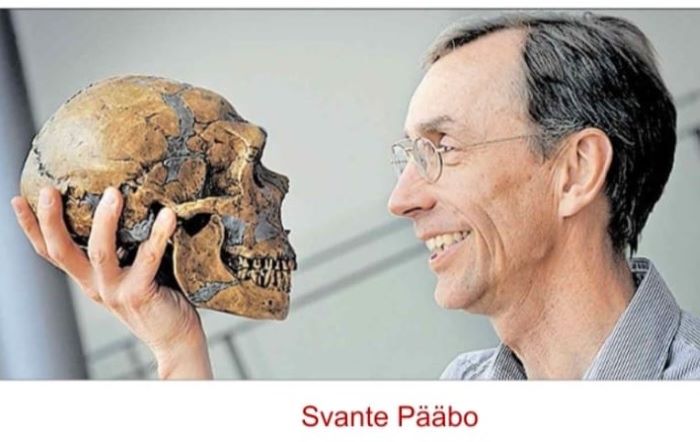
In the annual series of lectures on Nobel Prizes at the Vanprastha Sanstha in Hisar, Haryana, Dr. Pushpa Kharb, former professor of Genetics at the Haryana Agricultural University, said that the prize in Physiology this year has been conferred on Swedish scientist Sevante Paabo who has established a new branch of science, Paleogenomics, by making important discoveries about the extinct species of Neanderthal humans. He has discovered the complete genome of this extinct species, and this technique will pave the way for the discovery of more information on human evolution.

Prof. Pushpa Kharb said that scientific study of how and when the human species evolved, has been going on for a long time. In 2003, after complete genome of the current humans, the Homo Sapiens, was obtained, the search for the extinct species of humans began to attract attention. Prof. Savante Pabo, after tireless hard work, for the first time traced complete gene structure of the Neanderthals species that became extinct about 30000 years ago for some unknown reasons.
Evidence has been found for the origin of present humans in Ethiopia about three lakh years ago. About 70 thousand years ago, humans left Africa and came to Western and Central Asia and from there reached Europe, Asia and other parts of the world. When they reached Europe, the Neanderthal species had been living there since four lakh years ago. Genes of the Neanderthal species have been found in present humans, which proved that there was an interrelationship between the two species.

















Related Items
US Scientist funded Wuhan Lab that sparked Covid: Tulsi Gabbard
Gujarat launches India’s first tribal focused genome sequencing initiative
Shivraj Chouhan launches India’s first Genome edited 2 Rice varieties