 Newsinc24 Team
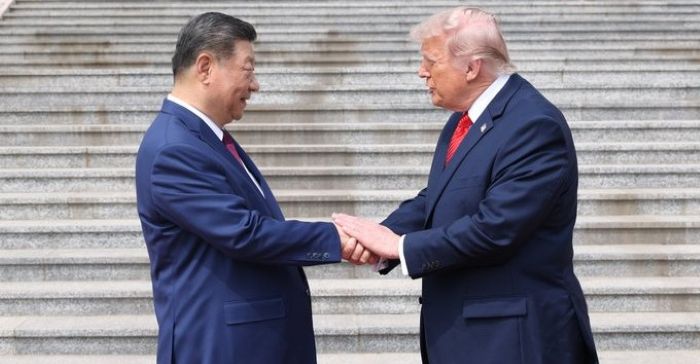
 New York based Asia Society Policy Institute (ASPI) experts comment on readouts from day two of the Trump-Xi Summit in Beijing.
Wendy Cutler - Senior Vice President, ASPI, and former Acting Deputy U.S. Trade Representative opined, thus far, the economic deliverables coming out of the Trump-Xi meeting are way below expectations. In light of the priority Trump puts on the economic/trade leg of the bilateral relationship, it’s disappointing that more wasn’t accomplished.
Beijing announced the resumption of export permits to U.S. beef producers, a long overdue move. Trump told the press that Xi had committed to purchase 200 airplanes, but Beijing has yet to confirm. Moreover, despite the participation of over a dozen leading U.S. CEOs, we did not see announcement of new business deals nor the resolution of company-specific regulatory/market access concerns.
What we expected and haven’t seen thus far is not only Chinese confirmation of the jet purchases, but other Chinese mega-purchases as well, particularly in the agricultural and energy sectors. Also absent was the announcement of a Board of Trade nor a Board of Investment, which seemed to still be on the table but obviously not ready for prime time. Both sides could still be hammering out the purpose and operational details of these fora.
Finally, while both sides welcomed stabilization in the relationship, they did not agree to extend the trade truce which expires in five months.
All of these matters appear to still be in the works, so we may see further announcements in the coming days. If further economic deliverable announcements are not forthcoming, it’s fair to conclude that this summit meeting was heavy on atmospherics but light on substance. This will also put more pressure on the two leaders in their upcoming engagements to produce meaningful and concrete outcomes.
Lyle Morris - Senior Fellow on Chinese Foreign Policy and National Security says that the results of the summit can be characterized as a temporary détente more than a reset. Trump obtained tangible deliverables in the form of China agreeing to purchase U.S. agricultural products, but fell short of the scale of deals announced when Trump last visited Xi in Beijing in 2017. Xi was successful in signaling his desire to build a new “strategic partnership” with Washington based on mutual respect and non-confrontation, and seemed more interested in rebuilding political trust than in discrete trade deals. Xi also got his message across that the Taiwan question remains the most important factor in U.S.-China relations, warning Trump to treat Taiwan with caution. With no joint press conferences or joint statements, however, the summit was light on deliverables and specifics, paving the way for more concrete deliverables the next time the two leaders meet.
According to Lizzi C. Lee - Fellow on Chinese Economy, Center for China Analysis, in Chinese diplomatic tradition, a tea setting signals intimacy and creates the space for leaders speaking beyond their scripts. A tea reception in Zhongnanhai, the political compound where China’s top leaders work and live, is very rare and therefore symbolically significant. Xi has used similar formats with Obama and Putin. For Trump, who places unusual weight on personal rapport, atmospherics, and displays of respect, this kind of setting is especially well matched to his diplomatic instincts, and, frankly, his ego.
The absence of announced deliverables so far itself does not tell us much. We need to be wait and see. State visits with Chinese leaders rarely produce deals negotiated in real time. The substance is usually prepared in advance / afterwards by lower-level officials, the ministries, and designated working groups. In fact Chinese leaders tend to provide the big-picture political directions. Since Xi is expected to visit the United States later this year, there will likely be more negotiations in the coming months, with trade, national security, technology, and investment details hashed out between the two sides’ teams.
Given U.S. election cycles, China does not have strong incentives to lock in long-term commitments. But Beijing does want to lower the temperature, reopen working channels, and stabilize the relationship enough to manage competition. Still, I expect more ups and downs: the fundamentals of strategic competition have not changed.






Related Items
Trump threatens 'tremendous' economic costs on Iran partners
China’s LandSpace safely lands reusable rocket booster, joins SpaceX
Trump declares Hormuz 'new US territory'