 Newsinc24 Team
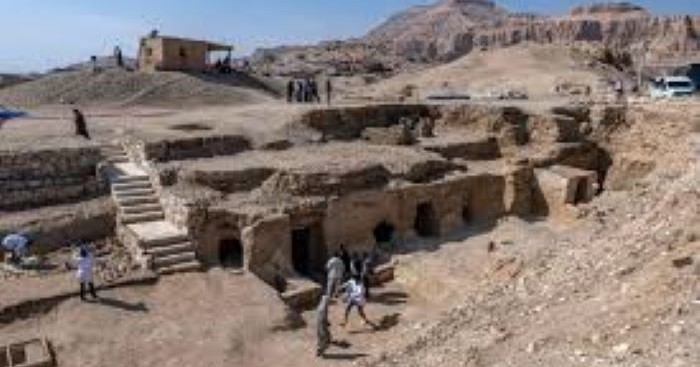
In Egypt, archaeologists have unearthed significant finds near Luxor, including parts of a temple linked to Queen Hatshepsut. The Ministry of Tourism and Antiquities said, a team of archaeologists on Wednesday discovered a well-preserved section of the Valley Temple’s foundations, which served as the main gateway to Hatshepsut’s funerary temple, dating back to the 18th Dynasty (around 1539 to 1292 BC). The excavation yielded over 1,000 decorated blocks and fragments with detailed carvings and inscriptions, considered rare examples of sculpture from Hatshepsut’s reign and that of her successor, Thutmose III. The ministry said these inscriptions are the most complete found from the temple, which was deliberately destroyed during the Ramesside Period (around 1292 to 1077 BC).
The team also uncovered rock-cut tombs and artefacts from the Middle Kingdom (around 1938-1630 BC), including a tomb belonging to "the Overseer of the Palace" of Queen Tetisheri from the 17th Dynasty (around 1630-1540 BC). Burial shafts from the same period, an extensive necropolis, and bronze coins from the Ptolemaic Period (the last dynasty of ancient Egypt) were also discovered.Excavators found 11 graves containing skeletal remains of men, women, and children, suggesting a multi-generational family burial site.
Director General of Luxor Antiquities, Abdel-Ghaffar Wagdy, said, the discoveries, supported by the Ministry, will help the country attract more tourists. Last year in November, an Egyptian-American archaeological team unearthed the first Middle Kingdom-era burials at the Assasif cemetery near Luxor.


Related Posts
Egypt: At least 31 killed, 25 injured as truck crashes on Cairo highway
India, Egypt to work on terms of reference for potential trade pact
Egypt bus crash kills at least 22 in South Sinai