 Krishan Gopal Sharma
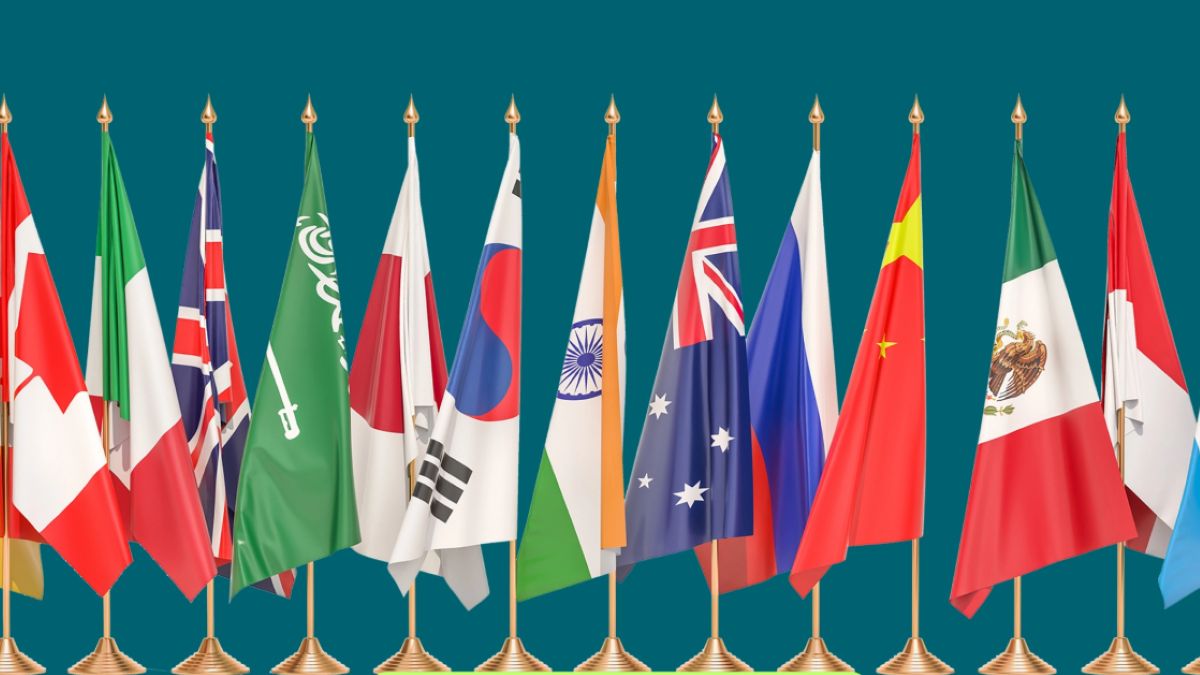
The Quad may enhance India's global standing, but diplomatic visibility cannot compensate for weakening neighbourhood relationships, an increasingly uncertain international environment and the erosion of institutional depth.
The diplomatic developments of mid-November have offered India an instructive glimpse of the changing international order. On 17 November, Prime Minister Narendra Modi joined the leaders of the United States, Australia and Japan at the Quad summit in Manila. The meeting reaffirmed cooperation on maritime security, critical supply chains, artificial intelligence and regional stability. Two days later, on the sidelines of the APEC summit in Shenzhen, Donald Trump, Xi Jinping and Vladimir Putin held an unprecedented trilateral meeting and issued a joint declaration on peace and strategic stability.
The contrast was striking. While India was strengthening its Indo-Pacific partnerships, three major powers were demonstrating how quickly the international conversation could move into a different configuration, with little regard for the assumptions on which existing alignments rest. The development does not make the Quad irrelevant, nor does it signal an imminent realignment against India. It does, however, offer a reminder that strategic partnerships are not permanent guarantees. National interests, rather than personal warmth or diplomatic ceremony, ultimately determine the conduct of states.
For New Delhi, the lesson is particularly important. India's growing international profile is undeniable, but its foreign policy faces a more fundamental test: whether its diplomatic reach is matched by the institutional strength and regional relationships needed to sustain it.
The limits of strategic friendship
The Trump administration has brought this vulnerability into sharper focus. Washington's willingness to use trade as an instrument of political pressure has exposed the limits of the assumption that closer strategic cooperation necessarily produces economic security. India and the United States have substantial common interests, particularly in balancing China's growing influence in the Indo-Pacific. Yet their relationship remains subject to differences over tariffs, market access, technology and energy. Strategic convergence does not eliminate commercial friction. Nor does it prevent one partner from using economic leverage against the other.
The absence of India from APEC adds another dimension to this problem. India applied for membership in 1991, but the forum's expansion restrictions, initially introduced in 1997 and subsequently extended, have prevented its entry. The moratorium formally expired in 2010, but membership requires consensus among existing economies, which has not materialised. As a result, India remains outside an important platform where regional economic priorities and trade cooperation are discussed. This is not simply a question of diplomatic prestige. It concerns India's ability to participate in shaping the economic architecture of a region in which its interests are increasingly invested.
The experience following Operation Sindoor provides an even more immediate illustration of the complications in India's relationship with Washington. Launched on 7 May 2025, following the 22 April Pahalgam terrorist attack that killed 26 people, the operation marked a significant military response by India against terrorist infrastructure in Pakistan and Pakistan-occupied Jammu and Kashmir. The subsequent military confrontation ended on 10 May after direct contact between the two countries' military operations chiefs.
President Trump repeatedly claimed that his intervention, backed by threats of trade restrictions, had brought the confrontation to an end and prevented a wider war. India rejected the suggestion that trade negotiations or American mediation had determined its decision. In a parliamentary reply in December 2025, the government reiterated that Pakistan's Director General of Military Operations had approached his Indian counterpart and that the understanding to cease military action was reached directly between the two sides.
The issue goes beyond competing accounts of a ceasefire. When an American president repeatedly presents a bilateral military understanding as the outcome of his personal intervention, it places India's claim to independent strategic decision-making in an uncomfortable position. It also demonstrates how quickly the language of partnership can give way to the politics of leverage. India cannot afford to confuse diplomatic access with diplomatic assurance.
The China-Pakistan equation
Meanwhile, China's relationship with Pakistan presents a more enduring strategic challenge. During the May 2025 confrontation, senior Indian military officials alleged that Beijing had provided Pakistan with live intelligence inputs and technical assistance. Reports also pointed to Chinese support for Pakistan's air-defence and satellite capabilities. These allegations deserve serious attention, although the precise extent and operational details of Chinese assistance have not been independently established in full.
The larger concern is not confined to any single military confrontation. China has spent years cultivating Pakistan as a strategic partner through defence cooperation, infrastructure investment and diplomatic support. The relationship gives Beijing considerable leverage in India's immediate neighbourhood and ensures that New Delhi must account for two closely connected security challenges rather than one isolated adversary.
A neighbourhood slipping away
Yet India's difficulties do not originate entirely outside its borders. Its neighbourhood policy requires a more searching examination. The South Asian Association for Regional Cooperation has remained largely paralysed by India-Pakistan tensions, while regional economic integration continues to languish. The World Bank estimates that trade within South Asia accounts for barely five per cent of the region's total trade, compared with approximately 25 per cent in ASEAN. Geography, inadequate connectivity, trade barriers and political mistrust have all contributed to this failure.
India's own diplomatic choices deserve scrutiny in this context. The close relationship cultivated with Sheikh Hasina's government in Bangladesh offered New Delhi important security and connectivity advantages. But the political upheaval of August 2024 exposed the risks of allowing a bilateral relationship to become too closely identified with one political leadership. The subsequent deterioration in relations demonstrated that a friendly government cannot be treated as a permanent diplomatic asset. The challenge now is to rebuild confidence across Bangladesh's political and social spectrum, irrespective of who occupies the seat of power.
The experience with the Maldives offers a related, though not identical, lesson. Relations deteriorated sharply after Mohamed Muizzu assumed office in November 2023, amid the 'India Out' campaign and demands concerning the presence of Indian military personnel. Subsequent diplomatic engagement helped bring about a considerable improvement. The episode demonstrated both the fragility of political goodwill and the value of patient engagement when personal and political differences threaten established relationships.
There is a larger institutional question here. India's foreign policy has increasingly acquired the character of leader-driven diplomacy. Personal engagement by the Prime Minister has undoubtedly helped raise India's profile, open doors and give its international relationships greater visibility. There is nothing inherently wrong with that. Indeed, high-level diplomacy is indispensable in an increasingly complex world. The problem arises when the visibility of the leader begins to overshadow the institutions responsible for sustaining the relationship.
Foreign policy cannot be built on photographs, summit declarations and personal equations alone. It requires diplomatic continuity, professional assessment, parliamentary scrutiny and sustained engagement with political parties, civil society, businesses and institutions in neighbouring countries. Relationships must be strong enough to survive a change of government on either side. China's influence in the region, for all its own contradictions and limitations, is built partly through the patient accumulation of economic, infrastructural and military interests. India cannot expect goodwill alone to compete with such a sustained presence.
The cost of an echo chamber
There is also an uncomfortable domestic dimension. Effective foreign policy depends on the quality of information reaching decision-makers. Diplomats and intelligence professionals must be able to report inconvenient developments without fearing that an unwelcome assessment will be interpreted as disloyalty. A media environment dominated by political messaging, in which critical scrutiny is too readily confused with hostility, can further narrow the space for informed debate. The consequences may not be immediately visible, but the cost of an echo chamber in national security can be considerable.
A democracy does not become strategically stronger by reducing the number of voices heard in its corridors of power. Institutional debate may sometimes appear slow, but it allows competing assessments to be tested before a decision becomes irreversible. A policy that commands wider institutional and political confidence is also more likely to survive changes in leadership.
Beyond the politics of optics
India's ambitions are entirely legitimate. It has the economic weight, geographical position, diplomatic experience and democratic credentials to play a much larger role in shaping the international order. But global influence cannot be measured merely by the number of summits attended or the warmth of a leader's reception abroad. It must also be measured by the confidence of neighbours, the resilience of partnerships and the ability of national institutions to anticipate threats rather than merely respond to them.
The Quad is an important instrument of India's foreign policy, but it cannot substitute for a coherent neighbourhood strategy. Nor can personal diplomacy compensate indefinitely for institutional weaknesses at home. India must invest in relationships that outlast governments, strengthen regional economic interdependence and encourage independent professional advice within its own system.
The world is becoming less predictable, and the major powers are increasingly prepared to pursue their interests without regard for the sensitivities of their partners. India should recognise that reality without abandoning its strategic autonomy. The real measure of diplomatic maturity is not how successfully a country cultivates powerful friends, but how well it protects its interests when those friends choose a different course.
A country aspiring to global leadership cannot afford to remain uncertain of its footing in its own neighbourhood.
<><><>
(kgsharma1@gmail.com; The writer is a retired officer of the Indian Information Service and a freelance writer. Also worked as an international media consultant with UNICEF Nigeria and contributes regularly to various publications.)

Related Posts
Cabinet approves India-Singapore MoU to boost aviation MRO Sector
Venice Biennale names India’s Pavilion the Best National Participation
India rejects US excess capacity claims