 Ira Singh
The US dollar tumbled on Wednesday, erasing its gains for 2026, as a ceasefire between Iran and the United States triggered a sharp unwind of safe-haven trades and lifted risk sentiment across global markets.The Bloomberg Dollar Spot Index fell as much as 1.1%, marking its steepest decline since January, as investors rotated into equities and higher-risk assets. The greenback weakened against all 16 major currencies, with the euro, pound, and yen each surging over 1% at one point during the session.
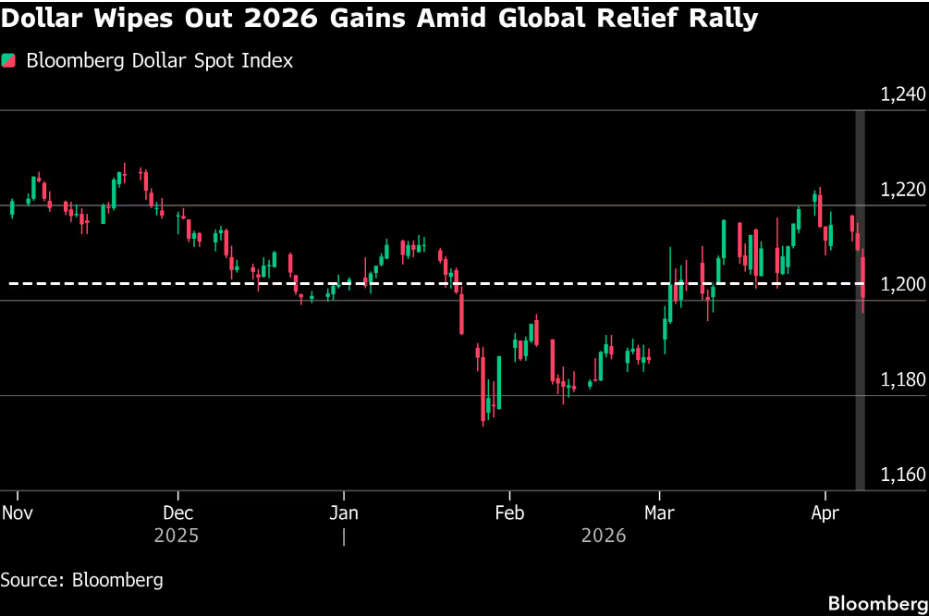
From an analyst’s viewpoint, the move reflects a classic reversal of geopolitical risk premium. The dollar’s earlier strength—built on its safe-haven appeal and the US economy’s relative insulation as a net oil exporter—quickly unraveled as easing tensions reduced the urgency for defensive positioning.The turnaround followed news of a two-week ceasefire, with Tehran committing to reopen a key global oil transit route. This development sent crude prices sharply lower, undermining one of the core drivers of the dollar’s recent rally.
Market participants interpreted the de-escalation as a green light to re-enter global risk trades. “This is a pure relief rally,” said Leah Traub of Lord Abbett, noting that non-US markets are benefiting more due to their greater exposure to energy price shocks during the conflict.The easing in oil prices has also revived expectations of policy accommodation by the Federal Reserve. Traders are once again pricing in the possibility of rate cuts later this year, with money markets indicating roughly a one-in-three chance of a quarter-point reduction by year-end.
Analysts suggest that if crude continues to soften, the disinflationary impulse could strengthen the case for monetary easing, further weighing on the dollar.Meanwhile, Brent crude futures recorded their steepest drop in nearly six years, as expectations of restored flows through the Strait of Hormuz improved the global supply outlook. This has significantly reduced fears of an extended energy shock.
Currency strategists highlight that part of the dollar’s decline is technical in nature. The rapid unwinding of long-dollar positions by leveraged funds amplified the move, rather than signaling a complete shift in macro fundamentals.Volatility indicators in foreign-exchange markets have also eased, with option-implied swings dropping to their lowest levels since the conflict began. At the same time, bullish sentiment on the dollar has been pared back sharply.
Still, analysts caution against declaring a sustained trend reversal. The ceasefire remains fragile, with intermittent disruptions in the Strait of Hormuz underscoring lingering geopolitical risks.“This remains a headline-driven market,” said Kathleen Brooks of XTB. “Any signs of renewed escalation could quickly restore volatility and reverse the dollar’s losses.”In the near term, markets are expected to remain highly sensitive to developments in the Middle East, particularly the durability of the ceasefire and the pace at which oil flows normalize.
(Business Correspondent)



Related Posts
Gill, Rohit power India's eight-wicket victory in 2nd ODI, seal series
Modi, Trump discuss bilateral ties in trade, defence, energy over phone
UP Trade fair concludes, MoUs worth Rs6,500 cr signed