 Ajay Chaturvedi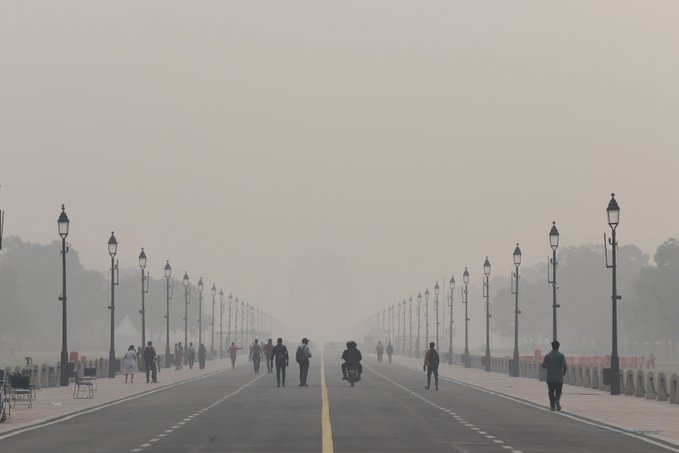
The Graded Response Action Plan (GRAP) stage 3 has been implemented in the national capital with a complete ban on construction or demolition activities.The air quality of Delhi remained in the 'very poor' category till Thursday morning with an AQI of 315 and it deteriorated to 418 in the evening. Friday morning was worse as the AQI reached up to 450..The Centre's pollution control panel issued directions on Thursday to halt non-essential construction work, stone crushing and mining in Delhi-NCR as the air quality in the capital entered the 'severe' category.This action is part of Stage III of the Graded Response Action Plan (GRAP) -- the Centre's air pollution control plan implemented in the region during the winter season. Delhi's Air Quality Index (AQI) stood at 402 at 5 pm.At a meeting to review the air quality situation in Delhi-NCR, the Commission for Air Quality Management (CAQM), a statutory body responsible for developing strategies to combat pollution in the region, said that pollution levels are only "expected to increase further" due to highly unfavourable meteorological and climatic conditions.
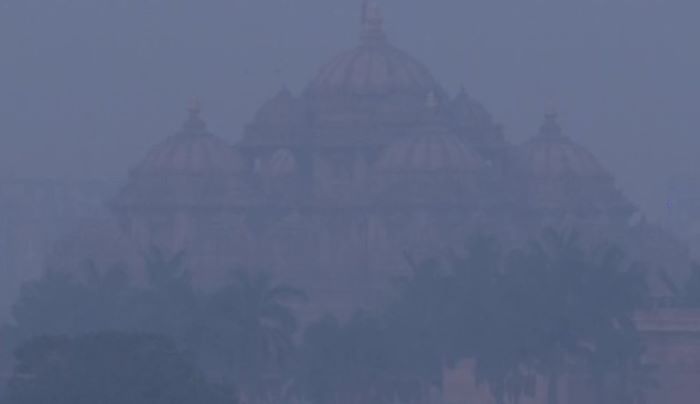
A sudden dip in Delhi's air quality has pushed the Delhi government to shut primary schools for two days- Friday and Saturday. Neighbouring Gurugram has also taken measures to counter pollution.Several other measures will also come into effect as part of Stage III of the Graded Action Response Plan, which was framed to tackle the annual surge in pollution in the Capital and the surrounding areas.The Delhi government imposed a ban on non-essential construction activities and on the plying of BS-3 petrol and BS-4 diesel cars in Delhi Gurugram, Faridabad, Ghaziabad and Gautam Budh Nagar.
An AQI between zero and 50 is considered good, 51 and 100 satisfactory, 101 and 200 moderate, 201 and 300 poor, 301 and 400 very poor, and 401 and 500 severe and above 500, it is hazardous.Delhi's AQI has turned severe so far, scientists have warned of further deterioration in the air quality. On Thursday 10pm, Delhi AQI dipped to 422, the worst of this season. The concentration of PM2.5 on Thursday exceeded the safe limit of 60 micrograms per cubic metre by seven to eightfold at multiple locations. Delhi's air pollution peaks between November 1 to November 15 when the stubble burning by the farmers of Punjab and Haryana increases. The Commission for Air Quality Management reported that this year the incidents of stubble burning in both Punjab and Haryana reduced since September 15 but there was a significant jump in the last few days.
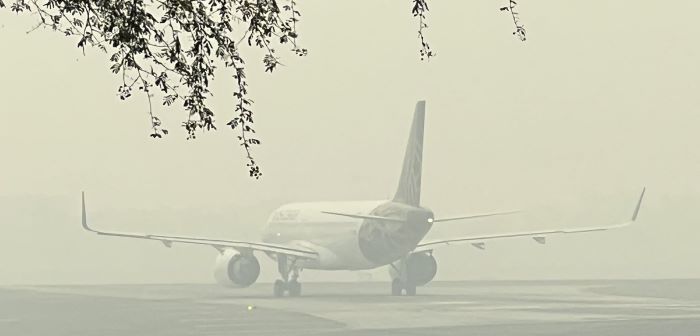
Delhi had the highest PM (Particulate Matter) 2.5 levels in the country in the month of October and has been experiencing a consistent upward trend since 2021, according to the Respirer Report. The report, on analysis of air quality over the past five years, said that while air pollution has increased in the country's four major cities, it has fallen in state capitals like Lucknow and Patna, according to a recent report

Related Posts
Delhi Police de-notify Jantar Mantar as protest venue, name three sites
62nd IHGF Delhi Fair to display more than 23,000 products
Retd IAS officer, son arrested after man dies in Delhi Metro seat dispute