 Newsinc24 Team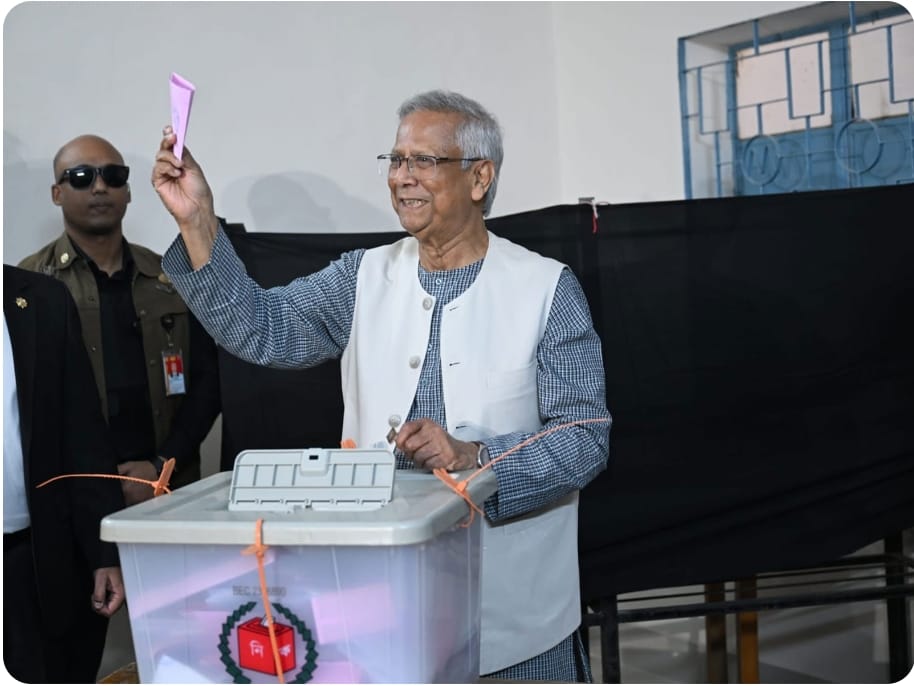
Bangladesh went to the polls on Thursday in its first national election since a deadly uprising in 2024, marking a pivotal moment for the country as parties sidelined during Sheikh Hasina’s long rule return to the political arena amid a tightly contested race.The election pits the Bangladesh Nationalist Party (BNP), led by veteran leader and prime ministerial hopeful Tarique Rahman, against a resurgent Islamist-led coalition anchored by Jamaat-e-Islami, raising the prospect of a historic shift in the country’s political landscape.
BNP chief Khaleda Zia’s party has urged citizens to turn out in large numbers, warning that high voter participation is essential to thwart what it described as “conspiracies” aimed at undermining the democratic process. Tarique Rahman, 60, expressed confidence that the BNP can reclaim power after years in opposition, following the ouster of Sheikh Hasina in August 2024.However, the BNP faces a strong challenge from Jamaat-e-Islami, the Muslim-majority country’s largest Islamist party. Jamaat chief Shafiqur Rahman, 67, has run a disciplined grassroots campaign and promised free and fair governance. If victorious, he could become the head of the first Islamist-led government in constitutionally secular Bangladesh.
Opinion polls ahead of the vote have varied widely. While most surveys give the BNP a narrow edge, some suggest the contest remains on a knife-edge, reflecting deep political polarisation in the country of 170 million people.“This day carries far-reaching significance,” interim leader Muhammad Yunus said ahead of polling. “It will determine the future direction of the country, the character of its democracy, its durability, and the fate of the next generation.”
The 85-year-old Nobel Peace Prize laureate has led Bangladesh since the end of Hasina’s 15-year rule, which collapsed following mass protests over alleged authoritarianism, economic distress and a violent crackdown on demonstrators. Yunus’s interim administration barred Hasina’s Awami League from contesting the election.Hasina, 78, was sentenced to death in absentia on charges of crimes against humanity linked to the protest crackdown and is believed to be in hiding in neighbouring India.Across urban centres, many young voters from Generation Z described a renewed sense of political openness and cautious optimism, seeing the election as a rare chance to reshape Bangladesh’s future after years of turmoil.




Related Items
Bangladesh elects Mirza Fakhrul Islam Alamgir as new president
Bangladesh imposes nationwide load-shedding, turns to India for help
21 MPs oppose TN delimitation, 36 skip all party meet