 Newsinc24 Team
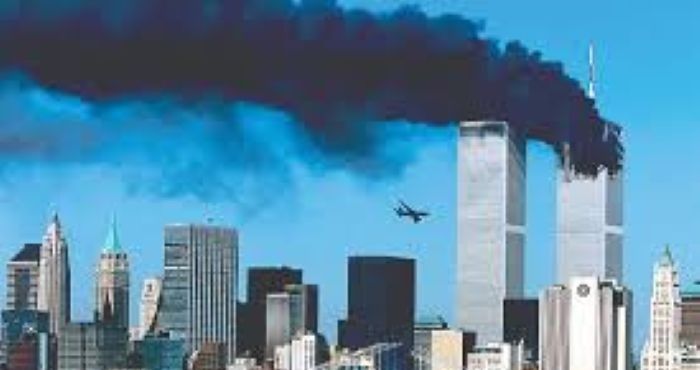
One should not be surprised if The Kingdom of Saudi Arabia can face a civil lawsuit in 9/11 case after nearly 24 years. A federal judge in New York decided on Thursday that Saudi Arabia can face a civil lawsuit alleging the kingdom sponsored, aided and supported the al-Qaeda hijackers. Families of 9/11 victims called the judge's decision denying Saudi Arabia's bid to dismiss the lawsuit "the most consequential step yet" in two decades of litigation. The decision by Judge George B. Daniels of the Southern District of New York in Manhattan, represents a crucial victory for survivors of the attacks and relatives of the 2,977 people who were killed.
According to ABC reports, Attorneys representing Saudi Arabia had tried to dismiss claims by victims' families and estates, first filed in 2003, arguing that, as a sovereign state, it is immune from civil litigation in American courts. U.S. District Judge George Daniels said the families provided "reasonable evidence" that two Saudi citizens -- Omar al-Bayoumi and Fahad al-Thumairy -- were sent by their government to the United States to assist the hijackers.
"KSA [Kingdom of Saudi Arabia] did not proffer sufficient evidence to the contrary," Daniels said. "Although KSA attempts to offer seemingly innocent explanations or context, they are either self-contradictory or not strong enough to overcome the inference that KSA had employed Bayoumi and Thumairy to assist the hijackers."
According to the judge's opinion, there is evidence the Kingdom of Saudi Arabia sent Bayoumi to San Diego in 1994. The official reason was to pursue education. Plaintiffs contended he was co-opted by Saudi intelligence, which Bayoumi denied. As per report, the Saudis assigned Thumairy to serve as imam of a Los Angeles mosque in 1998. One of his bank accounts received significant funds from a senior member of the Saudi cabinet, the judge wrote in his decision. Thumairy said the money was for mosque expenses. When al-Qaeda sent two of the hijackers -- Nawaf al-Hazmi and Khalid al-Mihdhar -- to Los Angeles in January 2000, they were brought to the mosque and introduced to Thumairy, who left the U.S. five weeks prior to the attacks. About a month after meeting Thumairy, the two hijackers met Bayoumi, who helped them find an apartment in San Diego, it noted.On a notepad seized from Bayoumi, authorities said they saw a handwritten sketch of an airplane along with some numbers, calculations and notes. Plaintiffs alleged that the Saudi government engaged Thumairy and Bayoumi to carry out covert activities in the U.S. that provided material support and assistance to the hijackers. The Saudis have denied those allegations, report said.
"Nearly a quarter-century after we lost our loved ones, Judge Daniels' ruling gives us the chance to finally pursue accountability, justice, and closure in their memory," said Brett Eagleson, president of 9/11 Justice, a coalition of 9/11 families. “We have presented overwhelming evidence that the Kingdom is complicit in the 9/11 attacks, and a federal judge agrees," Eagleson said. "Now, we are prepared to present even more evidence showing that Saudi Arabia was complicit in the attacks that killed nearly 3,000 innocent Americans.” Eagleson was just 15 when he lost his father in the attacks.
According to ProPublica report, the civil lawsuit nearly died in 2016, when President Barack Obama vetoed legislation to carve out an exception to the sovereign immunity of foreign governments and permit the families to sue the Saudi kingdom. Congress overrode that veto, however, allowing the suit to go forward.President Donald Trump later blocked the families from obtaining classified government documents on the 9/11 investigations, claiming they were state secrets. President Joe Biden later reversed that stance and declassified documents that included reporting confirming that Bayoumi was a part-time agent of the Saudi intelligence service.
Report further said that Bayoumi moved his family to Birmingham, England, in the summer of 2001. Within days of the attacks, he was detained and questioned by the British police at the FBI’s request before being allowed to return to Saudi Arabia. In a search of Bayoumi’s home, the British authorities turned up documents, notebooks, videotapes and computer files that they shared with the FBI, officials said. But only in the last two years did lawyers for the 9/11 families obtain much of that cache — and then only from the British government. The evidence that plaintiffs’ lawyers obtained from the British government has proved even more powerful. It included videotapes in which Bayoumi was filmed touring Washington before the 9/11 attacks with two visiting Saudi religious officials who had extensive ties to militants. In one of the tapes, he filmed the U.S. Capitol, describing its layout and security to an unidentified audience. Lawyers for the plaintiffs suggested that Bayoumi and his companions were “casing” the target for Qaida plotters; the Saudi government insisted in court that it was a tourist video, the report said.



Related Posts
Saudi oil facilities, airports targeted in fresh Houthi attacks
Indian killed in attack on airport, MEA slams Houthi strikes in Saudi
Probe panel headed by retd judge be appointed into Kolkata tragedy:HC