 Newsinc24 Team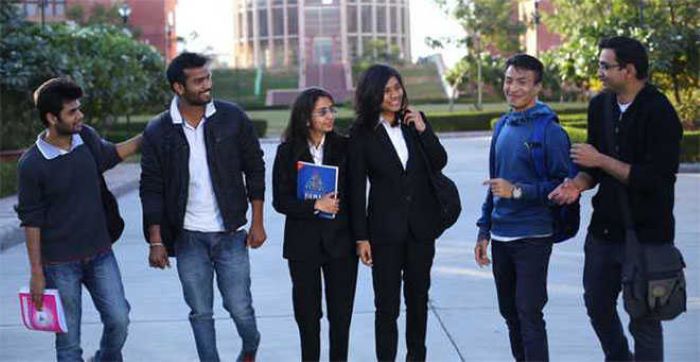
International students studying in the United States, who are out of the country for academic breaks, have been advised by their colleges to return before September 15 if they want to retain benefits under the existing immigration framework. The advice for F and J visa holders comes before the US Department of Homeland Security's "Final Rule," replacing the long-standing "Duration of Status" (D/S) system, comes into effect. Under the new rule, international students could only enter the US for a fixed admission period, not exceeding four years. "This final rule has a 60-day implementation period. We recommend that all students return to New York before the beginning of classes on September 8, 2026," wrote Columbia University in its notice.
The DHS has formalised a strict new immigration regulation that implements a maximum four-year limit on stays for F-1 student visa holders, J-1 exchange visitors, and I visa holders for foreign journalists, a move expected to heavily impact hundreds of thousands of Indian nationals. The rule also cuts the grace period after completion of studies from 60 days to 30 days and requires students to obtain US Citizenship and Immigration Services (USCIS) approval through Form I-539 for any extension.
The new rule will come into effect on September 15. The current D/S system allows F-1 students to remain in the US as long as they continue to maintain their academic status. However, this protection will be subject to an overall four-year limit from the effective date. It also cannot extend beyond November 14, 2030, including the departure period.
The policy shift has triggered immense anxiety among Indian students and professionals, casting a shadow of uncertainty over their academic and career aspirations in the United States. "This is a self-inflicted wound on US competitiveness," said Khanderao Kand, chief of policy and strategy at the Foundation for India and Indian Diaspora Studies (FIIDS). "A 4-year cap misaligns with how modern degrees actually work—median time to a bachelor's is about 52 months and to a PhD about 5.7 years—while USCIS is already sitting on more than 11 million cases with roughly year-long processing times." "Students will be forced out mid-program or mid-research, labs will lose critical talent, and America will hand its innovation pipeline to competitors," he said.







Related Items
US pauses visa appointments worldwide until further notice
Rahul thinks he's born to rule, his frustration visible: Pralhad Joshi
Central Govt orders 'One Officer, One Official Car' rule to curb misuse