 Krishan Gopal Sharma
When bureaucracy stops measuring merit, it begins to erase futures
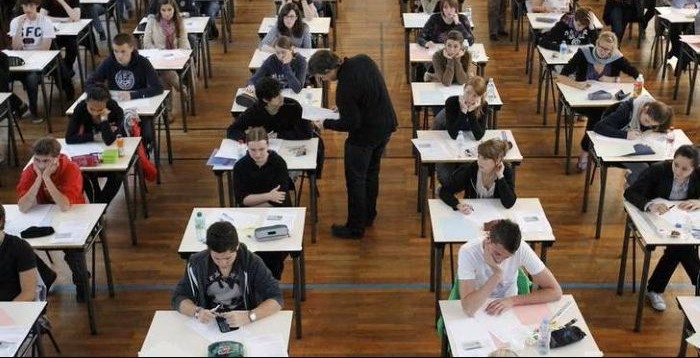
There is a particular kind of silence that descends when a young person opens an examination portal and finds a single word staring back: “Absent.”
For a student who has spent months preparing, paid the fees, turned up for the examination and sat through it, that one word is more than an administrative error. It can feel like a denial of reality itself. The student knows where they were. Their classmates know. The institution, however, says otherwise.
My niece recently found herself in precisely such a situation. She was marked “Absent” in four practical examinations she had actually attended. What followed was perhaps as disturbing as the error itself: the familiar journey from one office to another, from the examination branch to the digital cell and back again, with responsibility seemingly belonging to everyone and resolution to no one.
This is where the real problem begins.
Institutions will make mistakes. People make mistakes. Computers make mistakes. Databases can fail. What distinguishes a trustworthy institution from an indifferent one is not the absence of mistakes, but what happens after a mistake is discovered.
When a student has to prove that they were physically present for an examination they actually attended, the burden has already shifted from the institution to the individual. And when the machinery designed to correct the mistake becomes another obstacle, an administrative error begins to acquire a human cost.
When the ledger becomes the judge
Perhaps this is why such incidents resonate with those who have experienced the education system from the other side of the desk.
Decades ago, as a Class X student, I scored above 75 per cent in four subjects, yet received 33 per cent in Social Science. Later, while pursuing a BSc in Mathematics, I obtained 69 out of 75 in one paper and, inexplicably, 09 in another.
There was another irony during my journalism studies. By then, I had already been writing professionally and had published numerous articles in newspapers. Yet the academic ledger eventually returned a modest 40 per cent.
Were all these necessarily evidence of deliberate wrongdoing? No. They could have been errors, inconsistencies, differences in evaluation or simply the imperfections of an old system.
But that is precisely the point.
An individual error becomes a systemic problem when there is no credible, accessible way to question it.
Education is supposed to test knowledge, judgement, curiosity and the ability to think. It should not become a contest in reproducing precisely what an evaluator expects to see.
A young person can accept a disappointing mark. What is much harder to accept is the feeling that the mark has been produced by a process that cannot explain itself.
That feeling is dangerous because education is built on trust. A student trusts that effort will be recognised, that mistakes can be challenged and that institutions will listen when something goes wrong.
Take that trust away and the damage extends far beyond a marksheet.
From individual errors to a national question
The wider examination crisis has already demonstrated how quickly administrative failures can become matters of national consequence. In July 2026, Union Education Minister resigned amid sustained student protests over the NEET-UG examination controversy and wider concerns about examination irregularities. His resignation followed weeks of mounting pressure and was widely reported as a major political consequence of the protests.
That episode should not be conflated with every problem in India's education system. But it does underline something important: young people are increasingly unwilling to accept failures in examination systems as merely unfortunate glitches.
Nor should every “Absent” entry, every incorrect mark or every disputed result be treated as evidence of corruption. That would be unfair.
The deeper concern is more basic.
Can an education system command the confidence of its students if its processes are opaque, its errors difficult to rectify and its accountability fragmented?
That question deserves an answer.
Efficiency has a geography
The problem does not end at university gates.
Across India, governments have rationalised or merged schools, often citing low enrolment, infrastructure constraints and the need to use public resources more efficiently. There can be legitimate reasons for rationalising a school network. But efficiency has a geography.
For a policymaker looking at a spreadsheet, merging two schools may appear sensible. For a child in a remote village, however, the distance between those two schools is not a number on a spreadsheet. It may mean another bus, another hour of travel, another cost for a family already struggling to afford school.
The same principle applies to public healthcare.
India has expanded public health infrastructure significantly, including the large network of Ayushman Arogya Mandirs. At the same time, government and parliamentary data continue to point to substantial shortages and uneven access to primary and community healthcare facilities.
So the question is not whether the state is doing nothing. It plainly is not.
The more uncomfortable question is whether what is being planned and delivered is reaching the citizen who needs it most.
A service can exist on paper and still remain inaccessible in practice.
The danger of the private alternative
Private schools, universities and hospitals are not villains merely because they are private. They often provide choice, innovation and services that public systems struggle to deliver.
The danger begins when ability to pay quietly becomes the entrance examination for basic opportunity.
If the neighbourhood school disappears, the family that can afford private education will find an alternative. If the local health facility is inadequate, the family with money will travel to a private hospital.
The poorer household has fewer choices.
This is where the debate about public institutions becomes a debate about equality itself. The state does not necessarily have to provide every service directly. But it cannot outsource its responsibility to ensure that essential services remain accessible, affordable and accountable.
A nation cannot call opportunity equal when the quality of that opportunity depends increasingly on the depth of a family's pocket.
The most dangerous loss is trust
The greatest casualty of institutional failure may not be marks, degrees or even money.
It is trust.
A young person who discovers that hard work does not necessarily translate into fair recognition may begin to question the value of effort itself. A citizen who repeatedly encounters unanswered complaints may eventually stop complaining. And a generation that learns to expect indifference from institutions can become cynical long before it becomes cynical about politics.
That is a far greater national loss.
The brightest young Indians do not leave only in search of higher salaries. Many leave in search of functioning systems, professional dignity and the confidence that their effort will be judged by rules that can be understood and challenged.
A country may celebrate its growing economy, its technological achievements and its global ambitions. But none of these can substitute for an education system in which a student can believe the word “Absent” only when they were actually absent.
History has a warning for us
There is an older lesson here too.
Throughout history, those seeking to dominate societies have understood the power of knowledge. Libraries, schools, archives and centres of learning do more than store information. They preserve memory. They carry ideas across generations. They allow people to ask questions that power may prefer they did not ask.
History, however, is rarely as neat as the slogans built around it. The Library of Alexandria, for instance, was not destroyed in one spectacular event, as the popular story suggests; its decline involved a long combination of political, financial and cultural changes, alongside episodes of destruction.
Closer home, the destruction associated with Nalanda remains a sobering reminder of how vulnerable centres of learning can become during periods of violent upheaval. More broadly, UNESCO has repeatedly documented the deliberate destruction of cultural heritage, archives and educational institutions during conflicts because such places embody collective memory and identity.
The lesson is not that every bureaucratic failure is an act of authoritarianism.
It is something subtler.
A society begins to endanger its intellectual future whenever it stops treating knowledge, education and access to institutions as public goods worth protecting.
Author's Note
Perhaps that is why the experience involving my niece unsettled me more than I expected.
The mistake itself was not entirely unfamiliar. Educational systems have always produced odd marks, disputed evaluations and administrative errors. What felt different was the helplessness surrounding the error — the sense that a young person could be confronted with a fact that was plainly wrong and still have to fight the institution to establish what had actually happened.
That experience brought back memories of my own encounters with the academic ledger. At the time, they were accepted with the resignation that often accompanies such things. A strange mark here. An inexplicable result there. One moves on.
But perhaps we should not always move on.
A nation does not lose its intellectual future in one dramatic moment. It can lose it quietly — one misplaced mark, one inaccessible classroom, one unanswered complaint, one unheard student at a time.
The challenge before India is therefore larger than correcting examination results or repairing digital portals. It is about rebuilding the faith of the young in institutions that are supposed to serve them.
The ledger should record achievement. It should not become the judge of a person's worth.
And if there is one lesson history continues to whisper to every generation, it is that societies which stop protecting knowledge eventually pay a much heavier price for losing it.
As Heinrich Heine warned:
“Where they burn books, they will ultimately burn people as well.”
<><><>
(Author: kgsharma1@gmail.com; The writer is a retired officer of the Indian Information Service and a freelance writer. Also worked as an international media consultant with UNICEF Nigeria and contributes regularly to various publications.)



Related Posts
UGC NET 2026 re-exam result, final answer Keys out
Saudi Arabia activates Mecca warning system amid Houthi threat
NTA gets new officers amid exam overhaul