 Newsinc24 Team
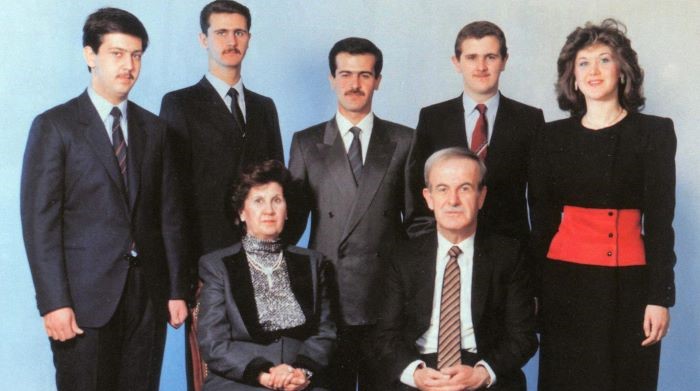
The Assads have ruled Syria for over half a century which lasted for more than half a century, has come to a dramatic end after a decade-long bloody civil war. Rebel forces breached the regime’s seat of power in Damascus, prompting President Bashar al-Assad, an ophthalmologist, to flee. This marks the collapse of the Assad family's long-standing rule over the country.For over five decades, this Alawite dynasty has held sway over a predominantly Sunni nation. This long rule, initiated by Hafez al-Assad in 1970.
Hafez al-Assad, the architect of modern Syria, came to power through a coup on November 13, 1970. At a time when Syria was plagued by political instability and frequent coups, Hafez, an Alawite, rose to prominence as the commander of the Syrian Air Force and Minister of Defence. His strategy of divide-and-rule, exploiting Syria's ethnic and religious divisions, helped him consolidate power. Hafez elevated the Alawite minority, traditionally marginalized, to key positions in the military and government, ensuring their loyalty and reinforcing his control.By the time he seized control, he had cultivated a loyal network within the military and the Ba'ath Party. To fortify his regime, Hafez elevated the Alawite minority, traditionally a marginalised group, to positions of power in the military and government. At the same time, he manipulated Syria's sectarian and tribal fault lines to neutralize potential threats, ensuring that no single group could challenge his authority.Following Syria's independence in 1946, the Alawite community emerged as a significant force in two key areas: political movements and the armed forces. This shift marked a departure from their historically marginalised status, as the Alawites began to assert influence within Syria's evolving power structures.The Alawite minority, which makes up roughly 12-15 per cent of Syria's pre-war population, has been the regime's primary base of support. Alawites, while not doctrinally Shia, venerate Ali ibn Abi Talib, a figure central to Shia Islam.
After Hafez’s death in 2000, his son Bashar, a relatively inexperienced ophthalmologist, assumed the presidency. Initially, there were hopes that Bashar would introduce reforms, but these hopes quickly faded as he inherited his father’s authoritarian system. His early attempts to replace his father’s allies with his own loyalists isolated him from Syria’s rural population, further weakening state institutions. Bashar inherited not only his father's system but also his father's inner circle, composed of ageing revolutionary leaders who had controlled key state institutions since the 1970s. Bashar’s consolidation of power involved placing his inner circle, including his brother Maher and cousin Rami Makhlouf, in key positions. While Bashar’s rule brought economic growth, it was accompanied by rising inequality, widespread poverty, and corruption. By the 2010s, the country’s deteriorating economic situation fueled discontent, particularly after a devastating drought forced many rural Syrians into urban areas.
Hafez al-Assad's rule was marked by brutal repression, most infamously in 1982 when the Syrian military crushed an armed uprising by the Muslim Brotherhood in the city of Hama. Estimates of the death count range from 10,000 to 40,000, making it one of the most violent crackdowns in modern Middle Eastern history. This pattern of repression continued under Bashar, culminating in the 2011 uprising that marked Syria's entry into the wave of Arab Spring protests. What began as peaceful demonstrations in Deraa escalated into a full-scale civil war after the regime responded with violent crackdowns. The conflict has since claimed hundreds of thousands of lives and displaced millions.
Bashar's tenure has been marked by economic mismanagement and growing inequality. While GDP per capita doubled between 2000 and 2010, the benefits were concentrated among a small elite. Widespread poverty, unemployment, and corruption exacerbated public discontent. A severe drought in the late 2000s, compounded by poor resource management, forced hundreds of thousands of rural Syrians into urban areas.Over thirteen years after the Syrian uprising began with hopeful cries for reform, the civil war remains an unresolved catastrophe. Born from the Arab Spring, Syria's descent into chaos was marked by the regime's violent crackdown on protests that spread from Daraa in 2011.Those early demonstrations, driven by demands for modest reforms, escalated into an all-out civil war, leaving hundreds of thousands dead and millions displaced. In 2024, after a brief thaw, a renewed surge in violence thrust the conflict back into global focus.
Among the rebel forces, groups such as Hayat Tahrir al-Sham (HTS), which evolved from the Al-Nusra Front, played a significant role. HTS, initially affiliated with al-Qaeda, broke ties with the terrorist group in 2016. Despite this,
many international bodies still consider HTS an al-Qaeda affiliate.The rebels' rapid march and occupation of key cities eventually ended with them taking control of Damascus and prompting the al-Assads to flee.



Related Posts
Cong neglected development during its rule in Arunachal: Amit Shah
The Old-World Charm — A Family Memoir
Imran Khan's party, allied group slam emergency, governor's rule in KP