 Ira Singh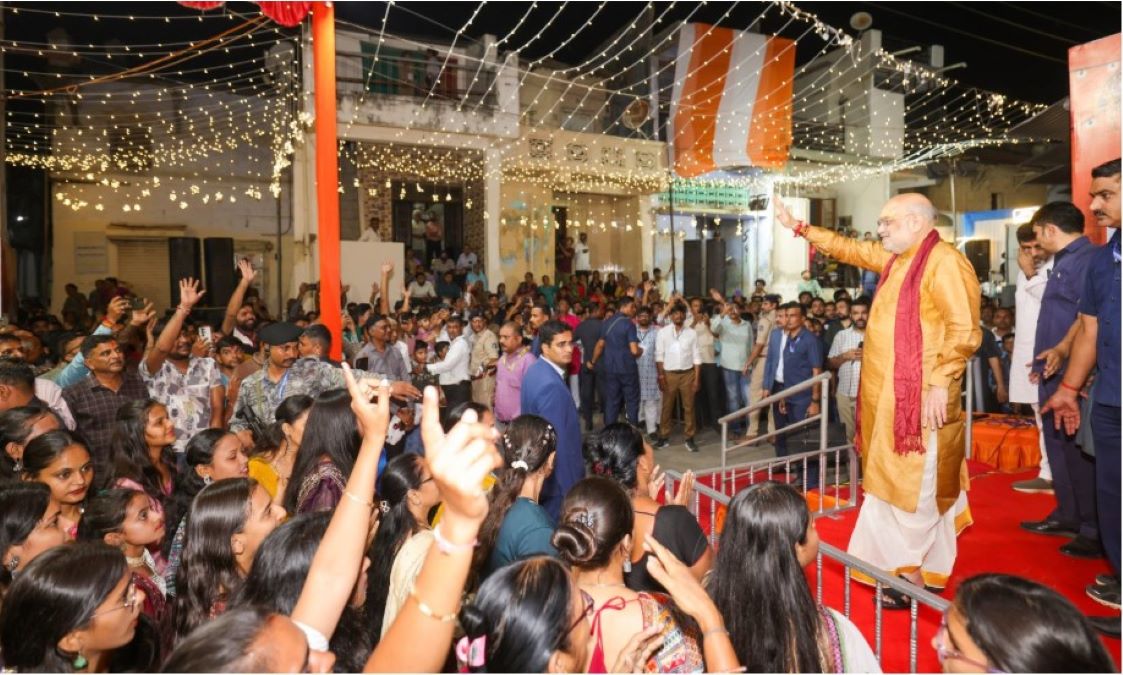
Union Home and Cooperation Minister Amit Shah participated in Navratri garba celebrations in Gujarat’s Gandhinagar district and offered prayers at several temples during his visit to the state on Friday. Shah took part in a raas garba programme organised by the Navratri Yuvak Mandal in Kolvada village, where he highlighted the religious and cultural significance of the traditional dance.In a post on social media platform X, Shah described garba as a symbol of devotion to the Goddess and Gujarat’s cultural heritage.“Garba embodies devotion to Maa Shakti and the fragrance of the land of Gujarat,” he wrote in Gujarati.
Earlier in the day, Shah visited Jain spiritual leaders in Ahmedabad and sought their blessings. He later offered prayers at the Varadayini Mata temple in Rupal village of Gandhinagar district, where he laid the foundation stone for an 81-foot-tall statue of Lord Shiva.
The Union Home Minister subsequently visited the Bahuchara Mata temple in Mansa with his family. He participated in the evening aarti and prayed for the well-being of people in Gujarat and across the country, officials said.Shah’s visit coincided with Navratri, the nine-night Hindu festival dedicated to the worship of the divine feminine, which is celebrated with particular enthusiasm across Gujarat.
Gandhinagar, Gujarat: Union Home and Cooperation Minister Amit Shah attended religious events in Ahmedabad and Gandhinagar, Gujarat, including the foundation stone laying for a 71-foot Mahadev statue, Bahuchar Mata and Amba Mata aartis, and a garba event. https://t.co/BSNfyjPoTb
— IANS (@ians_india) October 16, 2026
Garba and raas are central to the state’s Navratri festivities, drawing people to community grounds and temple premises for traditional music, dance and devotional gatherings.Garba is performed in a circle around an image or representation of the Goddess, accompanied by devotional songs, rhythmic movements and clapping. Raas, another popular traditional dance form, typically involves dancers using decorated wooden sticks known as dandiyas.These performances reflect Gujarat’s rich cultural heritage and bring communities together through shared religious observances and festive celebrations.
(State Correspondent)
Related Posts
Who Is the Boss in India?
India's internal security landscape has changed irrevocably: Home Secy
Five workers killed, five injured in explosion at Gujarat chemical unit