 Uday Kumar Varma
There was a time when government communication followed a relatively uncomplicated trajectory. The Government had something to announce; the communication machinery prepared the message; newspapers, radio and television carried it; and citizens received it. The system had its complexities, but its architecture was reasonably stable. There were identifiable gatekeepers, fixed deadlines, editions and broadcasts, and a certain scarcity of information that gave professional media institutions considerable authority.
That world has not merely evolved. It has been fundamentally disrupted.
News is now continuous, communication is instantaneous and the distinction between communicator and audience has become increasingly blurred. Almost anyone with a smartphone can create, publish and distribute content. A citizen can record an event and make it available to millions before a conventional news organisation has even reached the spot. A story can acquire a life of its own within minutes, travel across platforms and mutate as it travels. Increasingly, algorithms rather than editors influence what millions of people see and, in the process, what they consider important.
Artificial intelligence is adding yet another dimension to this transformation. It is beginning to alter not only how content is produced but also how it is translated, presented, distributed and consumed. Text, images, audio and video can now be generated or modified with an ease that would have seemed extraordinary only a few years ago.
The consequence is not simply that government has acquired new tools of communication. The deeper change is that technology has become the environment in which communication takes place.
From channel to environment
I had an early glimpse of this transformation, though I did not appreciate its eventual scale. Around 2012–13, when I was Secretary in the Ministry of Information and Broadcasting, we had begun taking the Government's presence on social media seriously. We started using Twitter in a fairly systematic manner. At the time, it seemed innovative. We thought we were embracing a new and potentially useful channel of government communication.
What I did not realise—and I suspect very few of us did—was that we were witnessing the beginning of a transformation that would eventually alter the entire communication architecture.
We were thinking of social media as another channel. It would take considerably longer to understand that it was becoming an environment.
That distinction is central to understanding the communication challenge before government today. A new platform cannot simply be treated as a new receptacle for old communication. Putting a conventional press release on a digital platform does not make it digital communication. The form, language, pace, visual presentation and even the underlying conception of the audience have to change.
Yet it would be equally mistaken to conclude that everything learnt in the earlier era has become obsolete. Platforms change with extraordinary speed; human beings do not. The fundamental principles of communication remain remarkably resilient. One must know what one wants to say, whom one is addressing, speak in a language the audience understands, provide reasons for people to believe what is being said and, crucially, listen to the response.
The technology may be new. The human psychology of communication is not.
From the public to many publics
Perhaps the most significant change is in the conception of the audience itself. For much of the last century, government could reasonably think in terms of reaching the public. Today that expression is becoming increasingly inadequate. There is no longer one public; there are many publics, inhabiting different information ecosystems.
A farmer in Madhya Pradesh, a young entrepreneur in Bengaluru, a college student in Delhi, a woman running a small enterprise in a district town and a retired person watching television at home are all citizens of the same Republic. Yet they may receive information through entirely different channels, trust entirely different sources and respond to entirely different forms of communication.
This is why Gen Z—and increasingly Gen Alpha—assume unprecedented significance. Their importance lies not merely in their age but in the fact that they represent the emerging architecture of attention. They have grown up with smartphones, video, social platforms, creators, search engines and now artificial intelligence. For them, communication is not an event that takes place at a particular time of day. It is continuous.
The implication for government communication is profound. The first question can no longer simply be, What does the Government want to say? It must increasingly be, Who needs to understand this, and what is the most effective way of reaching them?
The citizen, rather than the medium, has to become the starting point.
The press release has lost its monopoly
This does not mean that newspapers, television or press releases have ceased to matter. They have not. Traditional media continues to play an important role in informing citizens and shaping public discourse. What has changed is its monopoly over the communication process.
The press release has not died; it has lost its monopoly.
A major government announcement may still require a press release and interaction with journalists. But it may also require a short video, an infographic, an explainer, a regional-language version, a conversation with relevant creators, a podcast or a direct response to questions emerging online. Different audiences may need the same policy explained in very different ways.
The communicator therefore has to think less in terms of selecting a medium and more in terms of designing a communication ecosystem.
This requires a fundamental change in institutional mindset. Government communication can no longer be conceived principally as the dissemination of information from the Government to the citizen. It has to become a continuing interaction in which government communicates, citizens respond, government listens and the communication evolves.
A government that only broadcasts eventually risks becoming a government that does not hear.
Information is not understanding
This brings us to perhaps the most important distinction of all. Government has never suffered from a shortage of information. There are reports, statistics, schemes, Cabinet decisions, notifications, speeches and an extraordinary quantity of data. The problem is not the absence of information; it is converting information into understanding.
And understanding does not automatically become trust.
This is where the professional communicator acquires a role that is much larger than that of a disseminator. The modern communication professional has to be an interpreter of policy, a strategist, a storyteller and a listener. The task is to take something that may be administratively clear and make it intelligible and meaningful to the citizen.
A government programme may have benefited a million people. The number is important, but the story of one farmer, entrepreneur, student or family whose life has changed because of the programme may sometimes communicate its significance more powerfully than the statistic itself.
Government has millions of such stories.
The challenge is to discover them, verify them and tell them well.
Communication, therefore, is not merely about putting information into the public domain. It is about helping citizens understand what government is doing, why it is doing it and how it affects their lives.
That is the new architecture of government communication.
And it places a very different responsibility on those who are going to build and operate it.

From Press Release to Public Conversation
Part II — From Information to Influence
If the architecture of communication has changed, the role of the government communicator must change with it. The challenge is no longer simply to disseminate information but to create understanding, build credibility and, where necessary, persuade citizens and stakeholders that a particular course of action is both necessary and desirable.
I learnt something about this during the process of television digitisation. The Government had decided to move towards compulsory digitisation, which was a major technological and regulatory transition for the broadcasting sector. But taking the decision was only one part of the task. There was considerable apprehension and resistance among cable operators, platform owners and broadcasters. Their concerns about costs, disruption, business models and the future of their enterprises were real and could not simply be wished away.
The Government could have announced the decision and expected the system to comply. But implementation of a major transformation cannot always be secured through notification alone. We spent considerable time engaging with the stakeholders, listening to their concerns, explaining the rationale for the transition and attempting to address their fears. That communication and engagement proved crucial. Without it, the process of digitisation might well have taken considerably longer.
The lesson is a simple but important one: communication is sometimes what makes implementation possible.
The battle for attention
The challenge today is complicated by the fact that government no longer communicates in a vacuum. Political parties, activists, commentators, influencers, creators, interest groups and individual citizens possess communication capabilities that were once available only to large media organisations. They have access to many of the same technologies, platforms and audiences as government.
Some use them responsibly. Some do not. Some verify information; others repeat what is merely interesting or provocative. Some distort information deliberately.
Government cannot afford to adopt the same standards of irresponsibility. It has a larger obligation to facts and to the public interest. But responsibility must not be confused with timidity.
Government communication needs to be responsibly aggressive: fast when speed matters, confident when the facts justify confidence, persistent when an important message needs repetition, and willing to enter difficult conversations rather than retreat from them. But it must never knowingly mislead, manufacture facts or sacrifice credibility for a temporary communication advantage.
Credibility is itself a national asset. It should be accumulated carefully and spent sparingly.
Don't let others write your narrative
There is a particular danger in the current environment. When a negative story emerges, the instinct of government is often to rebut it. A clarification is issued, followed perhaps by another clarification, and eventually much of the communication machinery is engaged in responding to somebody else's narrative.
There is a limit to the effectiveness of such an approach.
If government spends all its communication energy rebutting other people's narratives, others will determine its agenda.
The alternative is not to ignore criticism. Legitimate criticism is part of a healthy democracy and should be heard. The alternative is to build a stronger and more credible narrative of one's own: explain the policy, present the evidence, acknowledge genuine concerns, show what has actually happened and, above all, communicate continuously rather than appearing only when controversy erupts.
Technology offers government the means to do this on an unprecedented scale.
A misleading story can be created in minutes. A credible positive narrative may take years to build.
It must nevertheless be built.
Leadership from the beginning
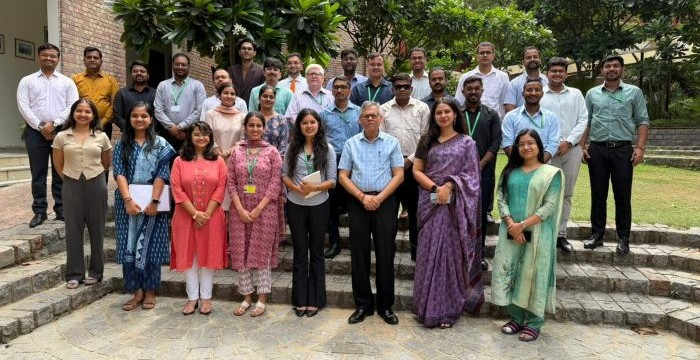
This transformation also has an important implication for young officers entering the Indian Information Service. The traditional relationship between age, hierarchy and knowledge is being altered by technology. A young officer may sometimes know more about a particular platform, technology or audience than an officer considerably senior in the hierarchy.
This should produce neither arrogance nor inhibition.
Young officers must continue to learn from their seniors, whose experience and institutional understanding remain invaluable. But they must also recognise that they may possess knowledge which the hierarchy needs. If a senior officer asks what is happening on a particular platform, the young officer should be able to answer. If a communication problem is emerging, it should be identified before it becomes a crisis. If government is speaking in a language citizens do not understand, that should be pointed out. If there is a better way of communicating, it should be proposed.
Leadership in this field cannot always wait for seniority.
The professional officer is not merely someone who executes instructions. The professional officer understands the environment, anticipates problems and provides judgement.
The promise and peril of AI
Artificial intelligence will make this responsibility still greater. It will transform the creation of text, images, audio and video; facilitate translation and personalisation; and make it possible to analyse vast quantities of public feedback.
But the same technology will make manipulation easier and synthetic content more difficult to distinguish from authentic material. The ability to produce convincing content will no longer require the resources of a large organisation. Speed and scale, which can be powerful allies of government communication, can also become powerful instruments of misinformation.
The answer cannot be to retreat from technology.
It is to acquire better judgement.
Technology can amplify communication. It cannot substitute for wisdom.
The ethical boundary
This is ultimately where the greatest responsibility of the government communicator lies. Government communication has to be effective, but effectiveness cannot be measured simply by whether a message trends, whether a narrative wins a day's argument or whether criticism is silenced.
The communication professional will encounter criticism that is unfair, but also criticism that is justified. The ability to distinguish between the two is part of the job. Not every inconvenient fact is an attack on government; nor is every favourable story necessarily a good story.
The credibility of government communication depends upon its willingness to remain anchored to facts even when facts are inconvenient.
There is a distinction worth remembering throughout a career in public communication:
The client is the Government. The ultimate constituency is the citizen.
That distinction gives the profession its ethical foundation. The IIS officer represents the Government, but is also part of the machinery through which citizens understand the Government. That responsibility cannot be outsourced to technology, platforms or algorithms.
A new profession for a new age
The Indian Information Service is therefore entering an unusually consequential phase. Its officers will have to operate at the intersection of government, technology, media and society. Their tools will change constantly, but some professional principles will remain remarkably stable.
They will need curiosity because technology will change faster than their job descriptions. They will need to know the citizen rather than design communication entirely from within government offices. They will need to learn the art of storytelling because facts acquire meaning when connected to human experience. They will need speed, but never speed at the expense of accuracy. And above all, they will need to protect their credibility.
The communication architecture of government is being rebuilt while a new generation of IIS officers is entering it. This is not simply a technological transition. It is a change in the relationship between the State and the citizen.
The objective can no longer be merely to make government heard.
It must be to make government understood.
That is a more demanding task. It requires technology, but also judgement; data, but also empathy; speed, but also patience.
And perhaps the most important change is this: government communication can no longer be thought of as government speaking at citizens. It has to increasingly become a continuing conversation with them.
The future of government communication will not belong simply to those who speak the loudest or the fastest. It will belong to those who understand the citizen best.
For the young officers entering this profession, that is both the challenge and the opportunity.
(Uday Kumar Varma is an IAS officer. Retired as Secretary, Ministry of Information & Broadcasting)



Related Posts
Govt extends duty-free raw sugar import window till Dec 31
Airfare regulation rules to be published within 2 weeks, Govt tells SC
Govt raises export duties on petrol & diesel