 Newsinc24 Team
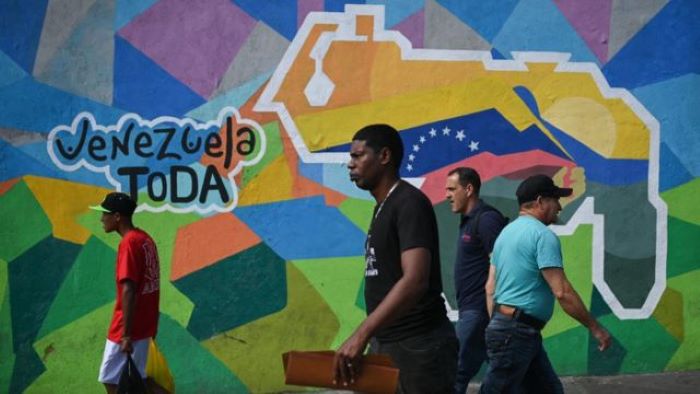
In Venezuela, citizens voted in a referendum to seal the fate of a disputed region called Essequibo. More than 95 percent of Venezuelans approved of establishing a new state in the region. President of Venezuela, Nicolás Maduro, hailed the people's mandate. This follows the discovery of oil in the waters off Essequibo's coast by United States oil giant ExxonMobil in 2015.
The International Court of Justice on Friday ordered Venezuela not to take any action that would alter Guyana’s control over Essequibo, but the judges did not specifically ban officials from carrying out Sunday’s five-question referendum. Guyana had asked the court to order Venezuela to halt parts of the vote.Although the practical and legal implications of the referendum remain unclear, in comments explaining Friday’s verdict, international court president Joan E. Donoghue said statements from Venezuela’s government suggest it “is taking steps with a view toward acquiring control over and administering the territory in dispute.” , Venezuelan military officials announced that Venezuela is taking concrete measures to build an airstrip to serve as a ‘logistical support point for the integral development of the Essequibo.
The 61,600-square-mile (159,500-square-kilometer) territory accounts for two-thirds of Guyana and also borders Brazil, whose Defense Ministry earlier this week in a statement said it has “intensified its defense actions” and boosted its military presence in the region as a result of the dispute.Essequibo is larger than Greece and rich in minerals. It also gives access to an area of the Atlantic where energy giant ExxonMobil discovered oil in commercial quantities in 2015, drawing the attention of Maduro’s government.
The country has always considered Essequibo as its own because the region was within its boundaries during the Spanish colonial period, and it has long disputed the border decided by international arbitrators in 1899 when Guyana was still a British colony.That boundary was decided by arbitrators from Britain, Russia and the United States. The U.S. represented Venezuela on the panel in part because the Venezuelan government had broken off diplomatic relations with Britain.Venezuelan officials contend that Americans and Europeans conspired to cheat their country out of the land and argue that a 1966 agreement to resolve the dispute effectively nullified the original arbitration.Guyana, the only English-speaking country in South America, maintains the initial accord is legal and binding and asked the International Court of Justice in 2018 to rule it as such, but a decision is years away.

Related Posts
India, Sweden launch LeadIT 3.0 at COP31; Brazil joins initiative
India announces 500-million-dollar credit line for Guyana
Trump claims Brazil election looked rigged