 Newsinc24 Team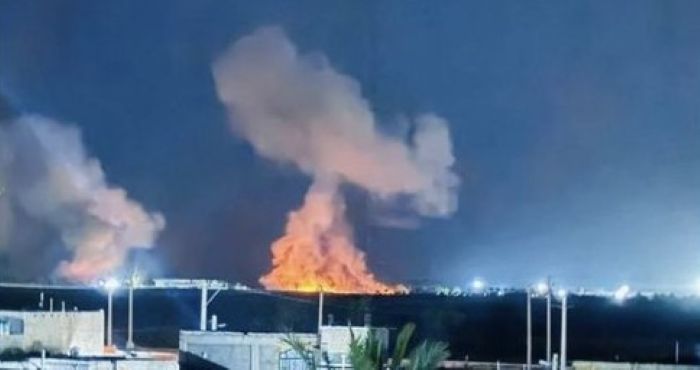
The United States launched fresh strikes on Iran late Wednesday and into early Thursday morning after striking Iranian targets a day earlier in response to attacks on commercial shipping in the Strait of Hormuz. Iranian state media reported that eight members of the Iranian navy and air force were killed in US attacks on southern parts of the country, in Bandar Abbas and Bushehr.
"US Central Command forces have started conducting additional strikes against Iran to further degrade their ability to threaten freedom of navigation in the Strait of Hormuz," US Central Command (CENTCOM) said in a post on X. "The United States is holding Iran accountable for recent unjustified aggression against commercial shipping and civilian crews freely navigating a vital international waterway," the statement added.
The US was also reportedly returning its refueling planes to the region, after they were removed during the ceasefire that began in early April. Some of the planes, whose presence is a potential signal of the war restarting, were previously parked at Ben Gurion Airport.US President Donald Trump said on Wednesday aboard Air Force One that Iran had contacted the US seeking a deal but questioned whether Tehran could be trusted to uphold any agreement. Trump said the US had already “won militarily” and that there were “many ways” to achieve a victory.
JUST IN: Following MASSIVE strikes on the regime earlier tonight, President Trump says Iran CALLED HIM wanting to go back to a “deal”
— Nick Sortor (@nicksortor) July 9, 2026
“They want to make a deal SO badly. They called a little while ago.”
“I just don't know if they're worthy of making a deal. I don't know that… pic.twitter.com/Qlvat3mSuA
Control of the strait, through which a fifth of global oil supplies passed before the war began with US-Israeli airstrikes on Iran on February 28, has given Tehran immense leverage, effectively allowing it to force a stalemate with the world's most powerful military. While Iran has not claimed responsibility for the ship attacks, analysts say Tehran uses such actions to gain leverage in negotiations.Iran's ambassador to the United Nations, Amir Saeid Iravani, asked the UN Security Council on Wednesday to take action over US strikes on Iran, saying in a letter that Washington violated the Iran-US memorandum of understanding and the UN Charter. Iranian parliament speaker Mohammad Bagher Ghalibaf said that the United States had yet to learn that "bullying and breaking promises" no longer came without consequences. In a post on X, he warned that "if you strike, you will be struck," adding that the Strait of Hormuz would reopen only under "Iranian arrangements," not US threats.
Qatar’s Interior Ministry said that the security threat level was elevated and urged everyone to remain at home, avoid going outside, and stay away from windows and exposed areas for their safety. Kuwait’s military said that its air defenses were confronting hostile missile and drone attacks. The army’s General Staff said any sounds of explosions heard were the result of air defense systems intercepting the attacks, urging residents to follow safety instructions issued by authorities.












Related Items
Putin orders halt on Kyiv strikes for 3 days
US sanctions Turkish bank to cut Iran's financial lifelines
Trump calls Iran conflict ‘small potatoes’ for US