 Newsinc24 Team
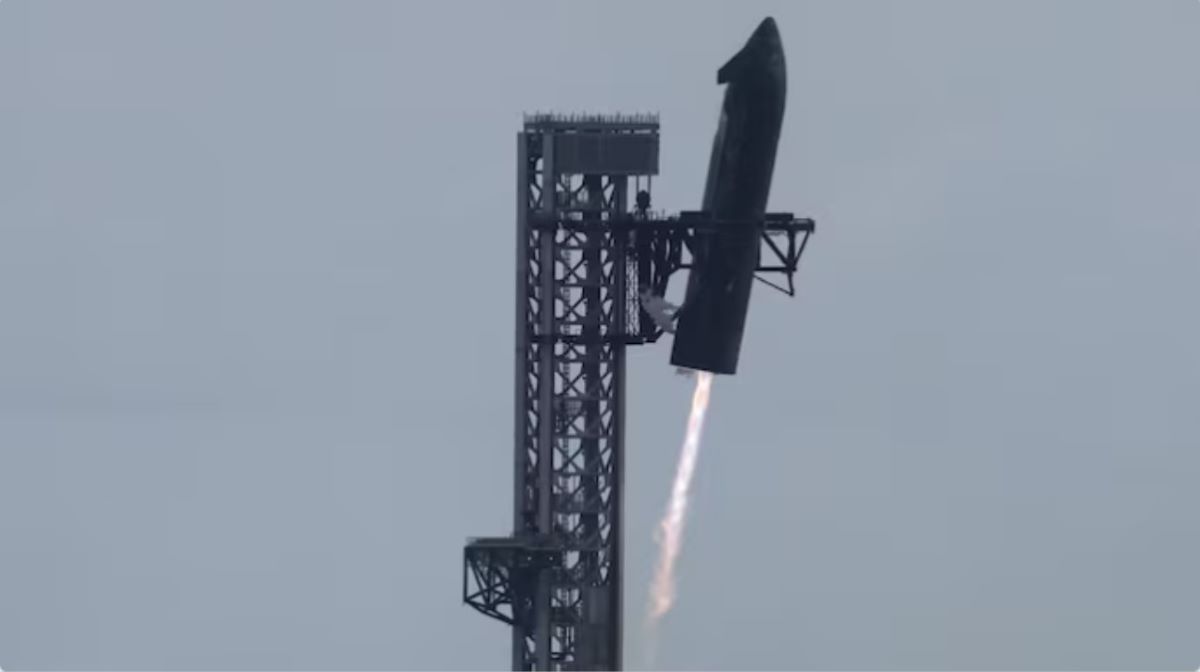
SpaceX's Starship spacecraft made history on Sunday, after successfully returning to its launch site in Texas and being caught by the giant mechanical arms of its launch tower, known as 'Chopsticks', according to agency reports. The achievement marked the first time the Starship upper stage was recovered at the launch site after travelling to orbit and returning to Earth.The milestone is a major step towards SpaceX's goal of making the world's most powerful rocket fully and rapidly reusable.
Mechazilla catches Starship! Congratulations to the entire SpaceX team on this incredible achievement! https://t.co/YJzmGUZb2B
— SpaceX (@SpaceX) November 14, 2026
Ship 42 was caught at around 2:52 am IST after spending more than 22 hours in space during Flight 15, the vehicle's 15th integrated flight test. It lifted off from Starbase in South Texas on November 14 and reached low Earth orbit at an altitude of approximately 275 km.During its time in orbit, Ship 42 completed around 14 revolutions around Earth and deployed 26 next-generation Starlink V3 satellites. Three satellites were equipped with cameras to inspect the spacecraft's heat shield and other hardware, helping engineers assess its readiness for the return journey.
Following its final checks, the spacecraft performed a de-orbit burn and began its descent through Earth's atmosphere. It then executed a controlled landing manoeuvre and aligned itself with the Starbase launch tower.The tower's two giant mechanical arms, popularly known as Chopsticks, successfully closed around the vehicle and brought it to a stop above the launch pad.
The successful recovery demonstrated that Starship's upper stage could return from orbit and be caught directly at the launch site, an essential requirement for SpaceX's plans to enable rapid rocket reuse.SpaceX has previously recovered and reused its Super Heavy boosters but had never successfully caught a Starship upper stage returning from orbit. The latest achievement demonstrates another important step in the company's plan to recover both rocket stages for inspection and reuse.
Flight 15 had initially aimed to recover both stages. However, the planned tower catch of the Super Heavy booster was called off, and it instead made an offshore landing in the Gulf of Mexico.While the mission fell short of its original dual-recovery objective, the successful capture of Ship 42 marked a significant milestone in SpaceX's reusable rocket programme.Reusing both stages could eventually reduce launch costs and support the company's ambitions for future missions to the Moon and Mars.



Related Posts
India, France strengthen ties in space and economic security
NASA's 22 yr old swift space telescope makes fiery return to earth
India launches next-gen satellite to strengthen indigenous GPS system