 Newsinc24 Team
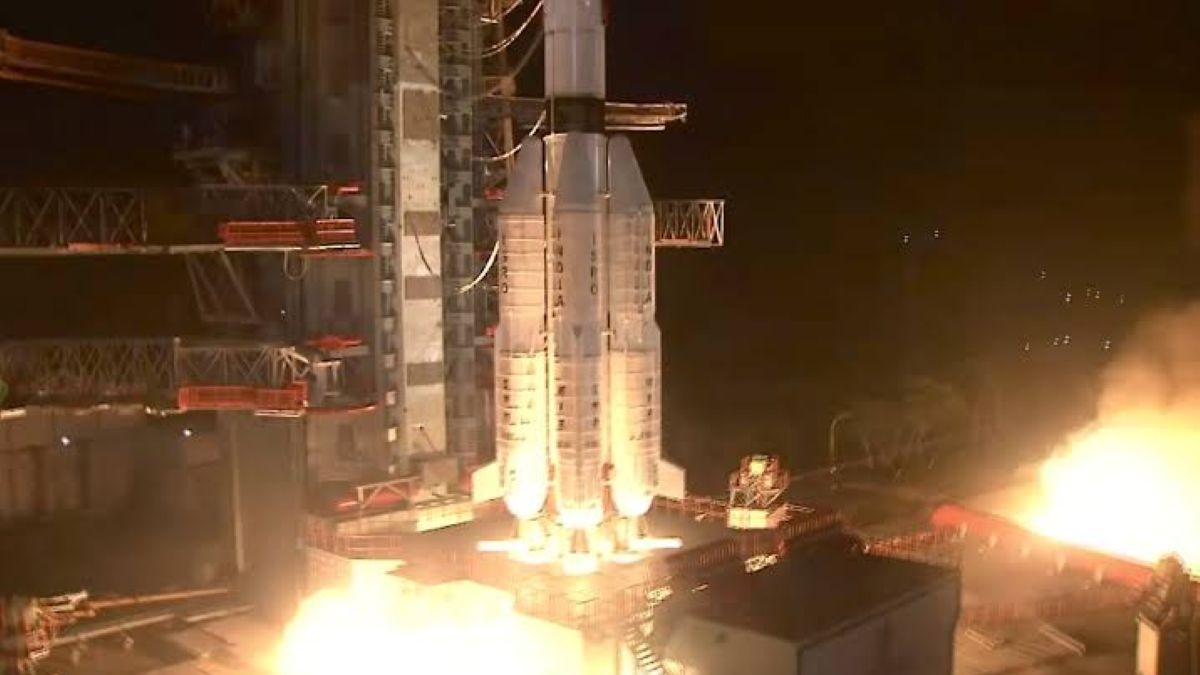
The Indian Space Research Organisation (ISRO) on Friday launched India's next-generation navigation satellite, NVS-03, aboard the Geosynchronous Satellite Launch Vehicle, GSLV-F18 rocket.The 50-metre-tall, three-stage GSLV-F18 rocket lifted off with the 2,232 kg NVS-03 satellite, aiming to deploy it into a Geosynchronous Transfer Orbit (GTO).The Geosynchronous Satellite Launch Vehicle (GSLV) carrying the satellite lifted off from the second launch pad at the Satish Dhawan Space Centre (SDSC-SHAR). NVS-03 is a crucial addition to the Navigation with Indian Constellation (NavIC) system, India's answer to GPS.
Congratulations Team #ISRO for the successful launch of GSLV-F18/NVS-03 mission! This remarkable achievement reflects India's growing prowess in Space technology and our unwavering commitment to strengthening sovereign indigenous navigation capabilities. With revolutionary Space reforms announced by PM Shri @narendramodi ji in recent years, India's success stories in Space vindicate the dream of founding fathers Vikram Sarabhai and Satish Dhawan. Today is the celebration of another proud moment for India!
— Dr Jitendra Singh (@DrJitendraSingh) October 30, 2026
The satellite carries an indigenous Rubidium atomic clock developed by the Space Applications Centre and will transmit signals in the L1, L5 and S bands. The inclusion of the L1 band makes the satellite compatible with modern civilian smartphone chipsets and wearable devices. Besides enabling navigation, the atomic clock also provides precise timekeeping. Banks, stock exchanges and the armed forces rely on accurate time, and even small differences between time sources can affect their operations. India has also been working to establish an independent ground-based timekeeping system.
With Friday's launch, the country's GSLV programme completed its 20th flight. Once dubbed as the "naughty boy" for its frequent failures, the rocket had earned the "smart boy" moniker after achieving successful launches. The launch aims to boost India's capability to provide accurate positioning, navigation, and timing services across the country and beyond. India needs the swadeshi GPS or NavIC signal, especially for strategic purposes, including for military operations like Operation Sindoor.



Related Posts
Assam: CM lays foundation for ISRO Advanced Radar Centre
Japanese lawmakers visit IISc, ISRO and BEL in Bengaluru
Saudi Arabia activates Mecca warning system amid Houthi threat