 Ira Singh
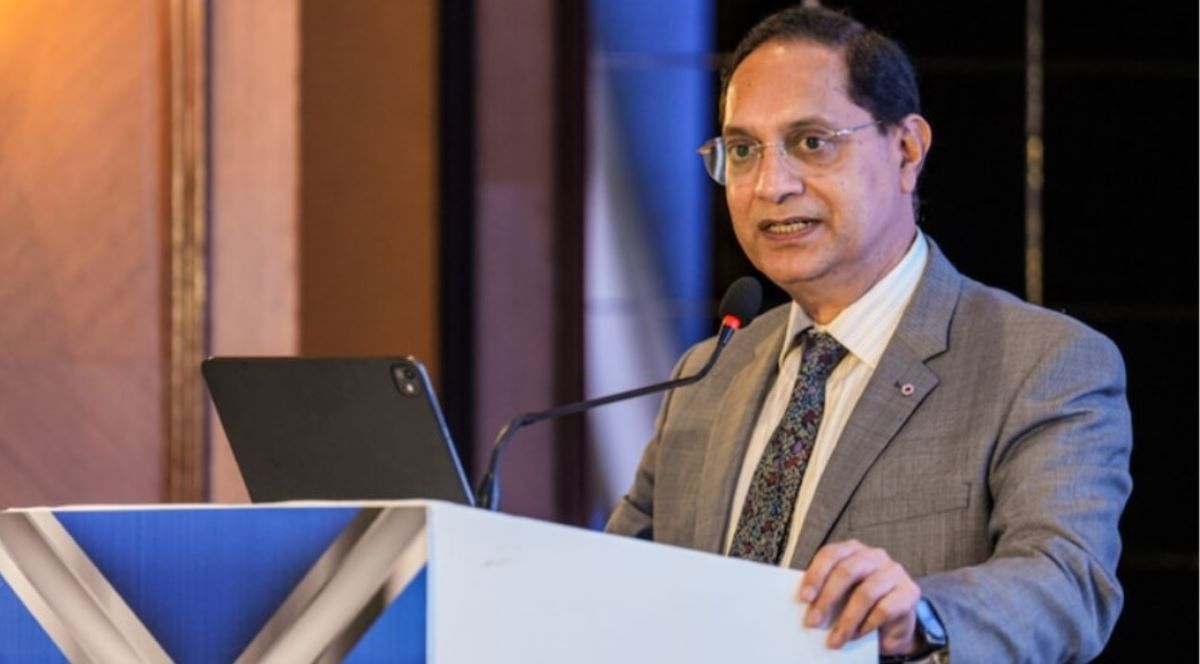
India’s next big stock market expansion may come not from its metropolitan trading hubs but from smaller towns and villages, where millions of potential investors remain on the sidelines. Securities and Exchange Board of India (SEBI) Chairman Tuhin Kanta Pandey said the next major wave in retail broking would emerge from these underserved regions, highlighting the need to widen access to financial markets.
Addressing the 16th ANMI International Capital Market Convention in Mumbai, Pandey said India’s capital markets were entering a new phase of growth, supported by an equity market capitalisation of around Rs470 lakh crore and more than 15 crore unique investors.India’s strong economic outlook offers further momentum, with the International Monetary Fund projecting growth of around 7%. Pandey noted that the country continues to outperform global growth averages, backed by its young population, large domestic market and sustained structural reforms.However, the next challenge lies in converting widespread awareness of financial products into meaningful participation. SEBI’s investor surveys suggest that nearly two-thirds of Indian households are aware of securities market products, but fewer than one in ten actively invest. With almost half of potential investors living in rural areas, smaller cities and villages represent a significant opportunity for the retail broking industry.
The shift also marks another milestone in India’s financial market journey. From paper-based share certificates and screen-based trading to dematerialised securities and digital investment platforms, the country has undergone a sweeping transformation. Pandey credited market participants for supporting these changes and helping India establish itself as a global leader in market infrastructure.
#WATCH | Mumbai, Maharashtra: SEBI Chairman Tuhin Kanta Pandey says, "Let me start with where we are. Consider the numbers. Equity market capitalization of around Rs 470 lakh crore, outstanding corporate bonds of approximately Rs 61 lakh crore, mutual fund AUM of around Rs 83 lakh crore, over Rs 15 crore unique investors, foreign portfolio investors, assets of about Rs 74 lakh crore. These are not just statistics... Despite unprecedented global headwinds, the IMF expects India to grow at about 7% this year, more than twice the global pace. It credits this growth to our young population, our large domestic market, and steady reforms. None of this happened by accident. Everyone in this room has helped build it..."
— ANI (@ANI) October 24, 2026
India was among the first major markets to introduce T+1 settlement, while interoperable clearing corporations and mechanisms governing the movement and safeguarding of client funds have further strengthened the trading ecosystem.Beyond attracting new investors, SEBI is looking to deepen the market by expanding investment opportunities beyond equities. Corporate bonds, in particular, remain an area with considerable scope for growth, as limited secondary-market activity continues to constrain liquidity.
To address this, the regulator is reviewing the frameworks governing short selling and securities lending and borrowing to improve liquidity and price discovery. It is also developing a dedicated market-making framework to encourage more active trading in corporate bonds. Under the next phase of Demat 2.0, tokenised corporate bonds are expected to enter the secondary market, with the aim of improving liquidity, reducing settlement risks and speeding up access to funds.
Pandey identified trust as another essential pillar of sustainable market expansion, cautioning that wider participation must be accompanied by stronger investor protection. He urged brokers to rethink the traditional approach to know-your-customer (KYC) compliance, calling for a more continuous engagement with clients to understand their financial needs and risk appetite.“A client who understands risk invests wisely and stays invested longer. That is good for the client, for you and for the market,” he said.
SEBI is also stepping up efforts to protect investors from unregistered investment advisers, misleading financial influencers and fraudsters impersonating legitimate brokers. Measures such as verified labels, SEBI Check tools and validated UPI handles are intended to help investors identify genuine market participants and avoid scams.The regulator’s investor education drive, “Samajh Se Investing Simple”, launched on October 5 under Project Jagrook, is another part of this effort. The multimedia campaign, spanning television, radio, print, WhatsApp and social media, has reportedly generated more than 15 crore views and sent nearly 110 crore WhatsApp messages.
WritingPandey also stressed the need for stronger cybersecurity as algorithmic trading and artificial intelligence gain ground, urging intermediaries to test their systems and prepare for disruptions.SEBI is working to simplify regulations, strengthen market infrastructure and promote responsible AI use through safeguards, testing frameworks and greater human oversight. It is also streamlining digital onboarding and KYC procedures to reduce paperwork for overseas investors and NRIs while maintaining regulatory safeguards.Pandey further noted, the regulator’s broader focus is on deepening markets, building investor trust and expanding access, particularly in smaller towns and rural areas, to bring more people into India’s capital markets.
(Business Correspondent)



Related Posts
Delhi NCR gets new air pollution analysis facility
India achieves target of creating 11 crore Farmer IDs
Amit Shah reviews Delhi Police's preparedness for protests, law & order