 Newsinc24 Team
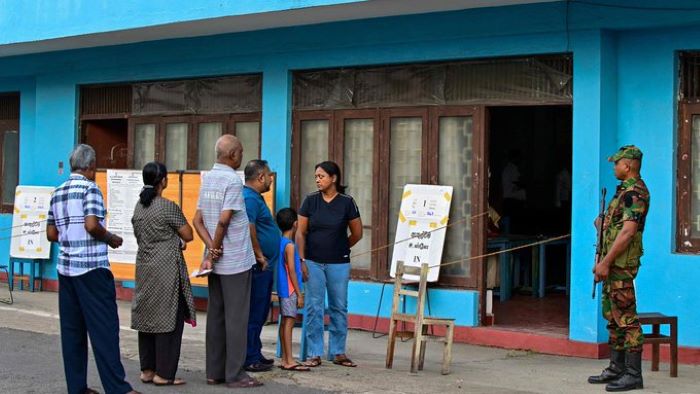
Polls opened on Saturday in Sri Lanka's crucial presidential election -- the island nation's first major electoral exercise since its worst economic meltdown in 2022.Some 17 million people are eligible to vote at over 13,400 polling stations.Over 200,000 officials have been deployed to conduct the election which will be guarded by 63,000 police personnel. Voting started at 7 am and will continue till 5 pm. Results are expected by Sunday. Voters will choose among 38 presidential candidates.
Domestic and international observers will be present to monitor the voting process. International election observers including from the European Union (EU) and Commonwealth observers, working across various teams, have also reported to their posts across all nine provinces in Sri Lanka, ahead of the country’s presidential election.
A total of 63,000 police officers have been deployed to ensure security throughout the election.The process of transporting ballot boxes from the counting centers to polling stations had commenced last morning under tight security. Similar operations were observed across all 22 electoral districts, with activities proceeding rapidly in preparation for tomorrow’s election.
The President of Sri Lanka is elected using a preferential voting system, whereby voters can rank up to three candidates in order of preference. If no candidate receives more than 50 per cent of the total valid votes in the first count, all candidates except the top two are eliminated, and the candidate with the most overall votes in the second round of counting is then declared the winner.If no candidate gets 50 percent plus one vote in the polls, the Election Commission will invoke the legal provision for a run-off between the two front-runners.
Sri Lanka’s unprecedented crisis manifested in acute shortages of essentials and long lines for fuel and gas. Inflation soared to 70%, the rupee depreciated 45% and the economy shrank by 7.3%, forcing the government to seek a International Monetary Fund bailout. Aided by a bailout package from the IMF and Indian assistance have brought down the inflation and prices of essential commodities, but economic issues continue to dominate the minds of the voters. As per local media report, contest is likely to narrow down between incumbent President and independent candidate Ranil Wickremasinghe, Opposition Leader Sajith Premadasa of the Samagi Jana Balawegaya (SJB), and National People Power’s (NPP) Anura Kumara Dissanayake.

Related Posts
India’s housing project expands in Sri Lanka’s plantation communities
Congress miffed after SP releases 1st list for UP Assembly polls
BJP and SAD to contest 2027 Punjab Assembly polls together