 Ira Singh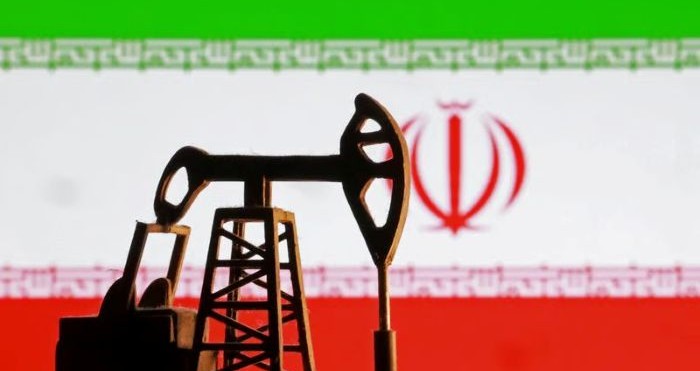
Oil surged 9% on Monday after retaliatory Iranian attacks disrupted shipping in the crucial Strait of Hormuz following the weekend’s bombing by Israel and the United States that killed Iranian Supreme Leader Ali Khamenei. A sustained jump in prices would threaten a global economic recovery, spur inflation and could push up U.S. retail gasoline prices, a risky result for President Donald Trump ahead of midterm elections this November. The price surge on the restart of trading after the weekend, however, was less than some analyst predictions.
Brent crude futures rose as much as 13% to $82.37 a barrel, their highest since January 2025, before retreating to trade up $6.00, or 8.2%, at $78.87 a barrel by 0919 GMT. U.S. West Texas Intermediate crude climbed to an intraday high of $75.33, up more than 12% and its highest since June, though it later pared gains and was up $5.15, or 7.7%, at $72.17. “The latest move reflects uncertainty around the scale and duration of the current conflict and recognises that Iran’s political future may have major implications for the stability of the Middle East,” said James Hosie of Shore Capital.
On Sunday, some analysts had predicted oil would open on Monday at over $90 a barrel and closer to $100. Prices jumped as an exchange of counterattacks damaged tankers and disrupted shipments in the Strait of Hormuz between Iran and Oman that connects the Gulf to the Arabian Sea.More than 200 vessels including oil and liquefied gas tankers have dropped anchor outside the Strait, shipping data showed on Sunday. Three tankers were damaged and one seafarer was killed in attacks in Gulf waters.
OPEC+ agreed on Sunday to an oil output boost of 206,000 barrels per day for April. Every OPEC+ producer is essentially producing at capacity except for Saudi Arabia, RBC Capital analyst Helima Croft said.The International Energy Agency is in touch with major producers in the Middle East, director Fatih Birol said on Sunday. The energy watchdog coordinates the release of strategic petroleum reserves from developed countries during emergencies.
Globally, visible oil inventories stood at 7.827 million barrels, enough for 74 days of demand, which is near a historical median, Goldman Sachs wrote in a note. Analysts are also warning retail gasoline prices in the U.S., the world’s biggest fuel consumer, may break above $3 a gallon because of the conflict, a potentially risky result for Trump and his Republican Party ahead of midterm elections. U.S. gasoline futures surged by as much as 9.1% to $2.496 a gallon, their highest since July 2024, and were last up 4.3%.
(Business Correspondent)


Related Posts
Jaishankar discusses Global, Regional Issues with EU & V4 leaders
Bhupender Yadav calls for Global action on conservation
Guterres calls for global unity, peace ahead of ‘last UNGA’ as S.G.