 Ira Singh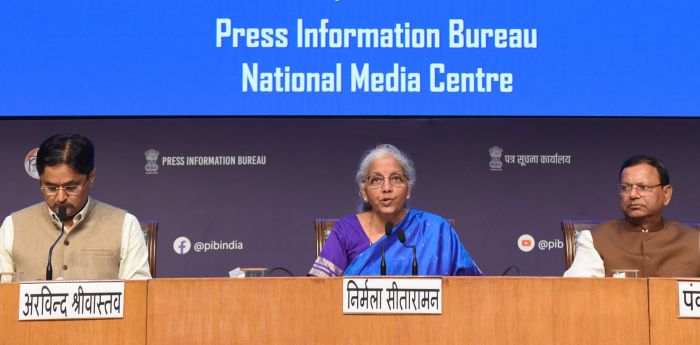
Finance Minister Nirmala Sitharaman on Wednesday announced a major reform in the Goods and Services Tax (GST) regime, consolidating the 12% and 18% tax slabs into a simplified dual-rate structure of 5% and 18%, with a higher 40% rate retained for sin goods. The move, described as “Next-Generation GST,” is aimed at boosting affordability, consumption, and economic efficiency while making compliance easier for businesses. At a press conference, the Finance Minister said the reforms have been carried out with a focus on easing the burden on the common man. “Every tax on the common man’s daily use items has undergone a rigorous review, and in most cases, the rates have come down drastically. Labour-intensive industries, farmers, the agriculture sector, and the health sector will all benefit,” she said.
There is a complete reduction on common man and middle-class items in the #NextGenGST.
— BJP (@BJP4India) September 3, 2025
Rates have come down from 18 or 12 percent to 5 percent.
Common man items such as hair oil, toilet soap, bars, shampoos, tableware, toothbrushes, and other household items are included in… pic.twitter.com/a9QN23TCM1
Daily essentials such as hair oil, soap, shampoo, toothbrushes, toothpaste, bicycles, and kitchenware will now attract only 5% GST. Ultra-high temperature milk, paneer, chena, and all varieties of Indian breads, including roti and paratha, will be exempt from GST. Food items such as namkeen, bhujia, sauces, pasta, noodles, chocolates, coffee, cornflakes, butter, and ghee have also been brought down to the 5% category.
Hon’ble Prime Minister Shri @narendramodi announced the Next-Generation GST Reforms in his Independence Day address from the ramparts of Red Fort.
— Nirmala Sitharaman Office (@nsitharamanoffc) September 3, 2025
Working on the same principle, the GST Council has approved significant reforms today.
These reforms have a multi-sectoral and… pic.twitter.com/NzvvVScKCF
The 56th Meeting of the GST Council was held in New Delhi on Wednesday under the chairmanship of the Finance Minister. The Council deliberated on India’s next-generation GST reforms, including rationalisation of tax rates and simplification of compliance. Union Minister of State for Finance Pankaj Chaudhary, Chief Ministers of Delhi, Goa, Haryana, Jammu and Kashmir, Meghalaya and Odisha were present in the meeting. Deputy Chief Ministers of Arunachal Pradesh, Bihar, Madhya Pradesh, and Telangana, Governor of Manipur and Finance Ministers of several States and Union Territories have also participated in the meeting.
(Business Correspondent)
Related Posts
FM Nirmala Sitharaman reaches Qatar for AIIB annual meeting
G4 nations express 'strong concern' at lack of progress on UNSC reform
Two Reform UK officials resign amid donation breach reports