 Newsinc24 Team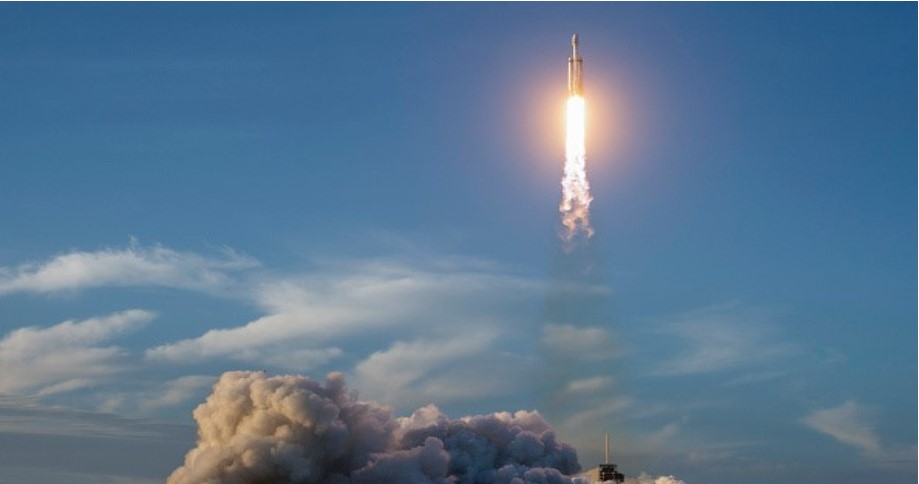
NASA launched its Nancy Grace Roman Space Telescope on Sunday aboard a SpaceX Falcon Heavy rocket from the Kennedy Space Center in Florida, beginning a new mission to study some of the biggest mysteries of the universe.According to media reports, the roughly $4 billion observatory is designed for a five-year mission, with enough fuel potentially allowing it to operate for another five years. It will travel to Lagrange Point 2, about 1.6 million km from Earth.
The Nancy Grace Roman Space Telescope has officially launched and is heading to its forever home at L2!
— Nancy Grace Roman Space Telescope (@NASARoman) August 30, 2026
Over the next three months, the observatory will perform final checks and power its instruments before revealing its first images by early 2027.https://t.co/IdabpolHmh pic.twitter.com/tuDHAEzgKh
Roman will investigate dark energy and dark matter, study gravity on vast scales and search for thousands of exoplanets beyond the solar system. Its main survey is expected to map more than two billion galaxies and create one of the most detailed three-dimensional maps of the universe.
The telescope was originally developed for a US spy satellite programme under the National Reconnaissance Office. After the programme was cancelled, the NRO donated the satellite to NASA in 2012, allowing it to be repurposed for astronomical research.Roman is expected to complement the James Webb Space Telescope and Hubble Space Telescope. While Webb provides deep, highly detailed views of distant objects, Roman is designed to survey large areas of the sky much faster. NASA scientists say it could survey the entire Milky Way in about a month, compared with roughly a century for Hubble.
Mission teams will spend the next 90 days commissioning the telescope and preparing it for scientific operations. NASA expects Roman to send back its first high-resolution images before the winter holidays.The mission could provide fresh insights into the accelerating expansion of the universe, the nature of dark matter and dark energy, and the diversity of planetary systems beyond our own.

















Related Items
India, Brazil reaffirm trade ties, target $30 bn bilateral trade by 2030
Sitharaman, 3M CEO discuss expanding manufacturing, R&D in India
India,Uzbekistan agree to deepen cooperation in trade & other fields