 Newsinc24 Team
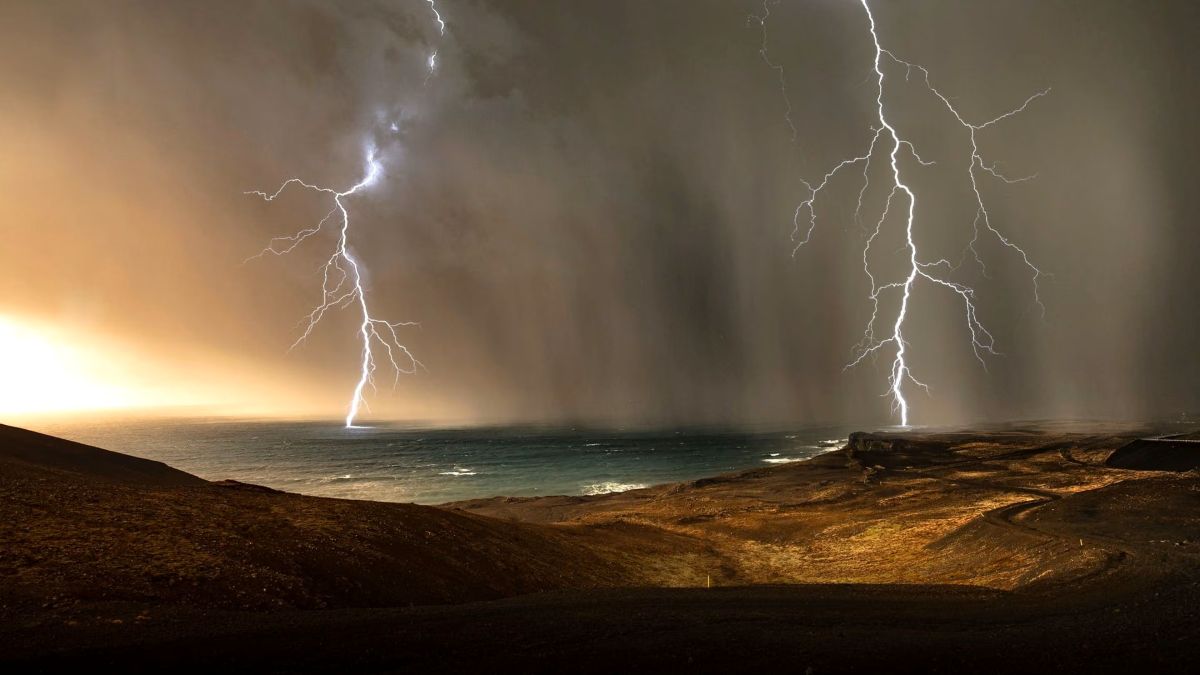
Globally, lightning could get 76 per cent to 140 per cent more common by the end of the century than between 1995 and 2014 -- roughly 30 per cent more lightning per degree of global warming, new research reveals. Cloud-to-ground lightning -- dangerous bolts that touch down to earth, sparking wildfires and damaging powerlines and other infrastructure -- kills several thousand humans and burns down hundreds of millions of trees around the world each year. Lightning may not change in the same way everywhere, researchers, including those from the Technical University of Munich in Germany, said.
The study, published in the journal Earth’s Future, projected the total number of strikes rising most in the tropics, where lightning is already the most common, especially in the Amazon, southeast Asia and Oceania.“… with continued climate change, CG (cloud-to-ground) lightning could increase by 76-140 per cent by century’s end — roughly 30 per cent more lightning per degree of global warming,” the authors wrote. The study’s figures far outstrip previous estimates, the highest of which project cloud-to-ground lightning frequency rising between 8 per cent and 17 per cent per degree of warming, the researchers said.
The discrepancy stems mostly from different mathematical approaches to estimate future lightning frequency and the new study’s use of a newer, more robust global lightning dataset, they said. “I was quite surprised that the projections were so high. I expected smaller changes,” lead author Andreas Krause, an Earth system scientist at the Technical University of Munich, said.The biggest relative changes from historical conditions could occur at higher latitudes where lightning is currently rare, according to the study.
Eventually, the lighter crystals loft upwards relative to the larger, heavier ones, carrying their different charges in opposite directions and creating an electric field. Once the field gets big enough, lightning is formed, the researchers explained. With climate change warming air temperatures globally, more convection stirs up the clouds, potentially generating more lightning. However, warmer air could also mean fewer ice crystals high up in the atmosphere, making it harder for strong electric fields — and, by extension, lightning itself — to form. “It’s not quite clear which of these is more important,” Krause said.



Related Posts
Dr.Kriti Bharti enters world records for annulment of 55 child marriages
Uttarakhand's reverse migration recorded 44% increase: CM Dhami
NSE ranks world’s 5th largest listed exchange by market capitalisation