 Ira Singh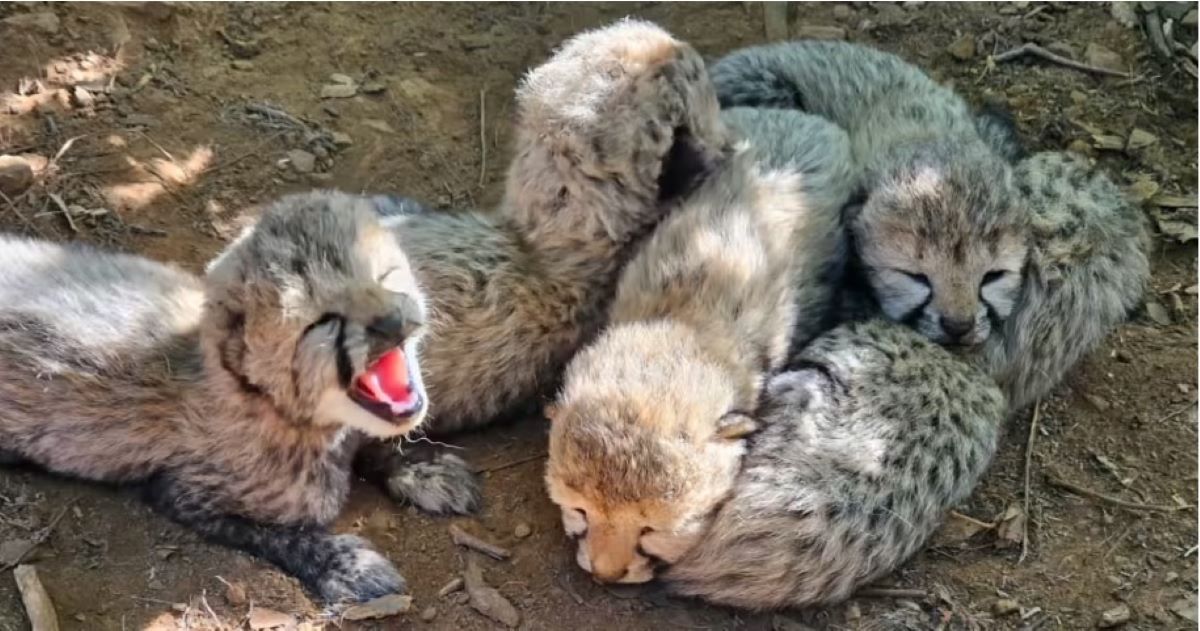
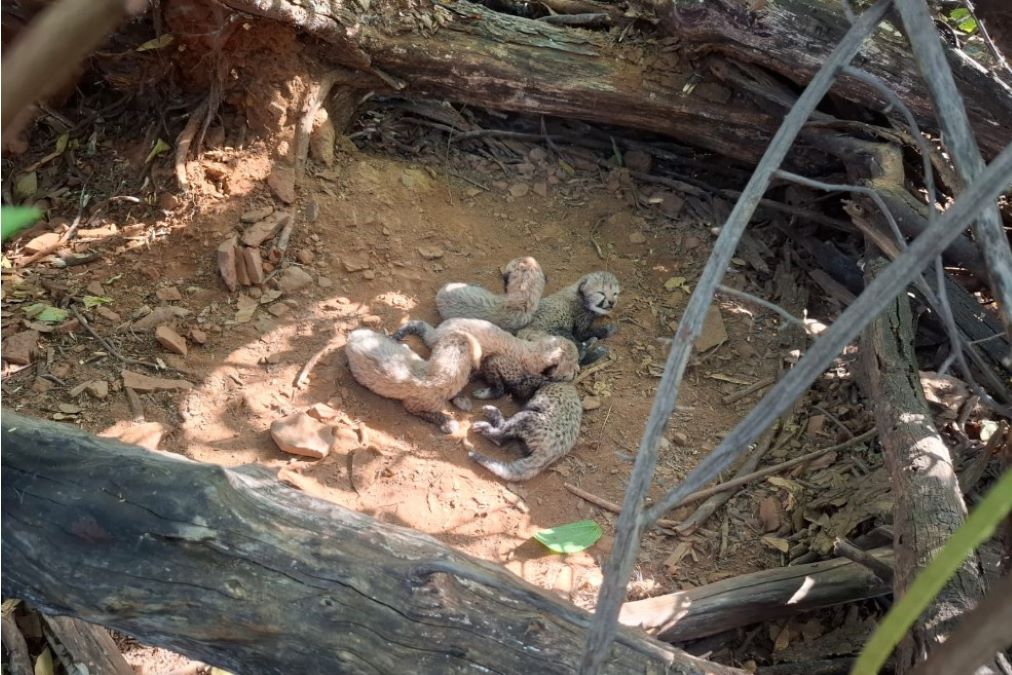
In a significant milestone for India’s ambitious cheetah reintroduction programme, five newborn cubs at Kuno National Park have brought together two continents, adding a new genetic lineage to the country’s growing cheetah population, according to agency reports.The cubs, born on Monday to an India-born female cheetah and a male brought from Botswana, mark the beginning of the Botswana lineage in India. Their arrival represents another important step in Project Cheetah, which aims to re-establish the world’s fastest land animal in the country after it was declared extinct in India in 1952.
The mother, KJP21, is a 32-month-old female born in India. Her partner is a male cheetah translocated from Botswana, making the five cubs the first representatives of the Botswana lineage to be born on Indian soil.
Union Environment, Forest and Climate Change Minister Bhupender Yadav announced the development, describing it as a boost to the country’s expanding cheetah population and genetic diversity.“With the arrival of these five cubs, the cheetah population in India has reached 60, including 41 Indian-born cheetahs,” Yadav said.He added that the cubs marked the beginning of the Botswana lineage in India, bringing a new genetic line into the country’s growing cheetah population.
Another historic and joyous milestone for Project Cheetah! ????❤️ KJP21, a 32-month-old Indian-born female cheetah, has given birth to five healthy cubs in Kuno National Park today. KJP21 is the third Indian-born female cheetah to give birth, after Mukhi and KGP12—an important milestone in the emergence of the next generation of India’s cheetah population. With the arrival of these five cubs, the cheetah population in India has reached 60, including 41 Indian-born cheetahs. Importantly, these cubs also mark the beginning of the Botswanan lineage in India, as their father is a Botswanan male cheetah—adding a new genetic lineage to India’s growing cheetah population. Another generation born on Indian soil, adding yet another beautiful chapter to the remarkable story of cheetah reintroduction in India. Heartfelt congratulations to the veterinarians, field staff, managers and everyone associated with Project Cheetah, whose dedication, commitment and tireless efforts have made these moments possible. Welcome to the world, little ones ???? #WildlifeWeek2026
— Bhupender Yadav (@byadavbjp) October 5, 2026
A new generation takes shape
Beyond the addition of five cubs, the birth carries particular significance because KJP21 is only the third female cheetah born in India to reproduce. She follows Mukhi and KGP12, demonstrating the growing contribution of India-born cheetahs to the programme.The development also highlights a key objective of Project Cheetah: building a population capable of reproducing and establishing successive generations in India, rather than depending indefinitely on animals brought from Africa.With their mother born in India and their father originating from Botswana, the cubs represent a new chapter in this effort. Their arrival adds to the population while introducing a new lineage through the latest international collaboration.However, their survival and eventual ability to reproduce will remain important measures of the programme’s long-term success.
 Botswana Cheetahs Strengthen India’s Conservation Effort
The births come months after India brought nine cheetahs from Botswana in February 2026, comprising six females and three males, to strengthen the genetic diversity of its cheetah population. They were the third group brought to India, following eight cheetahs from Namibia in 2022 and 12 from South Africa in 2023.The decision followed government-level discussions initiated in December 2024, with Union Environment Minister Bhupender Yadav taking up the proposal with Botswana’s then Environment and Tourism Minister Boipuso Wynter Mmolotsi. Botswana agreed to partner with India after reviewing its action plan for cheetah reintroduction.The partnership received a boost during President Droupadi Murmu’s visit to Botswana in November 2025, when she and Botswana President Duma Gideon Boko witnessed the symbolic release of eight cheetahs from the Ghanzi region into a quarantine facility at the Mokolodi Nature Reserve.
Botswana, home to one of Africa’s largest wild cheetah populations, has emerged as an important partner in India’s efforts to build a genetically diverse and sustainable cheetah population.A three-member Botswana delegation, including veterinarians and an anti-poaching expert, also visited Kuno National Park and Gandhi Sagar Wildlife Sanctuary and held discussions with officials of the National Tiger Conservation Authority in Delhi.
Four years of Project Cheetah
India launched Project Cheetah to bring back a species that had disappeared from the country decades ago. The cheetah was declared extinct in India in 1952, and the reintroduction programme was designed to establish a viable population through carefully managed translocations and breeding.On September 17, 2022, Prime Minister Narendra Modi released the first eight cheetahs from Namibia at Kuno National Park. The arrival of 12 more from South Africa in February 2023 expanded the initiative, while the Botswana group added another dimension to the programme in 2026.The journey has not been without challenges. The programme has recorded both births and deaths since its launch, underscoring the difficulties involved in establishing a free-ranging population of a species after such a prolonged absence.
Another Proud Moment for Project Cheetah… Indian-born female cheetah KJP21 has given birth to five healthy cubs at Kuno National Park, taking India’s cheetah population to 60, including 41 Indian-born cheetahs. Heartiest congratulations to the entire Project Cheetah and Kuno team. Another significant milestone in India’s journey towards restoring its cheetah population and strengthening wildlife conservation. #ProjectCheetah
— Dr Mohan Yadav (@DrMohanYadav51) October 5, 2026
Yet, the growing number of India-born cheetahs has offered an important sign of progress. The latest births are particularly notable because an Indian-born female has now produced cubs fathered by a Botswana cheetah, combining local reproduction with a new genetic lineage.With five more cubs at Kuno, India’s cheetah population has reached 60, including 41 born in the country, according to Yadav.The newborns will now add to the conservation effort unfolding at Kuno, where the larger goal extends beyond increasing numbers: establishing a healthy, genetically diverse and self-sustaining cheetah population in India.
(Assistant Editor)

Related Posts
Gujarat revamps Porbandar forest division for Barda lion rehabilitation
Kuno cheetah Nirva found in Shivpuri after 11-day search
CM Vijay condemns killing of 3 Tamil men in Karnataka forest firing