 Ira Singh
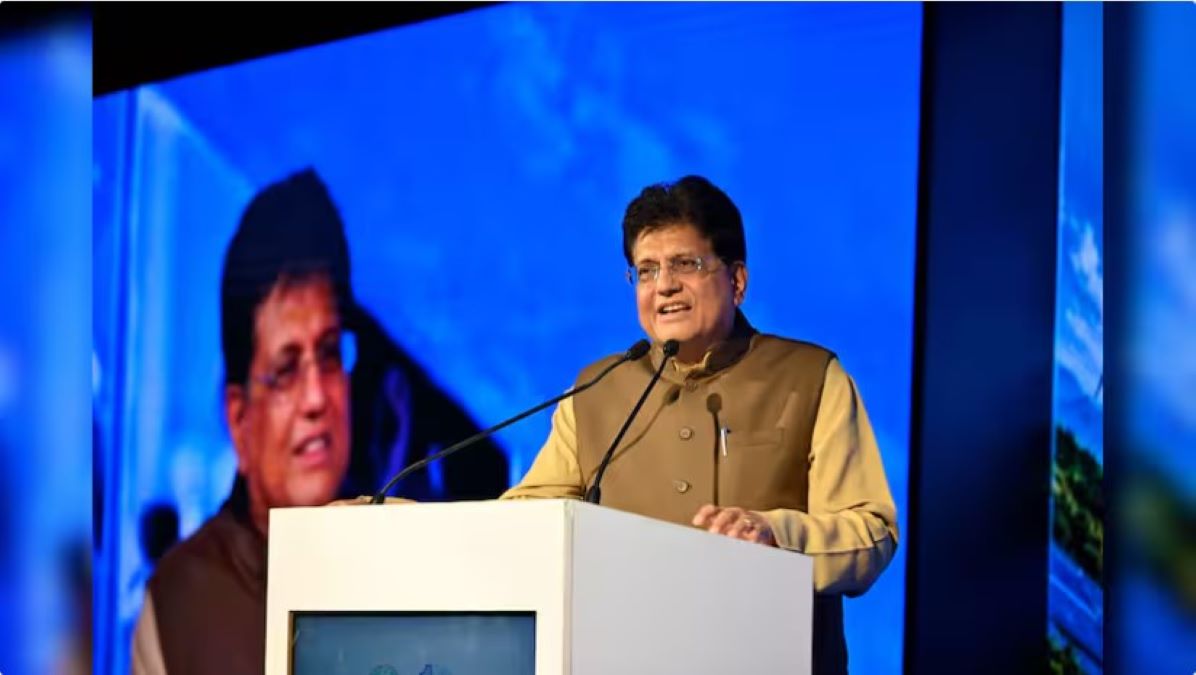
The proposed India-US trade deal is nearing completion, with the process and roadmap for finalising the agreement now taking shape, Commerce and Industry Minister Piyush Goyal said on Friday. His remarks signal progress in bilateral trade negotiations that have faced several challenges over the past few months.Addressing the India Debt Capital Market Summit 2026 virtually, Goyal said, "The US trade deal is close to culmination. The process and pathway, which was always something which held back finalising the deal, is now taking some shape."
India has disputed the US assessment of structural excess capacity in its manufacturing industries and maintained that trade-related concerns should be addressed through bilateral negotiations.On India's trade engagement with other major economies, Goyal said the proposed India-European Union free trade agreement (FTA) was expected to be signed later this year and could come into effect by March or April 2027.
#WATCH | Delhi: At the India Debt Capital Market Summit 2026, Union Minister of Commerce and Industry, Piyush Goyal, says, "... The EU FTA will hopefully be executed and signed later this year and come into effect by March or April next year. The US trade deal is close to culmination. The process and pathway, which was always something that held back finalising the deal, is now taking some shape..." (Source: Piyush Goyal/'X'
— ANI (@ANI) November 27, 2026
The minister also highlighted the significant expansion of India's free trade agreement network over the past few years. According to him, before 2014, India's trade agreements covered economies with a combined Gross Domestic Product (GDP) of around USD 10 trillion.Nine trade agreements finalised over the past four-and-a-half to five years, covering 38 developed countries, have added markets representing approximately USD 60 trillion in GDP. This has taken India's preferential market access to economies with a combined GDP of around USD 70 trillion.Goyal said another eight or nine agreements currently under negotiation could add nearly USD 15 trillion, taking India's total preferential market access to around USD 85 trillion out of the global GDP of USD 115-120 trillion."Almost every country in the world wants to do an FTA with India. We will add another $15 trillion. $85 trillion out of $115-120 trillion of global GDP will see India as a trusted partner; will see opportunities for India's businesses to take forward," he said.
Speaking about crude oil prices, Goyal said markets were sometimes too quick to reassess India's economic outlook based on relatively small movements in global oil prices. While higher crude prices affect the economy, he said the country's stronger economic fundamentals and improved external position provide greater resilience compared to previous decades.He pointed to India's larger foreign exchange reserves, higher remittance inflows, foreign direct investment (FDI) and expanding export base as factors that have strengthened its ability to manage external economic challenges.
Goyal said fluctuations of a few dollars in crude oil prices should not determine India's economic trajectory over the next two or three decades. He also highlighted that India's annual exports had crossed USD 700 billion, with the government targeting USD 1 trillion in goods and services exports during the current financial year.The minister also stressed the need to strengthen India's debt capital market and encouraged large companies, public sector undertakings and infrastructure developers to increasingly use the bond market as their primary source of financing, particularly for long-term capital expenditure.
He called for greater participation by insurance companies, pension and provident funds and mutual funds in long-duration debt instruments. He also urged investors to look beyond only AAA-rated issuers to broaden the country's long-term financing base.According to Goyal, India's financing ecosystem must match the scale and duration of investments expected in sectors such as semiconductor manufacturing, power grids, data centres and infrastructure over the coming decades.He further urged exporters and financial institutions to convert the market access created through FTAs into actual investment and manufacturing expansion by building capacity and preparing to serve newly accessible international markets.The remarks came amid renewed attention on India-US trade negotiations following the latest report by the US Trade Representative (USTR), which proposed 25 per cent tariffs on Indian imports, with a provision to cap them at 17 per cent if the two countries reach a bilateral trade agreement. The proposed arrangement could give Indian exporters an advantage over competitors from other Asian economies.
(Business Correspondent)


Related Posts
AI likely to generate $700 Billion for India's MSMEs: RBI Governor
India, UAE agree to boost defence ties in advanced technologies
India weakened Pak in 1971, did not help Bengalis: B'desh Speaker