 Newsinc24 Team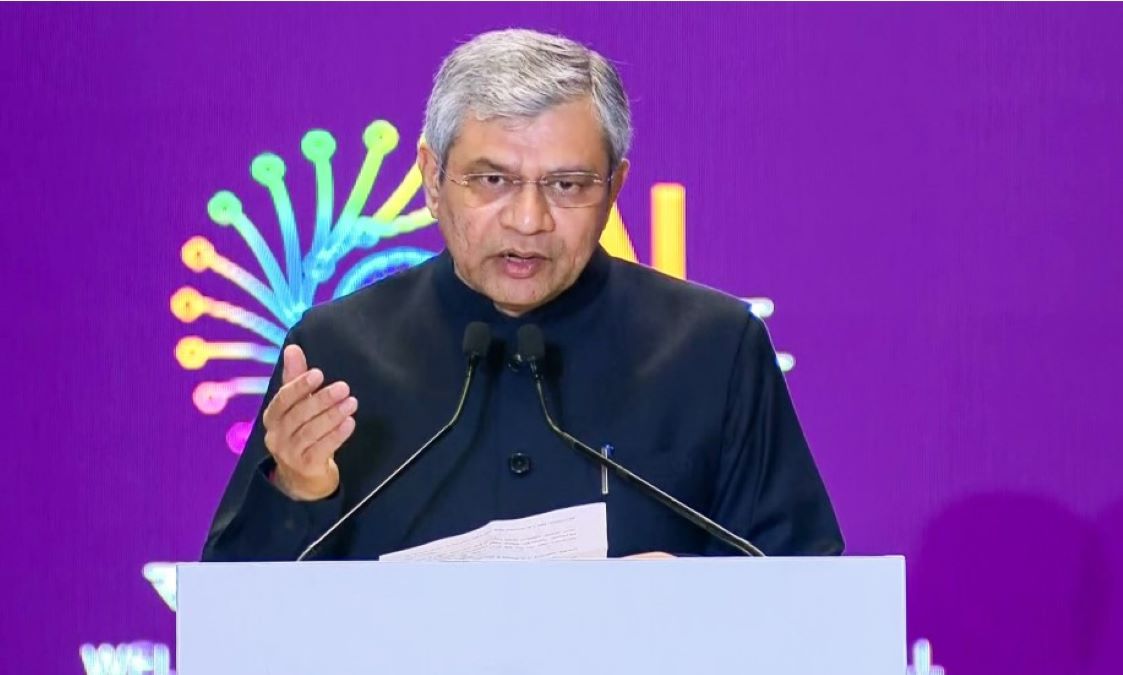
Union Minister Ashwini Vaishnaw said on Wednesday India is planning a long-term roadmap spanning 20 to 25 years to reduce critical technology dependencies and strengthen its ability to withstand global disruptions according to agency reports.
Emphasising that India aims to become a trusted partner in global technology supply chains rather than pursue complete self-sufficiency, Vaishnaw said the country was identifying strategic areas where excessive dependence on other nations could leave its economy and manufacturing sector vulnerable to geopolitical tensions and policy changes.“Things change, politics change, geopolitics play a big role, so we have to constantly calibrate our approach, and we in India are thinking at least 20 years ahead,” he said.
While speaking at the Bloomberg New Economy Forum, Vaishnaw outlined a phased planning framework, with short-term goals covering three to five years, medium-term targets spanning five to 15 years, and long-term objectives extending over 20 to 25 years. The approach focuses on building domestic capabilities in strategically important sectors while remaining integrated with global value chains.He said technology would continue to be a global industry, with supply chains distributed across several countries. India’s priority was to identify critical dependencies and strengthen resilience without compromising international partnerships.
Highlighting the semiconductor sector, the minister stressed the need to develop the entire ecosystem, including materials, chemicals, gases and substrate materials, alongside chip design and manufacturing. He said the second phase of India’s semiconductor programme placed greater emphasis on these essential inputs, adding that developing such capabilities required sustained investment and time.“Without ecosystem, no manufacturing effort will ever pay off,” he said.
#WATCH | Delhi: Bloomberg New Economy Forum | On the challenges emerging around the India Stack, Union Minister Ashwini Vaishnaw says, "We will have to look at the full spectrum available... In the semiconductor space, if we look at the entire spectrum from 2 nanometers to 90 nanometers, there are certain segments, such as 28 nanometers to 90 nanometers, known as legacy nodes, where there is huge concentration building up... Trust is going to be a very important part of the global value chain now. It is no longer just about cost. As cybersecurity becomes increasingly important, trust will be crucial. Countries like India are positioning themselves as trusted partners in the global value chain. In whichever segment we choose to operate, we want to be the trusted partner... Can we position ourselves as a country that is trusted in design, manufacturing, and the complete evaluation of the final product?... Without an ecosystem, no manufacturing effort will ever pay off... We are following a methodical cycle, moving step by step from the finished product to modules, components, materials, and capital equipment... We are following the same approach in semiconductors, railway systems, and defence systems. It is a very methodical way of moving forward." (Source: Bloomberg New Economy Forum via ANI)
— ANI (@ANI) October 14, 2026
Citing the mobile phone industry, Vaishnaw said India had gradually moved from assembling devices to manufacturing modules and components. The country was now producing several components for domestic requirements and had started exporting some of them, he added.The minister also called for higher research and development expenditure and better allocation of funds, particularly towards applied research that could strengthen domestic technological capabilities.Referring to the telecom sector, Vaishnaw cited the development of an end-to-end indigenous 4G telecom stack through collaboration between the government and private companies. The system was developed in three-and-a-half years and deployed on more than 100,000 towers, he said.
Vaishnaw also cautioned against potential global financial and technological disruptions, particularly those arising from artificial intelligence's impact on employment and mounting debt in advanced economies.He said the combined effects of AI-driven changes in employment patterns, especially in the services sector, and mounting debt pressures could create significant challenges in the coming years.
India was working to strengthen its financial, economic and technological resilience to prepare for such uncertainties, the minister said. He noted that the country's public debt-to-GDP ratio had declined from 61 per cent to 55 per cent over the past five years.The discussion also featured Cisco Chairman and Chief Executive Officer Chuck Robbins, who said India's approach of developing strategically important capabilities while partnering with trusted companies offered a practical path towards technological sovereignty.


Related Posts
India not a ‘middle power’ but a power in the middle: EAM Jaishankar
Rajnath Singh calls for stronger India-ASEAN defence cooperation
INDIA bloc, civil society unite to restore democracy