 Ira Singh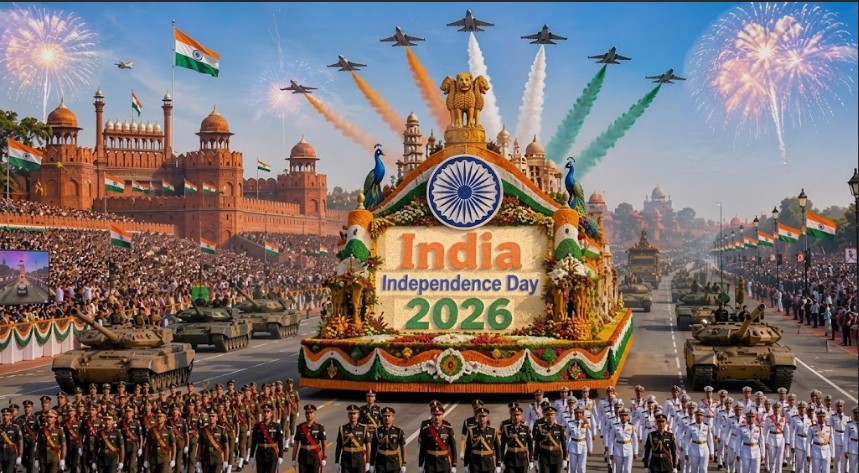
There is something timeless about the sight of the Tricolour rising against the morning sky on Independence Day.For a few moments, differences of language, geography and politics fade into the background. Schoolchildren stand in neat rows, bands strike patriotic tunes, veterans are honoured, cultural performances bring local traditions to life and citizens gather to celebrate a shared national identity.
On Saturday, as India marked its 80th Independence Day, this familiar yet powerful scene unfolded across the country. From the western plains of Gujarat to the northeastern landscape of Assam, Chief Ministers and senior leaders led state-level celebrations by hoisting the National Flag and paying tribute to the generations that fought for India's freedom.
Yet, this year's celebrations carried a deeper significance.
Eighty years is more than a numerical milestone. It is a moment of reflection. It offers an opportunity to look back at the extraordinary journey of a nation that emerged from colonial rule in 1947 and transformed itself into one of the world's fastest-growing economies and largest democracies.In state capitals and district headquarters, the Tricolour became more than a ceremonial symbol. It represented continuity between India's past and its aspirations for the future.
In Gujarat, Chief Minister Bhupendra Patel led the state-level celebrations in Amreli, where thousands gathered to witness the unfurling of the National Flag. The celebrations blended patriotic fervour with cultural pride, as ceremonial parades, traditional performances and public participation transformed the occasion into a community festival.
Amreli, Gujarat: On the occasion of India’s 80th Independence Day, Chief Minister Bhupendra Patel hoisted the national flag
— IANS (@ians_india) August 15, 2026
(Source: BJP Gujarat YouTube) pic.twitter.com/hxMywcPV0d
Adding to the celebrations in the state, Deputy Chief Minister Harsh Sanghavi hoisted the Tricolour in Vadodara, reinforcing the message that Independence Day belongs not only to governments and institutions but to every citizen.
#WATCH | Gujarat Deputy CM Harsh Sanghavi hoists the Tricolour in Vadodara on the occasion of 80th Independence Day. pic.twitter.com/IFwCCwo2ML
— ANI (@ANI) August 15, 2026
In Haryana, Chief Minister Nayab Singh Saini unfurled the National Flag at Government College in Hansi. The ceremony reflected the state's tribute to eight decades of freedom and the contributions of countless individuals who shaped modern India.
Hansi, Haryana: Chief Minister Nayab Singh Saini hoisted the national flag at a district-level Independence Day celebration at Government College in Hansi pic.twitter.com/fibxZo4qdk
— IANS (@ians_india) August 15, 2026
The spirit of celebration was equally visible in Chhattisgarh, where Chief Minister Vishnu Deo Sai hoisted the Tricolour at the Police Parade Ground in Raipur. Security personnel, government officials, and citizens came together to commemorate the historic occasion.
#WATCH | Chhattisgarh CM Vishnu Deo Sai hoists the Tricolour at Police Parade Ground in Raipur on the occasion of 80th Independence Day pic.twitter.com/WRSvZjimnH
— ANI (@ANI) August 15, 2026
In Odisha, Chief Minister Mohan Charan Majhi led the celebrations in Bhubaneswar, while in Assam, Chief Minister Himanta Biswa Sarma hoisted the National Flag at the Veterinary College in Guwahati, joining millions across the country in honouring the nation's democratic journey.
#WATCH | Odisha Chief Minister Mohan Charan Majhi hoists the Tricolour in Bhubaneswar on the occasion of the 80th Independence Day pic.twitter.com/n6jNkfDTk3
— ANI (@ANI) August 15, 2026
Although the venues differed, the message remained remarkably similar.
#WATCH | Assam CM Himanta Biswa Sarma hoists the National Flag at Veterinary College in Guwahati on the 80th Independence Day pic.twitter.com/tecwmqpOn8
— ANI (@ANI) August 15, 2026
Across states, schools organized patriotic programmes, colleges held cultural events and public institutions paid tribute to freedom fighters whose sacrifices made India's independence possible. Security forces participated in ceremonial parades, while young students presented songs and performances celebrating the country's rich cultural heritage.
The nationwide celebrations followed the main Independence Day ceremony at the Red Fort in New Delhi, where Prime Minister Narendra Modi unfurled the National Flag and addressed the nation.This year's celebrations also coincided with another significant milestone—the 150th anniversary of *Vande Mataram*. The rendering of the National Song during the Red Fort ceremony added an emotional dimension to the occasion, connecting contemporary India with one of the most powerful symbols of the freedom movement.
Perhaps the most remarkable aspect of Independence Day in India is its ability to unite diversity without diminishing it.
Bhopal, Madhya Pradesh: Chief Minister Mohan Yadav hoisted the national flag at Lal Parade Ground on the occasion of 80th Independence Day pic.twitter.com/zu3OwRHllP
— IANS (@ians_india) August 15, 2026
Every state celebrates the occasion in its own way. Gujarat showcases its cultural traditions, Assam highlights its unique heritage, Odisha honours its historical legacy and Haryana reflects its strong connection with the armed forces and agriculture. Yet, despite these regional identities, the Tricolour remains a common thread that binds the country together.
Bikaner, Rajasthan: Chief Minister Bhajan Lal Sharma hoisted the national flag on the occasion of the 80th Independence Day at Dr. Karni Singh Stadium
— IANS (@ians_india) August 15, 2026
(Source: DIPR Rajasthan) pic.twitter.com/250ikdLiI2
The story of India's 80th Independence Day is not confined to official ceremonies or speeches.It belongs equally to the child proudly holding a paper flag, the teacher narrating stories of the freedom movement, the police officer standing at attention during the parade and the countless citizens who continue to believe in the ideals that shaped the Republic.The celebrations across the country served as a reminder that independence is not merely a historical achievement preserved in textbooks. It is a continuing responsibility.The freedom fighters who envisioned an independent India left behind not only a nation but also a set of values—democracy, equality, unity and justice. Preserving these values requires participation from every generation.
As the Tricolour fluttered over government buildings, educational institutions and public squares across the country, it carried a message that remains as relevant today as it was in 1947: India's greatest strength lies in its unity amid extraordinary diversity.Eighty years after independence, the nation continues to write its story—one defined by resilience, ambition and an unwavering belief in a better future.
(Asstt.Editor)

Related Posts
Apple Pay launches in India with Axis Bank card support
ECI drops SIR declaration Form 6 in states with completed revision
India, Qatar agree to accelerate FTA, bilateral investment treaty talks