 Newsinc24 Team
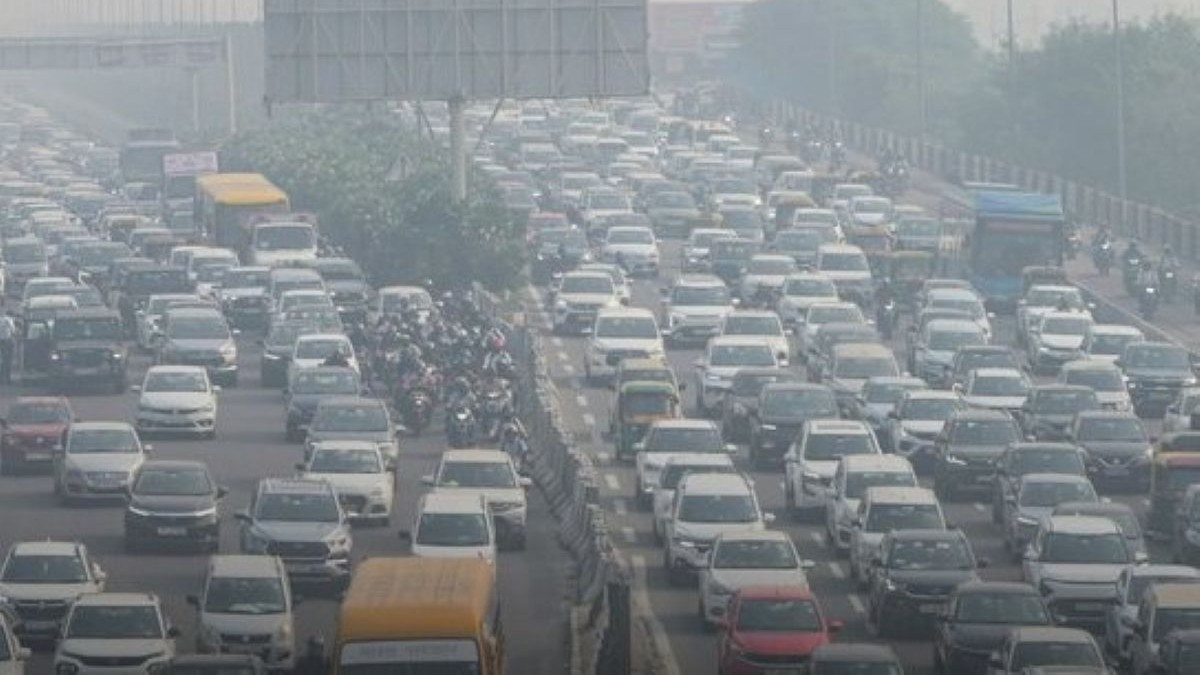
The Commission for Air Quality Management (CAQM) Sub-Committee on Friday after noon enforced Stage III of the Graded Response Action Plan (GRAP) across Delhi-NCR. Ahead of Deepawali, air quality in Delhi and the National Capital Region has dropped.This comes after Stage-II restrictions were imposed in Delhi and the NCR region on November 02, when AQI reached 382. GRAP, which is implemented in Delhi-NCR, divides air quality into four categories: “poor” (AQI 201-300), “very poor” (AQI 301-400), “severe” (AQI 401-450) and “severe plus” (AQI above 450).
GRAP-III restrictions include a complete ban on non-essential construction and demolition work, such as earthwork, piling, trenching and open-air operations of Ready-Mix Concrete (RMC) plants.The activities prohibited under Grap Stage III also include excavation, filling, boring, drilling, piling, demolition, brickwork, masonry, road construction and major repairs. Activities such as painting, polishing, varnishing, major welding and gas-cutting, and cutting or grinding tiles and stones have also been prohibited.
GRAP-3 also imposes restrictions on the movement of older vehicles. BS-III petrol and BS-IV diesel or older light motor vehicles (LMVs), including four-wheelers, will not be allowed to ply in Delhi and the high-vehicle-density districts of Gurugram, Faridabad, Sonipat, Ghaziabad and Gautam Buddha Nagar. Vehicles specifically adapted for persons with disabilities and used for their personal travel are exempted. Diesel-operated BS-IV and older medium goods vehicles and light goods vehicles (LGVs) registered outside Delhi will not be permitted to enter the Capital.
The restrictions also extend to schools and offices. Schools up to Class 5 in Delhi and the districts of Gurugram, Faridabad, Ghaziabad and Gautam Buddha Nagar will mandatorily conduct classes in hybrid mode, allowing students to attend either physically or online wherever the latter option is feasible. The choice of online classes will rest with students and their guardians. Other NCR districts may also consider adopting hybrid classes.
Meanwhile, the Supreme Court, has said that vehicular emission is a major reason for rise in air pollution in Delhi-NCR and asks authorities on measures taken to contain pollution. The Apex Court has said that Diwali celebrations should be accompanied by public awareness about air pollution, noting that pollution levels are rising. During the hearing on air pollution in Delhi-NCR, the court asked the Centre how public awareness could be increased more effectively. Additional Solicitor General Aishwarya Bhati said the government would intensify its awareness campaigns.
The court observed that repeatedly issuing judicial orders could lead to more violations, as people may develop a mindset that more court orders mean more violations. It said it would examine the documents submitted by the Centre and may seek compliance reports and fresh updates from the states. The matter will be heard again immediately after the Diwali holidays.



Related Posts
Delhi: 2 dead as 3-storey building collapses in Chawri Bazaar
CBI secures extradition of Delhi sexual assault case accused from UAE
Delhi: ACP Manasvi Vashishta suspended over personnel's protest