 Newsinc24 Team
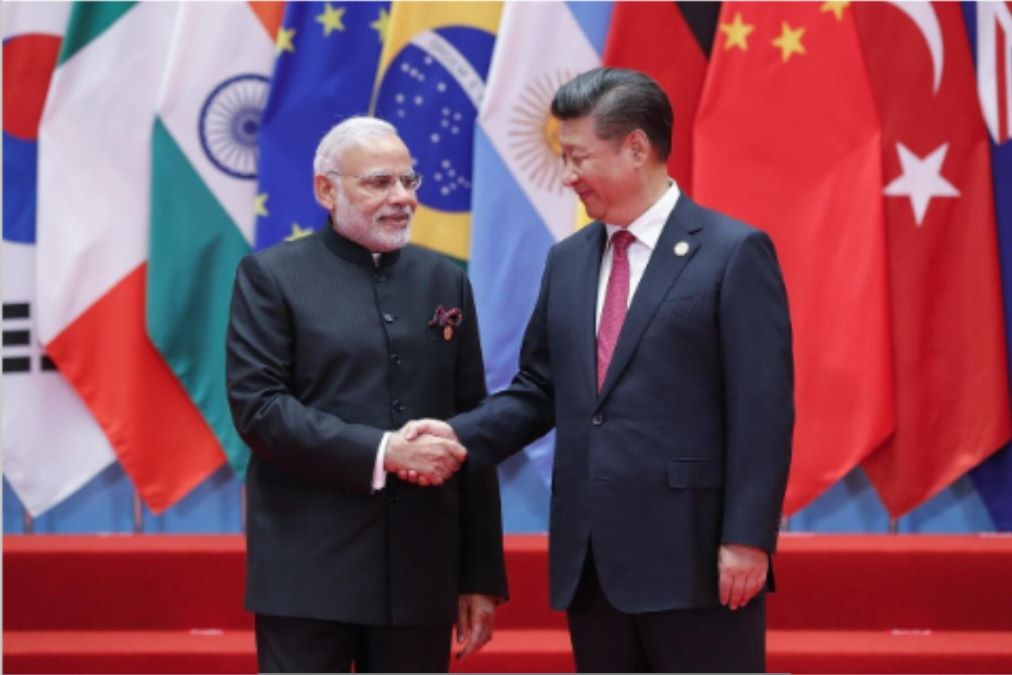
India and China are gradually moving towards improving bilateral ties after years of tensions over border disputes and security concerns. A new study by the Asia Society Policy Institute’s Center for China Analysis examines the domestic and economic factors driving this cautious rapprochement, arguing that the shift began before US President Donald Trump returned to office in 2025.The paper, titled What Is Driving the Pragmatic Re-engagement in the Sino-Indian Relationship?, has been co-authored by Brian Wong, Non-Resident Honorary Fellow at the Center for China Analysis, and Aravind Yelery, Associate Professor at Jawaharlal Nehru University.
The authors argue that economic interests and domestic priorities in both countries are the main drivers of renewed engagement, rather than US policy alone. They point to India's dependence on Chinese industrial components, electronics, pharmaceutical ingredients and renewable energy supplies as important reasons for pursuing selective cooperation.
The study proposes three key pillars for strengthening bilateral relations, focusing on value-chain integration, supply-chain cooperation and people-to-people connectivity.
Pillar 1: Consolidating Value Chain Integration in Electronics, Electric Vehicles, and Battery Technology – The Low-Hanging Fruits
The authors identify electronics, electric vehicles (EVs) and battery technology as the most immediate areas for cooperation, given India's growing manufacturing ambitions and China's technological advantage.India's electronics manufacturing sector has expanded from $37 billion in 2015-16 to $115 billion in 2023-24. However, the country continues to depend on imports for critical components such as printed circuit boards, displays, batteries and camera modules. The study argues that greater participation by Chinese companies could help India move beyond assembling finished products towards developing a stronger domestic component-manufacturing ecosystem.It cites partnerships involving Dixon Technologies and Chinese companies, including collaborations in electronics components and mobile phone manufacturing, as examples of how joint ventures can facilitate technology transfers and local production while allowing Indian firms to retain majority ownership.
The same approach could be extended to EVs and batteries. With India targeting EVs to account for around one-third of total vehicle sales by 2030, the country could benefit from China's lead in battery technology and charging infrastructure. The study refers to arrangements such as Uno Minda's technical collaboration with China's Suzhou Inovance and Tata Motors' battery-sourcing discussions as examples of emerging cooperation.The authors recommend that both governments establish clearer frameworks for such partnerships, linking market access and investment incentives to local manufacturing, technology transfers, domestic sourcing and Indian management control.They also suggest setting up a bilateral Board of Trade involving representatives from the two countries' foreign and commerce ministries. The proposed body could identify opportunities to increase Chinese imports from India while facilitating market access for Chinese companies in selected Indian manufacturing sectors. The authors stress that policymakers should distinguish between commercially beneficial technologies and those that carry unacceptable strategic risks.
Pillar 2: Expanding Supply Chain Alignment to Pharmaceuticals, Fertilizers, Green Technologies, and Beyond – The New Fruits of Synergy
The second pillar focuses on sectors where the two economies have significant supply-chain links but where cooperation requires greater safeguards, particularly pharmaceuticals, fertilisers and green technologies.In pharmaceuticals, the study highlights India's substantial dependence on China for active pharmaceutical ingredients (APIs) and intermediate drug products. China's share of India's API import bill stood at approximately 74% in FY2024-25, with dependence exceeding 90% in certain antibiotic categories.
The authors argue that India needs to strengthen domestic production while seeking better market access for its pharmaceutical companies in China. They point to the government's production-linked incentive scheme for bulk drugs, backed by an outlay of Rs 6,940 crore, as an effort to build domestic capacity. Greater cooperation could help Indian manufacturers access essential inputs while enabling Chinese consumers to benefit from India's competitive generic medicines industry.Fertilisers represent another critical area. The study notes that disruptions in Chinese supplies have exposed vulnerabilities in India's agricultural supply chain. It recommends more predictable supply arrangements, including standing export guarantees from China for selected fertiliser inputs. At the same time, India should continue diversifying its sources of supply and expanding domestic production to reduce exposure to external disruptions.
In green technologies, the authors highlight the complementary strengths of both countries. China has a dominant position in upstream solar manufacturing, particularly polysilicon and ingot-wafer production, while India is expanding its renewable energy capacity. India has set a target of achieving 500 GW of non-fossil fuel capacity by 2030 but remains dependent on China for several upstream components, including solar cells and battery technology.The study suggests that bringing some of these manufacturing capacities to India through carefully regulated Chinese investments could strengthen domestic production and reduce import dependence. However, it calls for stricter scrutiny of strategically sensitive technologies and emphasises the importance of localisation and diversification.
Pillar 3: Fostering Robust People-to-People Connectivity via Civilian Travel, Tourism, and Education – The Human Connection
The third pillar emphasises that economic cooperation must be supported by stronger people-to-people engagement. According to the authors, greater interaction between citizens, students, businesses and cultural institutions can help reduce mistrust and improve understanding between the two countries.The study points to the resumption of direct commercial flights and the reopening of tourist visa arrangements as important steps towards restoring connectivity. It also highlights the revival of the Kailash-Mansarovar pilgrimage and efforts by Indian institutions, including Jawaharlal Nehru University and Visva-Bharati's Cheena Bhavana, to restore academic exchanges with Chinese universities.
The authors recommend simplifying visa procedures for students, researchers, conference participants and tourists to encourage greater movement between the two countries. They also identify cultural cooperation as an opportunity, referring to preliminary discussions on a possible joint UNESCO nomination centred on the legacy of Chinese Buddhist scholar Xuanzang.They argue that stronger links among universities, businesses, pilgrims, professional associations and cultural organisations can create long-term constituencies for stable bilateral relations. Unlike trade and border negotiations, people-to-people engagement can continue to build trust even when diplomatic differences persist.
A Gradual Approach to Selective Integration
The authors emphasise that the future of India-China relations will depend on the ability of both countries to manage strategic differences while identifying areas of mutual economic interest.They recommend a gradual approach to integration, beginning with sectors where regulatory frameworks and commercial partnerships are already in place before extending cooperation to more sensitive supply chains. The approach, described as selective integration, should be guided by reciprocity, localisation, diversification and meaningful technology transfers.The authors stress that India should allow Chinese participation in sectors where it can support domestic industrial development, while retaining investment screening and safeguards against excessive dependence. China, in turn, needs to demonstrate greater commitment to reliable supplies and improved market access for Indian businesses.They asserted that carefully managed economic interdependence offers a more practical path than either unrestricted engagement or complete economic separation. Such an approach,they suggest, could advance the economic interests of both countries while helping reduce the risk of conflict between the two major Asian powers. 



Related Posts
Govt relaxes passport, visa norms for select foreigners residing in India
India announces 500-million-dollar credit line for Guyana
Manufacturing corporate sector GVA grows 9.28% in FY25: ASI