 Newsinc24 Team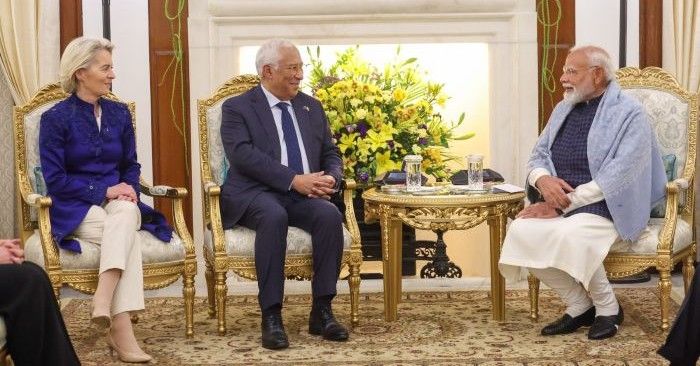
Asia Society Policy Institute (ASPI) experts comment on the just announced EU-India free trade agreement (FTA).
Wendy Cutler — Senior Vice President, ASPI and Former Acting Deputy U.S. Trade Representative
The EU and India should be congratulated for concluding their FTA, which has been under negotiation for close to twenty years. With its product exclusions from tariff cuts, long tariff staging periods, and absence of investment provisions, the just announced FTA is “lighter” than many other FTAs.
But criticizing its shortcomings misses the point. For India, it adds to a growing list of FTAs recently concluded with New Zealand, the UK and Oman, signaling a new interest in finding new markets as it opens its own. For the EU, following the signing of its FTA with Mercosur countries last week, it demonstrates its trade diversification strategy is well underway.
Both also have Washington to thank. After all, U.S. tariff hikes and threats helped to spur Brussels and Delhi to take a fresh look at the outstanding issues, overcome their differences and forge an agreement.
Tariff threats from Washington are propelling all sorts of new partnerships without U.S. participation, with more expected this year.
This deal still has some serious administrative hoops to go through, particularly in Europe before it becomes a reality. Let’s hope it doesn’t follow the path of the EU-Mercosur agreement which now has been subjected to additional legal review delaying its ratification.
Akshay Mathur — Senior Director, ASPI New Delhi
The conclusion of the EU-India FTA negotiations is a strong signal from India of its strategic interest in cross border trade and its belief in partnering with like-minded market economies.
The FTA will also endorse India's macroeconomic strength, possibly having a direct and immediate positive affect on exchange rate, credit worthiness, and as a promising destination of foreign investments, especially compared to China or Vietnam in Asia.
That the opportunity of 99% of Indian exports to get preferential entry into the EU, will be a welcome alternative to Indian industry, particularly labor-intensive sectors such as textile, anxious about their exports to the United States.
The FTA should be seen in conjunction with the agreement on mobility which will enable students, workers, and professionals both ways, and complemented by the defense and security agreement, which will open opportunities for defense-industrial ventures in a tough geopolitical environment.
It's no surprise that both India and EU have avoided commitments on sensitive sectors, such as dairy, cereal, and soymeal for India, and CBAM for EU, where work will be required to build inter-operability with India's carbon market.

Related Posts
India-US trade talks hits 'plateau', Sitharaman hails FTA with EU
PM Modi, Swiss Prez Parmelin hold talks on India-EFTA trade ties
India’s Highways Ministry holds two-day Chintan Shivir in Gujarat