 Newsinc24 Team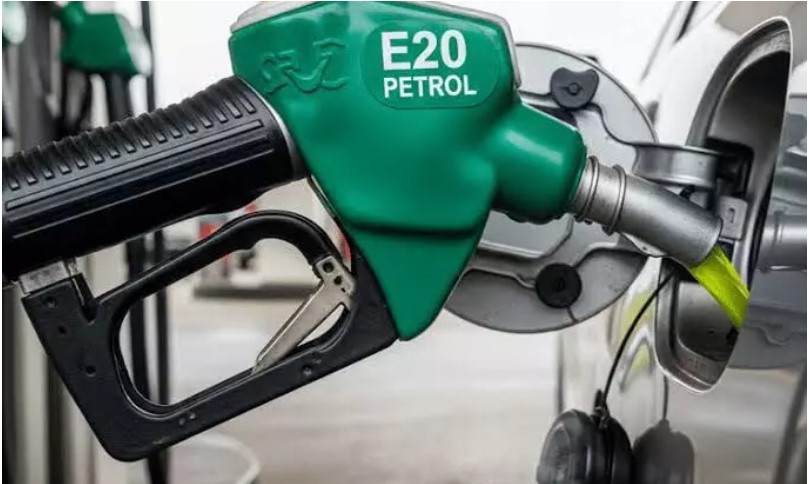
Ethanol blending in petrol has helped India save more than Rs 1.97 lakh crore in foreign exchange since 2014-15 by reducing crude oil imports, the Centre informed Parliament on Monday.
According to agency reports, replying to a question in Parliament, Minister of State for Petroleum and Natural Gas Suresh Gopi said ethanol blending has substituted nearly 316 lakh metric tonnes of crude oil over the past decade, strengthening the country's energy security while reducing dependence on imported fossil fuels.The minister said the ethanol blending programme has also generated over Rs 1.66 lakh crore in additional income for Indian farmers and helped cut 952 lakh metric tonnes of carbon emissions during the period.
According to the government, ethanol blending in petrol has steadily increased from 1.53 per cent in the 2013-14 ethanol supply year to 8.1 per cent in 2020-21, 10 per cent in 2021-22, 12 per cent in 2022-23, 14.6 per cent in 2023-24, and 19.2 per cent in 2024-25. In the current ethanol supply year (November 2025 to June 2026), blending has reached 20 per cent, achieving the target five years ahead of the original schedule.The ethanol supply year runs from November 1 to October 31.However, Gopi clarified that no decision has been taken to increase ethanol blending beyond 20 per cent. The E20 fuel consists of 20 per cent ethanol and 80 per cent petrol.
STORY | No decision yet on petrol blending beyond 20% ethanol, says minister
— Press Trust of India (@PTI_News) July 20, 2026
The government has not yet decided to raise ethanol blending in petrol beyond the current 20 per cent level, Minister of State for Petroleum and Natural Gas Suresh Gopi told the Rajya Sabha on Monday,… pic.twitter.com/VJFoCCtyRI
The government described the achievement as the result of more than two decades of policy development, stakeholder consultations, scientific evaluation and capacity creation.
Responding to concerns over the impact of E20 fuel on vehicles, the minister said the government has not received any widespread or substantiated complaints from vehicle manufacturers, automobile associations or consumer organisations regarding engine failure, fuel pump issues, corrosion, water contamination or other performance problems linked to E20 fuel.He added that concerns raised in the media and on social media have been taken note of and scientifically examined by the government.
While responding to an unstarred question raised by the CPI(M) member of parliament, John Brittas, regarding the effect of ethanol blended petrol on the performance of vehicles, Gopi stated that the government had found out that there were “no widespread issues” concerning ethanol blending through scientific validation, field tests, information from manufacturers and experience of crores of vehicles.The Government has, however, taken note of certain concerns raised in media and social media, which have been scientifically examined, he added.Meanwhile, Brittas criticised the minister for not addressing the core issues. By repeatedly qualifying every denial with the adjective "widespread", the Government carefully avoids addressing the real issue whether genuine instances of engine damage, water contamination or vehicle performance problems have occurred at all, Brittas said in a statement. The absence of "widespread" failures cannot be equated with the absence of failures. The Government has effectively shifted the goalpost from answering whether problems exist to merely claiming that they are not "widespread", he added.











Related Items
India-China ties must be guided by ‘Three Mutuals’: MEA
Tamil Nadu CM Vijay's London event cancelled over safety concerns
Six states sign agreement for rejuvenation of Yamuna River