 Uday Kumar Varma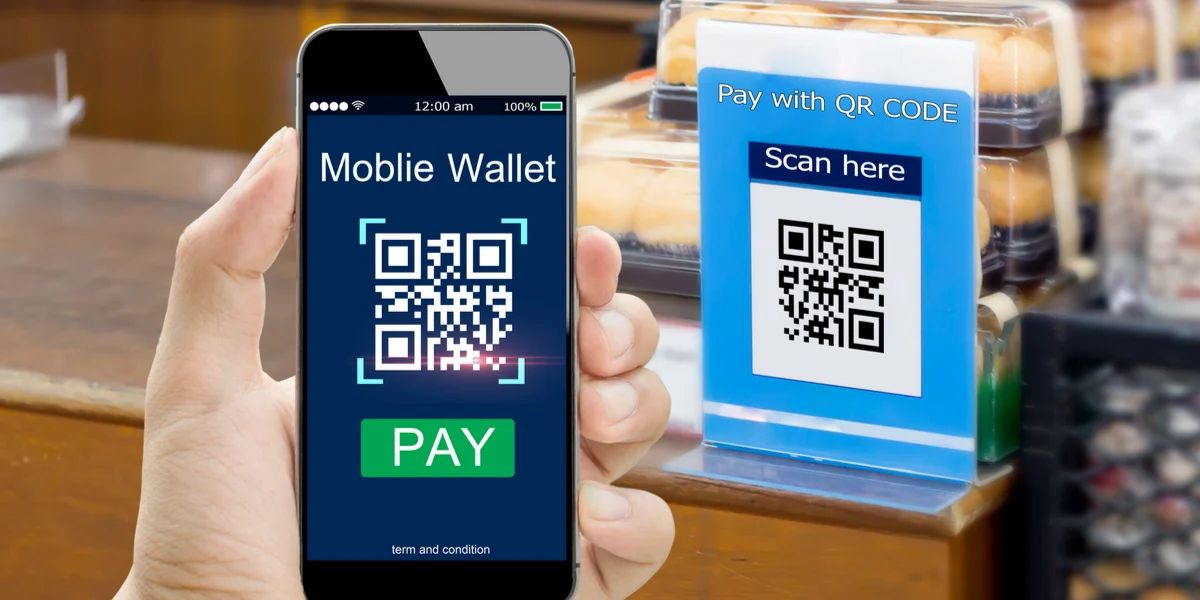
Part III: From the Tea Stall to the World
The story of UPI would be incomplete if it ended with the QR code at the neighbourhood shop. What began as an attempt to make domestic payments simpler has now acquired a larger significance. India is increasingly exploring whether the architecture that transformed payments at home can also become part of its economic engagement with the world.
That possibility would have seemed fanciful when UPI was launched in 2016. Today it is no longer so.
When a domestic innovation travels
UPI has already begun to cross India's borders. Indian travellers can use UPI at selected international merchant locations, directly from their Indian bank accounts, and NPCI has been steadily expanding international acceptance. The UPI One World initiative has gone a step further, allowing foreign visitors to India to make UPI payments without an Indian mobile number or bank account. At the India AI Impact Summit earlier this year, the facility was extended to delegates from more than 40 countries.
These may still be relatively small beginnings. But they demonstrate something important: a payment system designed for India's domestic needs can travel across borders.
The challenge, however, is considerably greater than putting a UPI QR code in another country.
A domestic payment is essentially a transaction within one regulatory and banking framework. A cross-border payment involves two currencies, two financial systems, different regulations, different settlement arrangements and questions of data, cybersecurity and foreign-exchange management. What looks like a simple scan to the consumer may involve a complicated chain of institutions behind the scenes.
The technical problem is therefore solvable, but the institutional problem is harder.
The BRICS opportunity
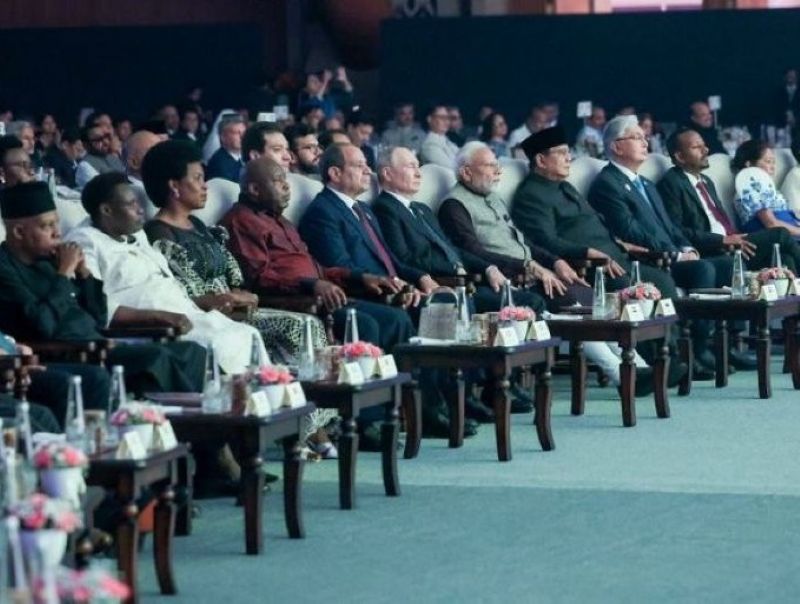
This is where the recent BRICS Summit in New Delhi becomes particularly interesting.
The New Delhi Declaration did not endorse a common BRICS currency or announce UPI as a common payment system. Instead, it acknowledged the work of the BRICS Payment Task Force on efficient cross-border payments, including the study of interoperability among payment and messaging systems and the promotion of trade settlements and investment in local currencies.
That may sound less dramatic than some of the earlier speculation surrounding BRICS. In reality, it may be more useful.
Countries do not have to surrender their currencies or banking systems in order to make payments between them faster and cheaper. If their payment systems can become interoperable, a Brazilian, Indian or other BRICS consumer or business could eventually use a familiar domestic payment interface while the underlying systems handle the complexities of settlement.
India's experience gives it something valuable to bring to this conversation.
The achievement of UPI is not simply that Indians can pay digitally. It is that India has demonstrated how a common, interoperable payment architecture can operate at extraordinary scale. The New Delhi Declaration's wider emphasis on digital public infrastructure is therefore significant. BRICS has agreed to pursue a repository of digital public infrastructure and cooperation around resilient, secure and interoperable digital systems.
India's digital experience is thus becoming part of a larger conversation about how developing countries can build technological infrastructure suited to their own needs.
Digital infrastructure as economic diplomacy
There is perhaps a larger change taking place here.
For decades, India's economic engagement with the world was discussed mainly in terms of goods, services, investment, technology and skilled people. We now have another category to add: digital infrastructure.
India has increasingly demonstrated that digital public infrastructure need not be confined to the developed world or built exclusively by large private corporations. Aadhaar, UPI and the broader India Stack have shown that public digital platforms can be designed for population-scale use.
This is potentially an important element of India's soft power—not soft power in the cultural sense in which the term is usually used, but in the more practical sense of offering another country a technological possibility that it can adapt to its own circumstances.
There is also an economic opportunity. Faster and cheaper cross-border payments can matter to tourism, remittances, small businesses and eventually trade. For an Indian tourist, the ability to pay easily in another country is a convenience. For an Indian MSME selling to an overseas customer, easier settlement could be something more consequential.
The same infrastructure that made a ₹50 payment to a local merchant effortless could, in time, make a cross-border transaction between two small businesses considerably less cumbersome.
The American question
The current debate over MDR has acquired another dimension with criticism from the United States and suggestions in India that foreign payment interests may be affected by the new arrangement. The Indian government has rejected the suggestion that the MDR decision was the result of US pressure and has said that the new framework does not give international credit-card networks an advantage over RuPay on UPI.
Whatever one's view of that particular controversy, it is worth noticing what the very existence of such a debate tells us.
Payment systems are no longer merely pieces of financial plumbing. They involve technology, data, commercial interests and, increasingly, questions of economic sovereignty. A country that has built a payment system used on a gigantic scale naturally acquires an interest in how that system evolves and who participates in it.
India should therefore be neither defensive nor triumphalist about UPI's international potential. The objective should be interoperability, openness and consumer benefit, while retaining the ability to protect the integrity of the system.
Beyond the QR code
There is one final reason why the sustainability question discussed in Part II of this essay matters.
UPI is unlikely to remain what it is today.
It is already moving beyond simple merchant payments into credit, recurring transactions and international use. The next generation could bring payments even closer to the background. Artificial intelligence may eventually enable authorised digital agents to make routine payments on behalf of individuals or businesses, subject to rules and limits specified by their users.
The QR code may then become less visible, perhaps even disappear from many transactions.
But the infrastructure beneath it will remain.
That is why the present debate about MDR, though seemingly narrow, deserves to be seen in a much wider context. A system that processes billions of transactions cannot depend indefinitely on the assumption that infrastructure has no cost. Nor can India afford to weaken an infrastructure that may become increasingly important to its domestic economy and its international ambitions.
The answer is not to burden the ordinary user or discourage small-value digital payments. The achievement of UPI lies precisely in making digital transactions accessible to everyone. But sustainability, innovation and security have to be financed somehow. A mature digital economy must eventually learn to distinguish between making access free and pretending that the underlying infrastructure is free.
What India has built
There is something quietly remarkable about the journey.
A decade ago, India was trying to persuade millions of people to move beyond cash. Today, UPI handles more than 24 billion transactions in a single month. It has become so familiar that many of us no longer think of it as technology at all.
That may be the greatest measure of its success.
The QR code on a tea stall does not look like a technological revolution. It looks like a QR code. Yet behind it stands a system built by Indian institutions, banks, technology companies and millions of users who collectively turned an innovation into a habit.
And now the world is beginning to look at it.
The ultimate significance of UPI may therefore not lie in the number of transactions it processes, or even in the convenience it has brought to everyday payments. It may lie in the possibility that India has demonstrated something larger: that a country of more than a billion people can build digital public infrastructure at population scale, make it accessible to ordinary citizens and gradually take its experience beyond its own borders.
The little QR code may have changed the way India pays.
Its more interesting journey, however, may just be beginning.
(Uday Kumar Varma is an IAS officer. Retired as Secretary, Ministry of Information & Broadcasting)









Related Items
India stresses trade facilitation, supply chains at 25th SCO meeting
Moody’s raises India’s FY27 GDP growth forecast to 7%
India welcomes New Zealand legislation to implement bilateral FTA