 Newsinc24 Team
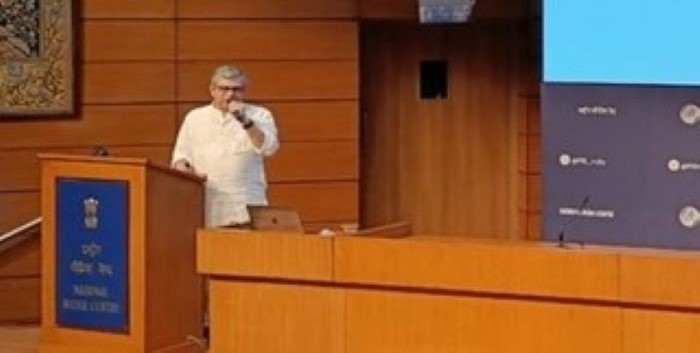
Union Cabinet on Thursday approved the PM Rashtriya Krishi Vikas Yojana, PM-RKVY to promote sustainable agriculture and Krishonnati Yojana to achieve food security for self-sufficiency with the combined total proposed expenditure of one lakh crore rupees. Briefing media in New Delhi, Union Minister Ashwini Vaishnaw said the decisions taken in the cabinet meeting relate to increasing farmers’ income and ensuring food security for middle-class people. He said the two pillars for this are PM Rashtra Krishi Vikas Yojana’ and ‘Krishonnati Yojana’. He expressed confidence that the income of farmers will rise after these measures.
Cabinet also gave its nod to Chennai Metro Rail Project Phase II. The second phase will comprise 128 stations with new lines of 118.9 kilometres. The approved corridors will connect North to South and East to the West of Chennai.

Cabinet has also approved conferring the status of Classical Language to Marathi, Pali, Prakrit, Assamese and Bengali languages. Union Minister Ashwini Vaishnaw has termed it as a historical decision saying it goes with the Narendra Modi government’s philosophy of taking pride in the country’s heritage. To support these Classical Languages, the Ministry of Education will provide benefits such as National Awards for Classical Languages, the establishment of Chairs in universities, and the creation of Centres dedicated to the promotion of these languages. The major benefit of conferring classical language status to these tongues also includes employment generation. The inclusion of languages as Classical Language will create significant employment opportunities, particularly in academic and research fields. Moreover, the preservation, documentation, and digitisation of ancient texts of these languages will generate jobs in archiving, translation, publishing, and digital media.
Cabinet has approved the signing of a ‘Letter of Intent’, enabling India to join the ‘Energy Efficiency Hub’. India will join the International Energy Efficiency Hub, a global platform dedicated to fostering collaboration and promoting energy efficiency worldwide. This move solidifies India’s commitment to sustainable development and aligns with its efforts to reduce greenhouse gas emissions.
The Union Cabinet on Thursday approved modifications to the Productivity-Linked Reward (PLR) Scheme for major ports and dock labour board employees/workers. The modified PLR scheme applicable from 2020-21 to 2025-26 will benefit about 20,704 employees of Major Port Authorities and Dock Labour Board Employees/workers, the Ministry of Ports, Shipping and Waterways said in a statement.The total financial implication for the entire period will be about Rs 200 crore.
The Union Cabinet chaired by PM Modi also approved the National Mission on Edible Oils - Oilseeds (NMEO-Oilseeds), an initiative aimed at boosting domestic oilseed production and achieving self-reliance in edible oils, according to an official statement.The mission will be implemented over a seven-year period, from 2024-25 to 2030-31, with a financial outlay of Rs 10,103 crores, it said . The newly approved NMEO-Oilseeds will focus on enhancing the production of key primary oilseed crops such as Rapeseed-Mustard, Groundnut, Soybean, Sunflower,and Sesamum, as well as increasing collection and extraction efficiency from secondary sources like Cottonseed, Rice Bran, and Tree Borne Oils.The mission aims to increase primary oilseed production from 39 million tonnes (2022-23) to 69.7 million tonnes by 2030-31.

Related Posts
TN cuts ATF VAT at Chennai Airport to 16%; Goa reduces rate to 7%
J-K Cabinet expansion, reshuffle to take place next week: CM
India's internal security landscape has changed irrevocably: Home Secy