 Newsinc24 Team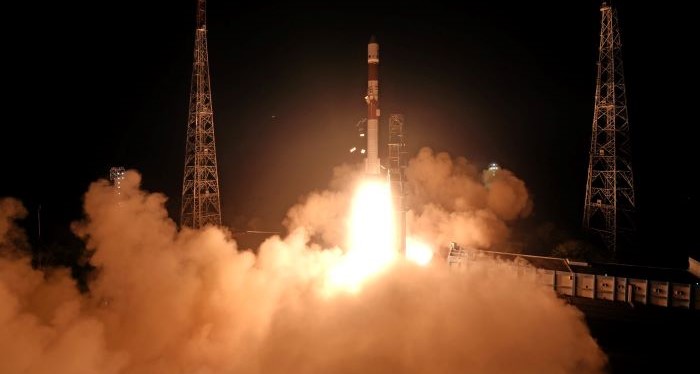
The Indian Space Research Organisation (ISRO) successfully launched the ambitious Space Docking Experiment (SpaDeX) mission on Monday night along with 24 experiments packed in with the launch vehicle. The Polar Satellite Launch Vehicle with the two, 220 kilogram each, satellites lifted off from the Satish Dhawan Space Centre in Sriharikota in a text-book launch. Earlier, the lift-off was delayed by just two minutes to avoid collision with other satellites in the same orbit above Earth. The two spacecraft will now be directed towards achieving space docking in the next 10 days likely on January 7. SpaDeX aims to demonstrate advanced in-space docking technology, a crucial capability for future missions, including lunar expeditions and the Bharatiya Antariksh Station (BAS). The two spacecraft—SDX01 (the Chaser) and SDX02 (the Target) are set to be deployed into low Earth orbit with a small relative velocity between them. Managed by the ISRO Telemetry, Tracking and Command Network (ISTRAC), initially, they will drift apart to a distance of approximately 10-15 kilometers. Once this distance is reached, the drift will be arrested, and onboard systems will undergo thorough health checks. After confirming system functionality, the Chaser will begin its approach toward the Target satellite in carefully controlled increments. The proximity with the target will be reduced stepwise: first to about 5 kilometers, then to 1.5 kilometers, and ultimately leading to docking.
This meticulous approach ensures that both satellites are launched separately but come together in a controlled manner. Each satellite is equipped with advanced payloads, including an imaging system and a radiation monitoring device designed to measure electron and proton radiation levels in space. This data is essential for future human spaceflight missions. The SpaDeX mission represents a critical step in advancing India’s capabilities in orbital docking. Successful completion of this mission will enhance ISRO’s ability to conduct complex operations in space and lay the groundwork for future interplanetary missions.
Watch: ISRO launched PSLV-C60, carrying SpaDeX and other innovative payloads from Sriharikota, Andhra Pradesh pic.twitter.com/iwnav3bGBu
— IANS (@ians_india) December 30, 2024
This was the 99th rocket launch from the Satish Dhawan Centre of Sriharikota and it had a glorious lift off, placing SpaDeX satellites in the best orbit.The next steps -- docking and the 24 experiments -- will be conducted over the next few weeks.With this, ISRO, which had started 2024 with a PSLV launch on Jan 1, ends it on a high note as well.


Related Posts
“Compute in space will round up to 100%”: Elon Musk backs AI's future
Assam: CM lays foundation for ISRO Advanced Radar Centre
Japanese lawmakers visit IISc, ISRO and BEL in Bengaluru