 Nisha Singh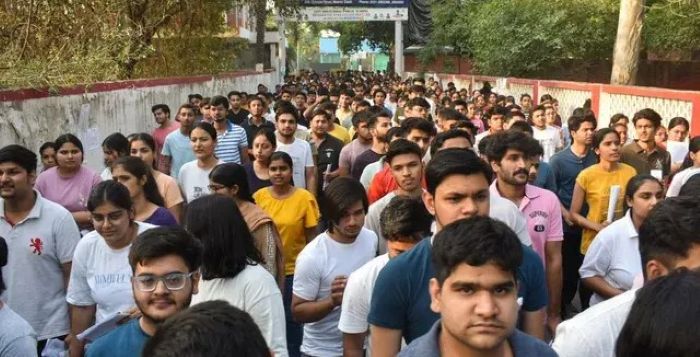
India has built universities at a pace few countries can match. In just twenty-five years, the number has risen from about 254 to more than 1,200. Yet beneath this expansion lies a question that matters far more than access: are graduates actually leaving campus prepared for work?
The numbers are striking. According to the Economic Survey 2024-25, India expanded from around 254 universities in 2000 to more than 1,200 in 2024, a growth of nearly 380%. Add to those 70,018 higher education institutions, over 43 million students enrolled and 54 Indian universities in the QS World Rankings 2026. The optics are impressive. The story beneath them is something else.
Having worked across skills development, employability and workforce readiness initiatives, I see every day that India does not suffer from a shortage of degrees. It suffers from a shortage of what those degrees are expected to produce.
The India Skills Report 2026, drawing on assessments of over one lakh candidates across seven industries, tells you plainly what the numbers obscure. ITI graduates clock 45.95% employability. Polytechnic graduates: 32.92%. Even MBA graduates, who should theoretically be workforce-ready, slipped to 72.76% from 78% the previous year. Engineering graduates held at around 70%, but only in streams directly tied to AI and data analytics. Many other streams continue to struggle in a labour market whose skill requirements are evolving faster than academic curricula.
Think about what that means. Across many disciplines, a significant proportion of graduates are entering the labour market without the skills employers increasingly demand.
This is not a new problem. It is a stubborn one. The India Skills Report has tracked graduate employability since 2012and the all-stream average has never sustainably crossed 55%. Policy cycles have come and gone. NEP 2020 promises a Gross Enrolment Ratio of 50% by 2035, a worthy goal, but the NITI Aayog itself has flagged that India may need as many as 2,500 universities to get there. The ambition is undeniable. The quality conversation has barely begun.
Here is what concerns me most: we have been measuring the wrong thing.
We measure how many institutions we build. We measure enrolments. We celebrate QS rankings and yes, India is now the fourth most represented country in QS 2026, which matters. But what we do not measure rigorously, systematically, or with any real urgency is whether the learning inside those institutions translates into capability outside them.
Industry reports continue to highlight significant gaps between campus curricula and employer expectations, particularly in emerging technology domains. In many cases, graduates are expected to demonstrate skills that receive little or no attention during their formal education. This is not merely a skills gap. It is a structural disconnect between two parallel worlds that are supposed to be connected: one that produces degrees and one that produces work.
The problem runs deep. The vast majority of India's 43,000-plus colleges are affiliated to state universities with centralised, slow-moving curriculum frameworks. An autonomous IIT can update its syllabus in months. A rural affiliated college often waits years for curriculum revisions to be approved. The same India that aspires to lead the Global Innovation Index, we moved from rank 76 in 2014 to 39 in 2024, is sending its brightest young people through an education system that teaches them a world that no longer exists by the time they graduate.
There is no single villain in this story. Faculty shortages, under-investment in research, governance gaps and the sheer scale of the system all play a role. But there is a choice being made consciously or not to prioritise quantity over quality, access over outcomes and certificate over competence.
What needs to change is not the number of universities. It is the relationship between those universities and the labour market. Mandatory industry exposure should not be an optional credit. Curriculum revision cycles should be tied to industry skill intelligence, not administrative convenience. Accreditation must ask harder questions, not just whether a library exists, but whether graduates find meaningful work.
India's demographic dividend is real. So is the deadline. The window to convert a young population into a skilled workforce does not stay open indefinitely. India's higher education challenge is no longer about creating more seats. It is about ensuring that every seat creates capability. Until that happens, the country's university boom will remain an achievement of scale rather than a measure of success.
(Nisha Singh is a policy analyst and General Manager – Brand & Corporate Communication at MEPSC under MSDE, working at the intersection of skilling, employability and workforce development. Views expressed are her own)

Related Posts
India targets 1 bn 5G users by 2030, up from 550 mn now: Scindia
India, Canada agree to boost security ties, extradition cooperation
‘Raised India to heavens’: Former Serbian President hails PM Modi