 Newsinc24 Team
Scientists say that global warming is making extreme weather events more frequent and ferocious, and even at present levels climate change is taking its toll. 2024 saw deadly flooding in Spain and Kenya, violent tropical storms in the United States and the Philippines, and severe drought and wildfires across South America. In total, disasters caused $310 billion in economic losses in 2024, Zurich-based insurance giant Swiss Re said this month. Scientists say the period being lived through right now is likely the warmest the Earth has been for the last 125,000 years.The Paris climate agreement commits the 196 signatories to keeping global heating to below 1.5C in order to limit the impact of climate disasters. But this is measured over a decade or two, not a single year.
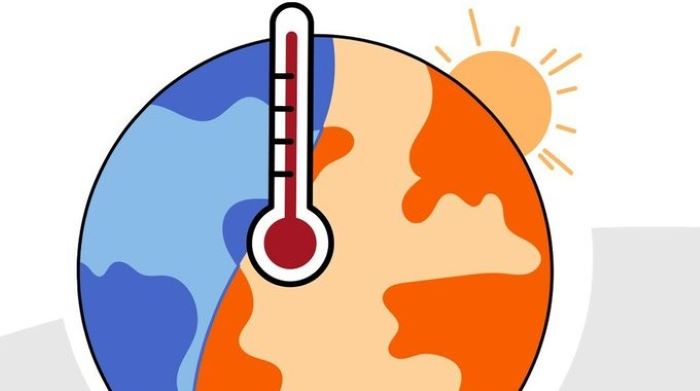
And the year 2024 is "effectively certain" to be the hottest on record and the first above a critical threshold to protect the planet from dangerously overheating, Europe's climate monitor said Monday. According to the Copernicus Climate Change Service an unprecedented spell of extraordinary heat had pushed average global temperatures so high between January and November that this year was sure to eclipse 2023 as the hottest yet. "At this point, it is effectively certain that 2024 is going to be the warmest year on record," the EU agency said in its monthly bulletin.In another grim milestone, 2024 will be the first calendar year more than 1.5 degrees Celsius hotter than pre-industrial times before humanity started burning large volumes of fossil fuels.Scientists warn that exceeding 1.5C over a decades-long period would greatly imperil the planet, and the world agreed under the Paris climate accord to strive to limit warming to this safer threshold.
As per AFP report, developing countries are particularly vulnerable and by 2035 will need $1.3 trillion a year in outside assistance to cope with climate change. At UN climate talks in November, wealthy countries committed $300 billion annually by 2035, an amount decried as woefully inadequate.2024 began at the peak of El Nino, a natural phenomenon that moves around warm water, helping raise global temperatures.But scientists said that such cyclical variability could not alone explain the record-breaking heat in the atmosphere and seas.



Related Posts
S&P Global retains India FY27 GDP growth forecast at 7%
PM Modi calls for cultural cooperation to promote global peace
D-St defies weak global cues,Sensex up 898 pts,Nifty at 25,801