 Newsinc24 Team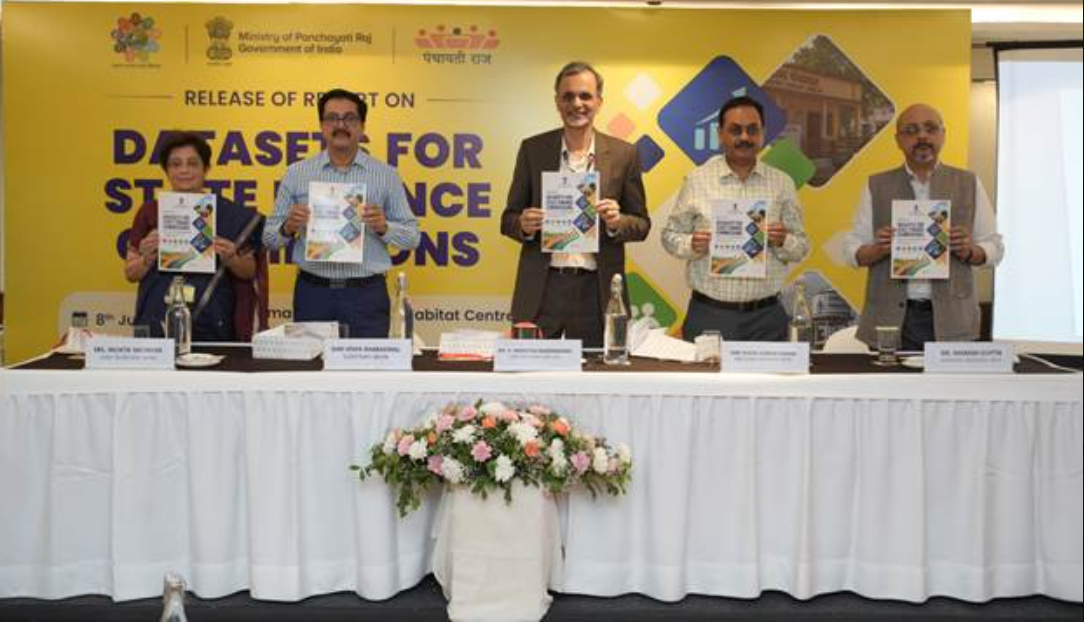
Chief Economic Adviser (CEA) V Anantha Nageswaran on Monday flagged serious shortcomings in the quality of data generated by State Finance Commissions (SFCs), describing it as a “data failure” that prevented the 16th Finance Commission from relying on their reports while framing recommendations on Centre-state fiscal relations.
Speaking at the launch of a report on datasets for State Finance Commissions, Nageswaran said the effectiveness of local governance and delivery of public services in rural areas depends less on broad macroeconomic indicators and more on how well panchayats are empowered to function.“Ease of living at the ground level is determined by how well-equipped and capable panchayats are, and not necessarily by macro factors, which affect them with a lag and somewhat indirectly,” he said.
#WATCH | Delhi: On the release of the Report on Datasets for State Finance Commissions, Chief Economic Advisor V. Anantha Nageswaran says, "... We spend a great deal of time and rightly so discussing macroeconomic policy, monetary conditions, fiscal deficit, the current account,… pic.twitter.com/3aXLeHboBL
— ANI (@ANI) June 8, 2026
The remarks come at a time when fiscal decentralisation remains a key pillar of governance, with Finance Commission transfers to rural local bodies funding essential services such as drinking water, sanitation, village roads and anganwadi centres.Highlighting the challenges in assessing local government finances, the CEA said reliable and comparable data often remains unavailable. Financial records are frequently incomplete, information is scattered across departments that operate in silos, and accounting practices differ significantly across states, making meaningful comparisons difficult.
According to Nageswaran, these issues have been repeatedly flagged by successive Finance Commissions. However, the concerns were stated most explicitly by the 16th Finance Commission, which found State Finance Commission reports too inconsistent and analytically weak to be used in formulating its recommendations.“The 16th Finance Commission has stated very clearly that it was unable to use State Finance Commission reports because they were highly heterogeneous in approach and lacked analytical rigour,” he said.
Calling it a serious indictment of the existing system, Nageswaran added that the problem reflects a broader failure in the collection, standardisation and management of data relating to local governance.
State Finance Commissions are constitutional bodies established by state governments every five years to recommend how financial resources should be distributed between states and local bodies, including panchayats and municipalities. Their recommendations are intended to strengthen fiscal decentralisation and improve local service delivery.To address the shortcomings, the report recommends several measures aimed at strengthening the information architecture of local governance. These include adopting common reporting formats for State Finance Commission reports and standardising accounting heads used for transfers to local bodies.
The CEA also raised questions about the extent to which the objectives of the 73rd Constitutional Amendment have been achieved more than three decades after it granted constitutional status to panchayats and sought to deepen grassroots democracy.One of the key recommendations of the report is for the Comptroller and Auditor General of India (CAG) to undertake a performance audit of the implementation of the 73rd Amendment. The proposed audit would assess the extent of functional, financial and administrative devolution to local governments.Nageswaran noted that similar audits have already been conducted in Karnataka and Goa and suggested that the exercise should be expanded systematically across the country.“A CAG audit can help establish where devolution actually stands and create accountability for the gap between constitutional intent and administrative reality,” he said.The recommendations, he added, could play a crucial role in improving transparency, strengthening local governance institutions and ensuring that fiscal decentralisation achieves its intended objectives of empowering grassroots bodies and improving public service delivery.









Related Items
JPSC exam cancellation demand met,Students say protests to continue
India clinch gold and silver at Asian Junior Weightlifting Championship
Vance dials PM Modi, discusses India-US ties