 Newsinc24 Team
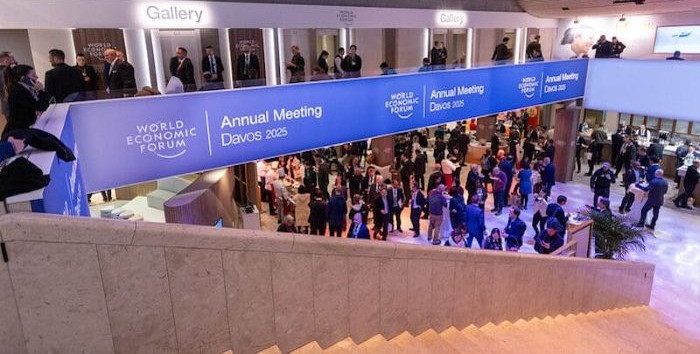
Leaders from across the world have called for a renewed global cooperation with constructive optimism as they continued their deliberations in Davos at the World Economic Forum Annual Meeting.They highlighted the need for new pathways to greater cooperation in an era of heightened geopolitical uncertainty. Cooperation and dialogue in a time of uncertainty emerged as key themes, with calls for new global partnerships and geostrategic adaptation common among European leaders in particular. Economic transformation through innovation, sustainability and inclusive development also took centre stage, as leaders highlighted pathways to prosperity and resilience across regions.
Addressing a gathering of global leaders, WEF Founder and Chairman Klaus Schwab said, "This transition from the Industrial to the Intelligent Age is occurring at an exponential pace, carrying unprecedented risks for humanity as we strive to prepare and adapt for its complexities." Schwab called on the global community to rise to the moment with "constructive optimism", urging stakeholders from all sectors-government, business, civil society and academia -- to unite in crafting solutions to shared challenges.
Speaking at what he described as "one of the most uncertain geopolitical and geoeconomic moments in generations," WEF President and CEO Borge Brende stressed that the world is at a critical inflection point and that 2025 will be a year of enormous consequence. "The longstanding international order that existed for the last three decades has receded. We need to find more effective ways to work together. It is the only way forward," he said.
In these turbulent times, democratic and liberal values serve as a critical signpost for stability and progress, Swiss President Karin Keller-Sutter said. She further said that open markets, fair and transparent rules and fiscal discipline are the cornerstones of sustained prosperity. "Only a state with stable institutions can create a sound environment where everyone can realize their potential, and a state must protect this freedom with rules," she added.
Also reflecting on the changing world order, European Commission President Ursula von der Leyen outlined Europe's plan to adapt to a new era of "harsh geostrategic competition" by increasing its competitiveness, strengthening global partnerships and maintaining its commitment to sustainable development. "To sustain our growth in the next quarter of the century, Europe must shift gears," she said. "We should not take anything for granted. We must look for new opportunities wherever they arise. This is the moment to engage beyond blocs and taboos. And Europe is ready for change," she added.
German Chancellor Olaf Scholz called for renewed commitments to security and prosperity in the face of global challenges, emphasizing that partnerships serve as the "engine for successful economic development." He highlighted plans to reform German public debt regulations to strengthen domestic growth and emphasized Europe's need to strengthen its defence capabilities and industrial base.
His remarks acknowledged geopolitical challenges and uncertainties related to the new administration in Washington, but highlighted optimism about opportunities in emerging technologies.
As the war in Ukraine nears its third year, President Volodymyr Zelenskyy urged Europe to solidify its position as a leading global power. Highlighting the need for unity and strategic investment, he emphasized that the continent must prioritize alliances, technological advancements, and a cohesive security and defence policy. He pointed to existing models of cooperation in Ukraine's defence as examples of how collective action can strengthen Europe as a whole.

Related Posts
S&P Global retains India FY27 GDP growth forecast at 7%
India and Netherlands discuss ways to strengthen cooperation
PM Modi calls for cultural cooperation to promote global peace