 Ira Singh
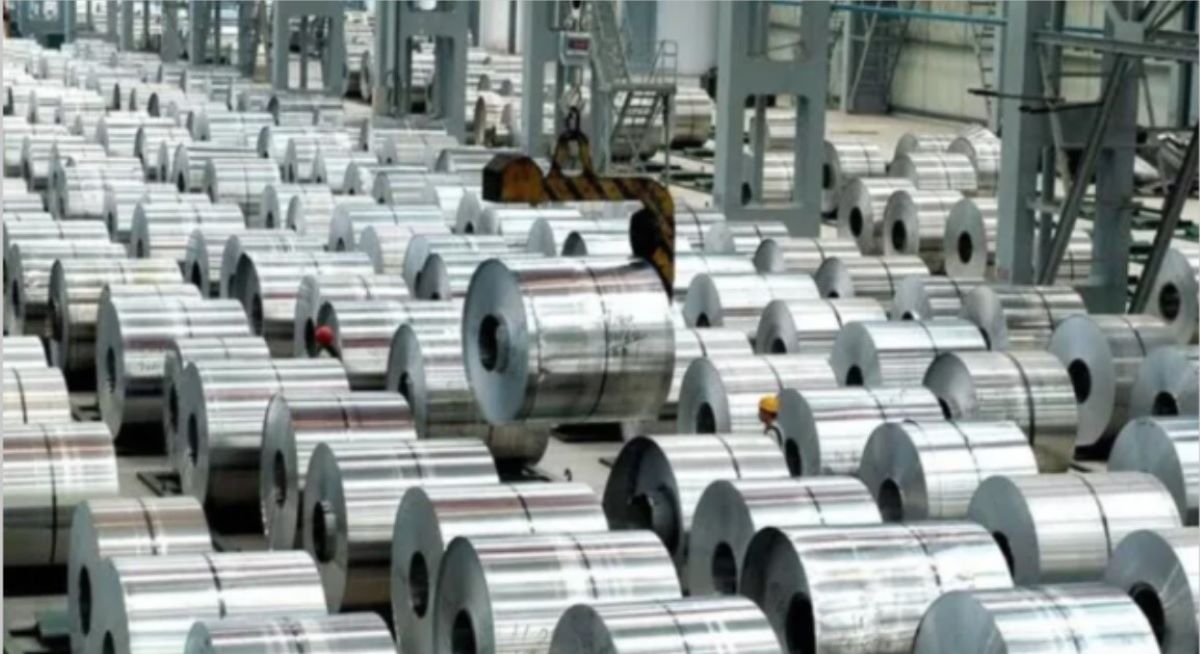
India has strengthened its position in the global steel industry, emerging as the world’s second-largest crude steel producer after China, with its annual output surpassing the combined production of the United States and Japan in 2025. The country produced 164.9 million tonnes of crude steel during the year, compared with a combined 162.7 million tonnes produced by the two established industrial economies.
According to the World Steel Association (Worldsteel), India's crude steel production increased by 10.4 per cent in 2025 from 149.4 million tonnes in 2024. The latest figures underline the country's remarkable industrial expansion over the past decade, with annual steel production nearly doubling from 87.3 million tonnes in 2014.China continued to dominate global steel production with 960.8 million tonnes in 2025, while India consolidated its position in second place. The United States produced approximately 82 million tonnes during the year, followed by Japan at 80.7 million tonnes.
India's steel production nearly doubles in a decade
India's rise becomes more significant when viewed against the changing production trends of other major steel-producing economies. Between 2014 and 2025, India's crude steel output increased by nearly 89 per cent, reaching 164.9 million tonnes.On the other hand, Japan's production declined from approximately 110.7 million tonnes in 2014 to 80.7 million tonnes in 2025. The United States also recorded a decline, with output falling from around 88.2 million tonnes to 82 million tonnes during the same period.
The contrasting trends reflect a gradual shift in the global steel manufacturing landscape, with India emerging as a major growth engine while some established industrial economies experience relatively subdued production.
Steel remains a critical indicator of a country's industrial capabilities, given its extensive applications across infrastructure, manufacturing and strategic sectors. From highways, railway networks, bridges and ports to automobiles, ships, power plants and defence equipment, steel plays a central role in supporting economic development.
India's rising production capacity is closely linked to its expanding infrastructure requirements, growing industrial activity and efforts to strengthen domestic manufacturing. Investments in railway modernisation, road connectivity, urban development, industrial corridors and defence manufacturing are also contributing to the growing importance of the domestic steel sector.The expansion assumes significance as India seeks to reduce import dependence, strengthen domestic supply chains and establish itself as a competitive manufacturing hub. A robust steel industry also supports downstream sectors, including construction, engineering, automobiles and capital goods.
India's performance in 2025 stands out against the broader global production trend. According to Worldsteel data, global crude steel production declined by approximately 2 per cent during the year. While India's output grew by 10.4 per cent, China's production fell by 4.4 per cent and Japan recorded a decline of around 4 per cent.This divergence highlights India's growing weight in the global steel market and its ability to expand production despite challenging conditions in the international industry.
India's achievement of surpassing the combined steel output of the US and Japan marks a significant milestone in its industrial journey. However, sustaining this momentum will depend on further investments in production capacity, technological modernisation, productivity, product quality and environmentally sustainable manufacturing.As infrastructure development and industrial expansion gather pace, the steel sector is expected to remain central to India's ambition of becoming a stronger global manufacturing powerhouse.
(Business Correspondent)

Related Posts
India win rain-hit second ODI against New Zealand by four runs
India’s chemicals sector expands capacity, investment potential
Brewing India's global rise heritage roots, premium coffees, expanding markets